

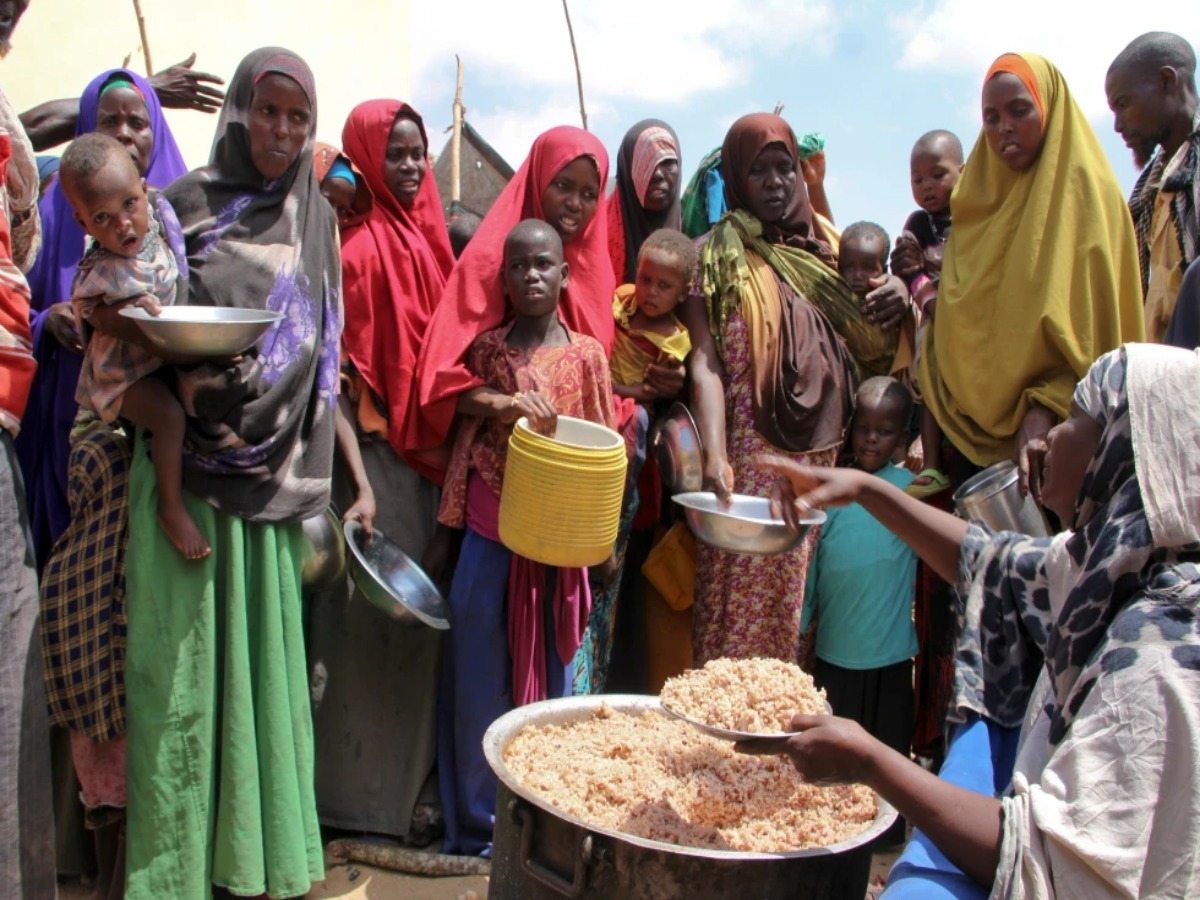
Nearly 6.5 million Somalis are confronting extreme hunger as a relentless drought, ongoing conflict, and shrinking global aid push the country deeper into crisis, according to Somali authorities and the United Nations.
The latest Integrated Food Security Phase Classification report projects that by the end of March, 6.5 million people will experience crisis-level or worse food insecurity. Among them, 1.84 million children under five are expected to face acute malnutrition in 2026, including almost 500,000 who could be severely malnourished.
Officials attribute the worsening food crisis to water shortages, insecurity, armed conflict, and historically low humanitarian assistance caused by global funding cuts. The severe drought, driven by below-average rainfall, has destroyed crops, killed livestock, pushed up food prices, and forced thousands to flee their homes.



READ ALSO: 750,000 in Somalia to lose U.N. food assistance due to funding collapse
“The drought emergency in Somalia has deepened alarmingly, with soaring water prices, limited food supplies, dying livestock and very little humanitarian funding,” said George Conway, the U.N. humanitarian coordinator for Somalia. He added that urgent lifesaving aid is critical in the coming months, especially as no significant rainfall is expected until the main rainy season from April to June.
Even with average rainfall, officials warn that 5.5 million people are likely to remain in crisis or worse later in 2026, highlighting that recovery from this extreme drought will be slow. Water shortages are particularly severe in southern and central Somalia and are unlikely to improve substantially, even if rains meet normal levels.
Conflict and drought forced roughly 278,000 people to flee between July and December 2025, disrupting farming, market access, and aid delivery, according to U.N. data.
“The severity of this drought is undeniable and deeply alarming,” said Mohamud Moallim Abdulle, commissioner of the Somalia Disaster Management Agency in an AP report. He urged international partners, the Somali diaspora, businesses, and civil society to increase immediate support.
READ ALSO: Somalia refutes U.S. allegation of food aid warehouse demolition
The United Nations and Somali government also warned that drastic cuts in funding have forced humanitarian agencies to reduce or suspend critical programs in food security, health, nutrition, and water and sanitation.