
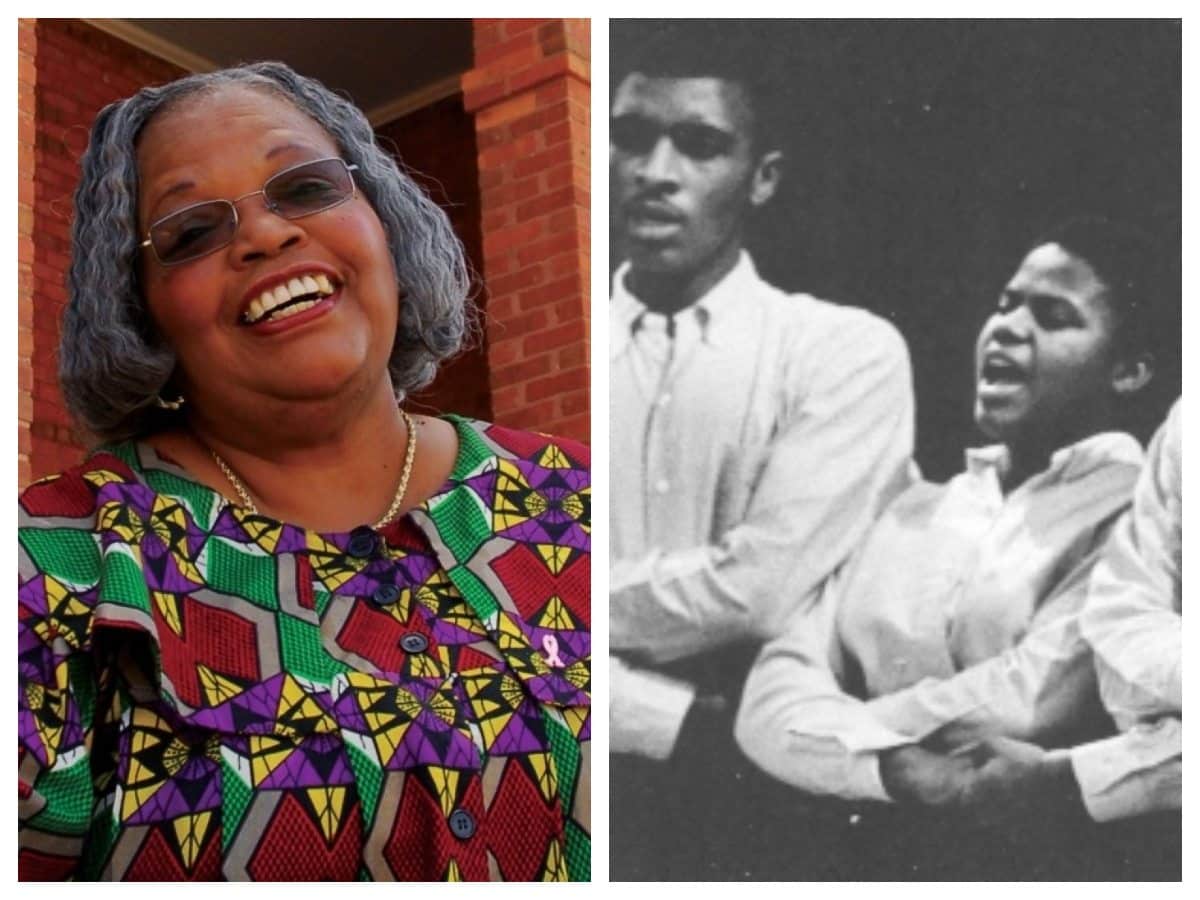
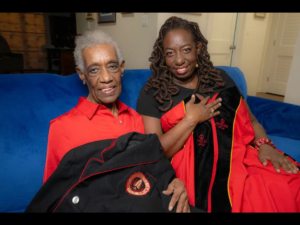
Rutha Mae Harris, the final surviving member of the original Freedom Singers, continues her work in Albany, Georgia, six decades after the Civil Rights Movement. She remains dedicated to showing emerging local leaders how to integrate music and vocal performance into their advocacy.
Harris explained her ongoing commitment to Essence, saying, “Today, I am still singing those songs because freedom is a constant struggle. It seems like we are trying to go backwards, but we ain’t going to let nobody turn us around. We are going to keep fighting.”
Harris’s enduring voice and legacy are essential to understanding the historical fight for civil rights in southwest Georgia and how those stories are told. Through historic churches, the Albany Civil Rights Institute, and yearly commemorative events during Black History Month, Albany’s community and city leaders are actively working to preserve the history embedded in its buildings, streets, and people.
RELATED STORIES

“Learning the history of Albany has helped me learn my own history and who I am as a young man, son, and leader,” said Martae Hicks, a student at Albany State University (ASU). “Being from Albany is a blessing and a privilege because greatness comes from my hometown. I am indeed a proud son of ‘The Good Life City.’
Formed in the early 1960s, The Freedom Singers—a quartet within the Student Nonviolent Coordinating Committee (SNCC)—included Cordell Reagon, Bernice Johnson, Chuck Neblett, and Harris. Their collective voices created the essential sounds of the Civil Rights Movement, communicating the resistance, emotion, and spirit of the South to audiences across the nation.
The Student Nonviolent Coordinating Committee (SNCC) was established at Shaw University, a historically Black college in Raleigh, North Carolina. This occurred two months after college students at North Carolina A & T State University initiated sit-ins at a Woolworth lunch counter in Greensboro, North Carolina. During the movement, activism and the pursuit of a new America were central to Black youth, as the Black experience across the nation was shaped by racial segregation and Jim Crow laws.
The group was formed to raise money for the SNCC and undertook an ambitious nine-month tour, primarily traveling by car through 46 states. They used their songs to narrate the story of the Civil Rights Movement. A significant moment occurred on August 28, 1963, when the Freedom Singers, having flown to Washington, D.C., on a plane chartered by actor and singer Harry Belafonte, performed ‘We Shall Not Be Moved’ for over 250,000 people at the historic March on Washington.
The singers performed at mass meetings, churches, and high schools across the nation. Their initial tour raised nearly $50,000, which helped to fund SNCC’s growing mobilization efforts. Beyond singing, Harris actively participated in voter registration drives and protests, resulting in her being jailed for 14 days for advocating for fundamental human rights. Even while incarcerated, Harris continued to use the jail cell as a platform to sing freedom songs.
Harris told Essence that while music has changed since the traditional sounds of the 1960s movement, “freedom songs are from any genre of music.” She explained that young people facing struggles need to “identify that struggle and come up with lyrics from a song that people already know. That’s how freedom songs came about.”
READ ALSO: Renowned transgender activist Miss Major Griffin-Gracy dies aged 78
Harris remains a familiar singing voice and advocate for Albany residents, continuing her dedication to community engagement. She regularly visits classrooms to discuss the importance of voting and the vital role freedom songs played in sustaining the Civil Rights Movement.
As Kasey Summerville, president and chief executive officer of Visit Albany, noted, Harris is “still using her gifts and her talents to give back to her community, right here in Albany.”
“Black history is American history and erasing it is not an option,” said Summerville. “I believe for generations to come we must tell the stories to our kids and grandchildren because they need to know.”
Her strong family background deeply influenced Harris’s commitment to the Civil Rights Movement in activism. Her father, Rev. Isaiah Harris, a church founder and long-time civil rights advocate, promoted literacy and voter registration from the 1940s, instilling a sense of self-worth and fearlessness in his children. Her mother, a supportive schoolteacher, encouraged Harris’s involvement, provided she returned to finish her education.
Harris still resides in Albany, Georgia, her hometown. She dedicated 30 years to teaching at Monroe High School and continues to inspire others through music. “Singing is my joy,” Harris declared, “I love to sing.”
Although the original Freedom Singers disbanded after recording an album in 1963, some groups that later emerged continued to perform under the same name.