

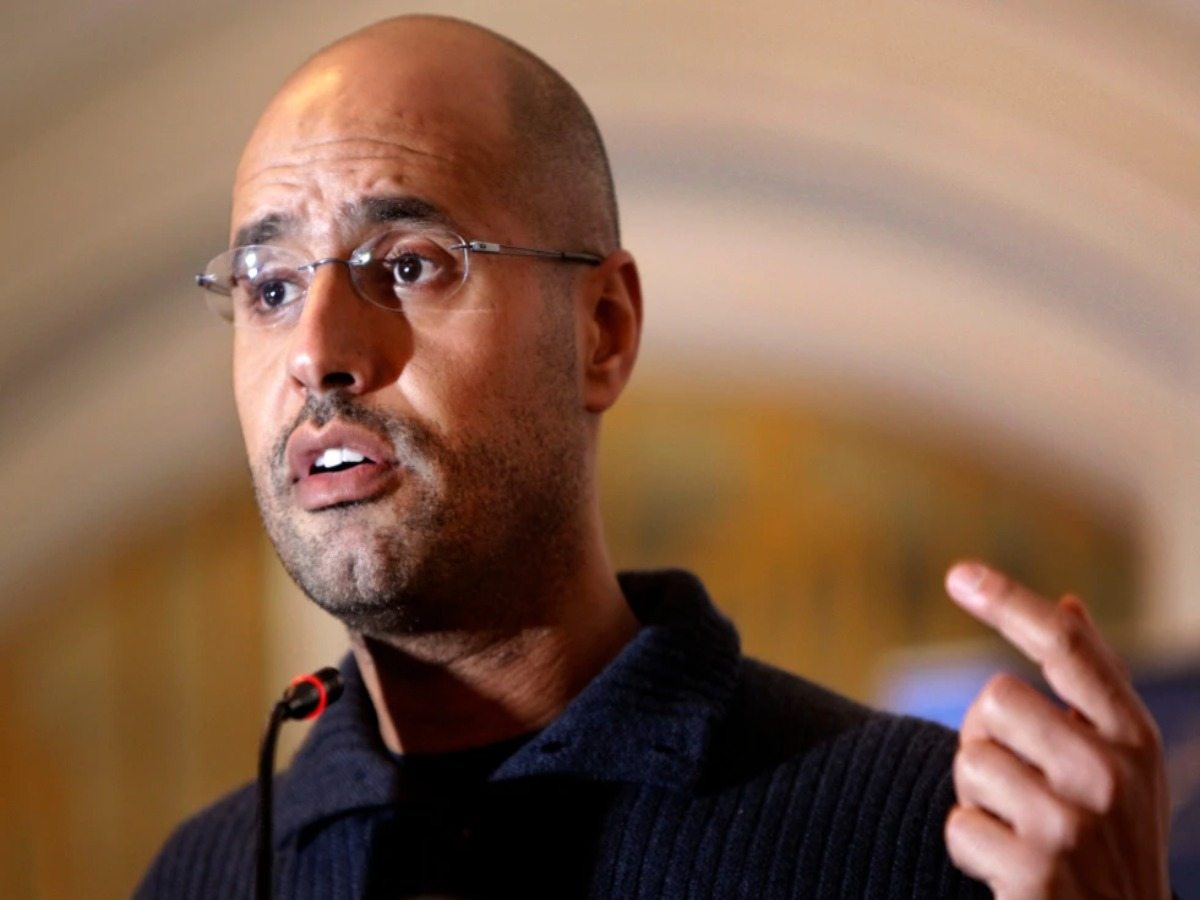
Libyan authorities have confirmed the death of Saif al-Islam Gaddafi, the son once widely regarded as the political successor to former ruler Muammar Gaddafi, in an incident that has stirred fresh uncertainty around Libya’s fragile security environment.
Officials said the 53-year-old was killed in Zintan, a town about 136 kilometers southwest of Tripoli. Libya’s chief prosecutor’s office stated that preliminary findings indicate he died from gunshot wounds, though investigators have yet to outline the exact sequence of events or identify those responsible.
News of his death was independently confirmed by Khaled al-Zaidi, his lawyer, who posted the announcement on Facebook without further explanation, the AP reported. Abdullah Othman Abdurrahim, who previously represented Seif al-Islam during United Nations-sponsored negotiations aimed at resolving Libya’s prolonged political crisis, also shared confirmation of the killing on social media.
RELATED STORIES

A statement later issued by Seif al-Islam’s political camp alleged that “four masked men” forced their way into his residence and killed him in a “cowardly and treacherous assassination.” The statement said that he clashed with the assailants, who closed the CCTV cameras at the house “in a desperate attempt to conceal traces of their heinous crimes.”
Seif al-Islam was born in Tripoli in June 1972 and was the second son of Libya’s longtime strongman. He gained prominence internationally after pursuing doctoral studies at the London School of Economics and was often presented as the regime’s more reform-minded figure during his father’s rule.
His political trajectory shifted dramatically following the NATO-backed uprising that ended Muammar Gaddafi’s four-decade grip on power in 2011. The elder Gadhafi was killed later that year during intense fighting, an event that pushed Libya into years of political fragmentation and armed conflict involving rival factions and militias.
During the final months of the 2011 revolt, Seif al-Islam was captured by fighters in Zintan while reportedly attempting to escape into Niger. He remained in their custody until June 2017, when one of Libya’s competing governments granted him amnesty. He continued living in Zintan after his release.
Legal challenges continued to shadow him. A Libyan court sentenced him to death in absentia in 2015 after convicting him of inciting violence and ordering the killing of protesters during the uprising. The International Criminal Court also sought his arrest, accusing him of crimes against humanity tied to the same period.
READ ALSO: Hundreds of Sudanese migrants deported from eastern Libya amid crackdown on smuggling
Despite the legal controversies, Seif al-Islam attempted a political comeback in November 2021 by declaring his intention to contest Libya’s presidential election. The move drew strong backlash from anti-Gaddafi groups across the country’s political divide. Libya’s High National Elections Committee eventually disqualified him from the race, though the election itself was later abandoned due to ongoing disputes among rival governments and armed factions still competing for control of the country.