
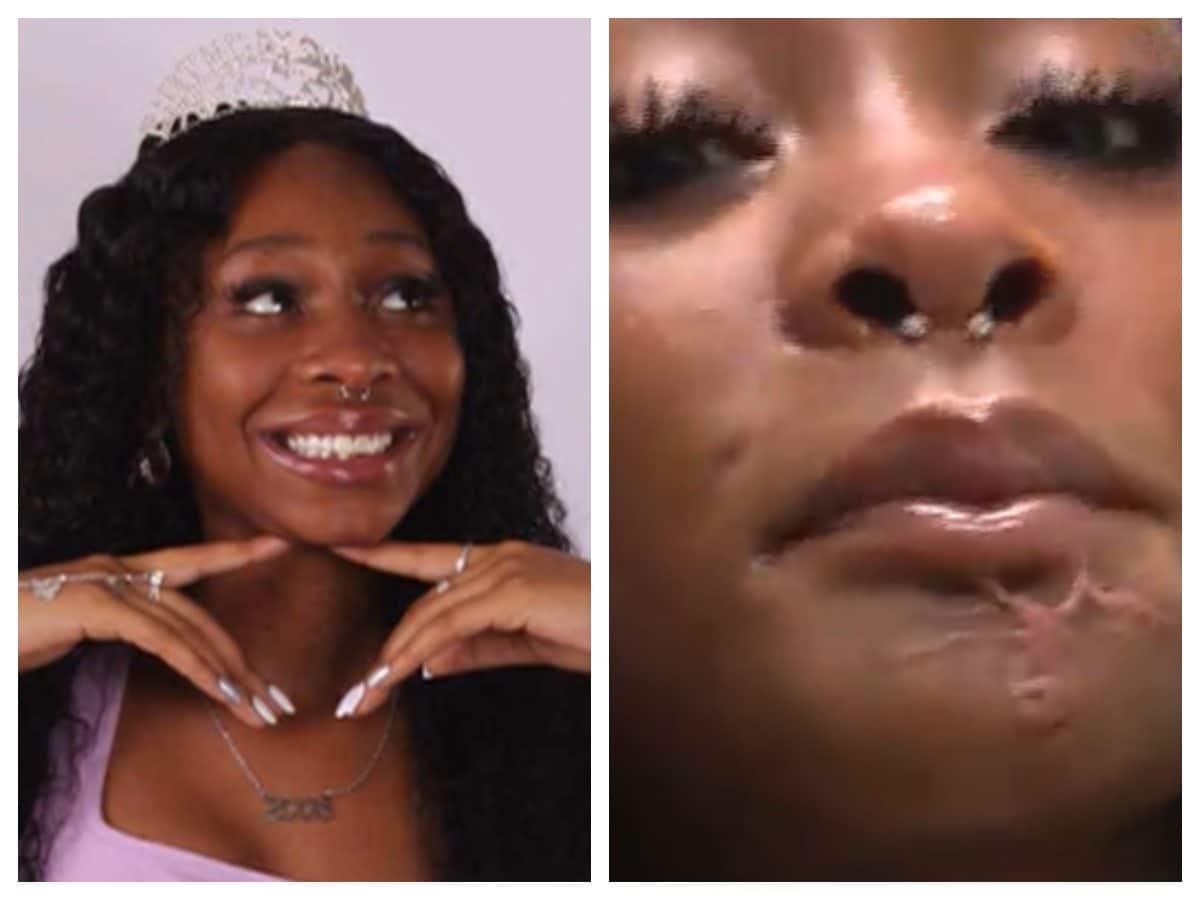
Iowa doctors gave 17-year-old Mya Buie a second chance to smile after she was allegedly shot in the face by her mother’s ex-boyfriend. Dr. Simon Wright, a facial reconstruction trauma surgeon, used cutting-edge artificial intelligence to meticulously rebuild Buie’s damaged jaw.
Just days before her 17th birthday in late October, Buie was allegedly shot in the face at close range by her mother’s ex-boyfriend during an altercation.
“It was kind of scary. It was traumatic,” the teen told KCCI.



Buie now describes her ongoing recovery as a miraculous journey.
“I thank God every day for giving me a second chance at life. I’m very grateful… I can tell this story and spread the word of God, like a testament,” she said.
Buie, whom Dr. Wright described as one of his bravest and most memorable patients, had already undergone multiple intensive surgeries before meeting Dr. Wright three months ago to address the severe injuries.
The impact of the .40-caliber bullet was severe and caused lasting physical damage. It permanently damaged four of Buie’s teeth and shattered her jaw.
READ ALSO: Man goes viral after plastic surgery left him looking half his age
According to Wright, who has 23 years of experience as a trauma surgeon, Buie’s injury was the worst he could recall from his entire career.
While still in the intensive care unit, the 17-year-old had two major surgeries: an initial procedure to stabilize her shattered jaw, immediately followed by a second, more complex operation to fully reconstruct the severely damaged bone structure.
“There is a lot of things that have to go right to do any kind of surgery at all, and to do something complicated like this… it’s really an inspiring thing to be part of,” Wright told KCCI.
The traditional, time-consuming method of manually bending and molding titanium plates to reconstruct facial bones, a process that often leads to suboptimal patient outcomes, has now been taken over by modern technology, ushering in an era of greater precision and efficiency in reconstructive surgery.
Artificial intelligence (AI) was vital in Buie’s jaw reconstruction. Doctors used AI to examine a CT scan of her jaw, which then guided a 3D printer to create a custom-fitted jawbone plate. This technology provides several benefits: a more exact fit, better alignment with the patient’s teeth, and a shorter surgery time.
“It’s so much easier than trying to bend a plate over and over again to get it perfect,” Wright remarked. “It’s no question a gamechanger.”
The customized plate for Buie marked a first for Des Moines trauma surgeons, after being created in record time. This process, which typically takes several weeks, was completed in only a few days.
“The ability to make a custom plate has been around for 10 years or more, but the ability to do it very quickly has not been,” Wright said.
Doctors expect Buie to make a complete recovery. Her new jawbone plate will eventually integrate with the existing bone, becoming fully fused and achieving its original strength.
The teen is scheduled to receive dental implants next month to replace her missing teeth.