
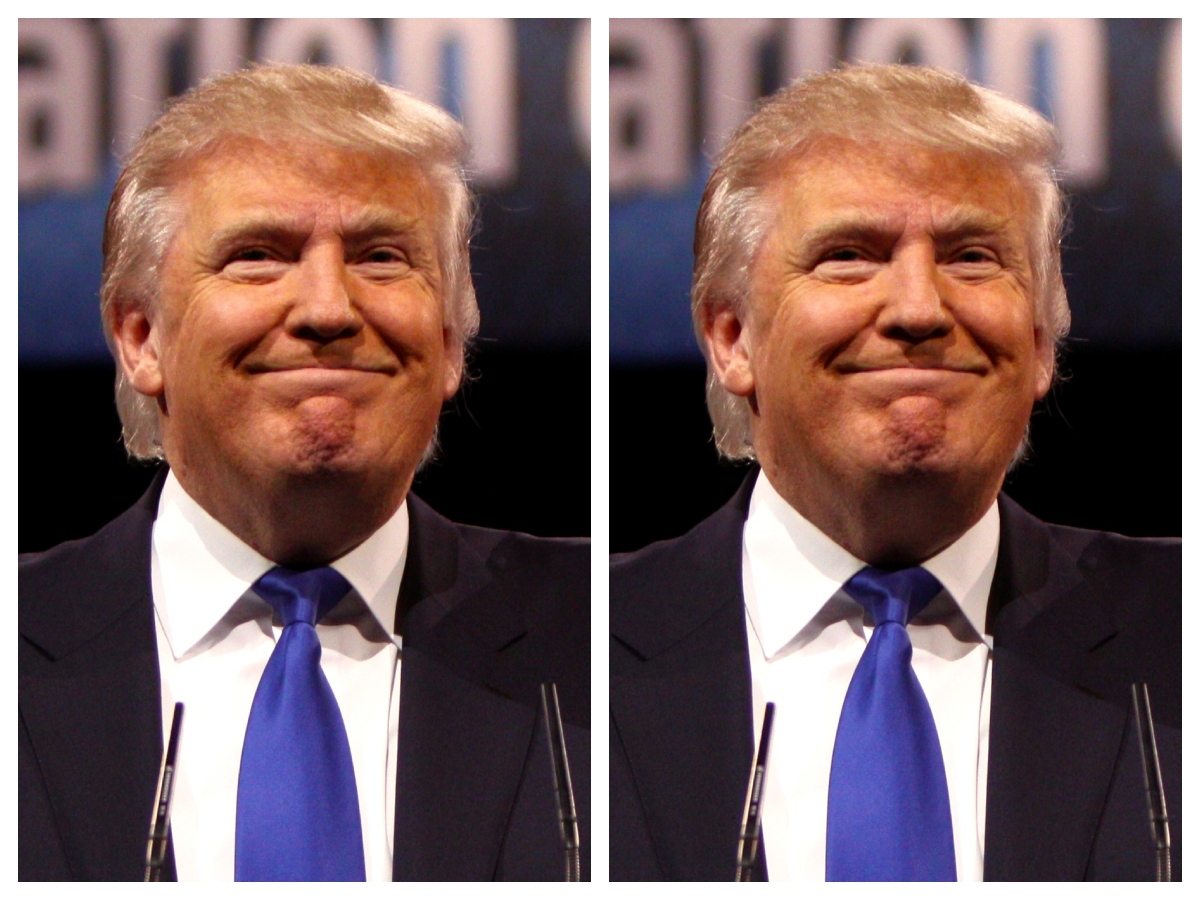
The United States carried out airstrikes in northwestern Nigeria on Christmas Day. President Donald Trump described the operation as a decisive blow against Islamic State fighters operating in the region. The strikes followed weeks of intense criticism from Trump over claims that Nigeria has failed to curb violence against Christians.
Posting on his social media platform Thursday night, Trump said the attack targeted militants he described as responsible for brutal killings, though he offered no details on the scale of the damage or specific targets hit in Sokoto State.
A U.S. Defense Department official, speaking on condition of anonymity because the details were not public, confirmed in an AP report that the operation was conducted in coordination with Nigerian authorities and had received formal approval from the Nigerian government.
RELATED STORIES


READ ALSO: U.S. targets Nigerians linked to anti-Christian violence with new visa restrictions
Nigeria’s Ministry of Foreign Affairs later acknowledged the cooperation, saying it involved intelligence sharing and joint planning carried out “consistent with international law, mutual respect for sovereignty and shared commitments to regional and global security.”
Trump tagged the strike as a response to attacks on Christians, writing that U.S. forces had acted against Islamic State fighters “who have been targeting and viciously killing, primarily, innocent Christians.” Security experts and residents, however, note that Nigeria’s conflict affects communities across religious lines, with both Christians and Muslims regularly targeted.
“Terrorist violence in any form, whether directed at Christians, Muslims or other communities, remains an affront to Nigeria’s values and to international peace and security,” the Foreign Affairs Ministry said.
Nigeria is confronting multiple armed groups across different regions, including two factions linked to the Islamic State. One is the Islamic State West Africa Province, a splinter group of Boko Haram operating mainly in the northeast. The other is the lesser-known Lakurawa group, active in northwestern states such as Sokoto, where militants use forested areas spanning several states as hideouts.
Analysts believe the U.S. strikes were likely aimed at Lakurawa, which has become increasingly violent over the past year.
“Lakurawa is a group that is actually controlling territories in Nigeria, in Sokoto state and in other states like Kebbi,” said Malik Samuel, a Nigerian security researcher with Good Governance Africa. “In the northwest, there has been the incursion of violent extremist groups that are ideologically driven,” he said, pointing to the limited presence of government forces in many affected areas.
READ ALSO: Trump signals possible Pentagon move against Nigeria over alleged Christian persecution
Nigeria’s government has previously pushed back against Trump’s claims that Christians are being singled out, stressing that extremist violence has claimed victims from multiple religious backgrounds.
Last month, Trump directed the Pentagon to begin preparing options for possible military action in Nigeria as part of a broader effort to address what he has described as the persecution of Christians. Around the same time, the State Department announced visa restrictions targeting Nigerians and their relatives linked to the killings of Christians.
The United States has also designated Nigeria a “country of particular concern” under the International Religious Freedom Act.
Trump praised the military operation in strong terms, saying U.S. defense officials had “executed numerous perfect strikes, as only the United States is capable of doing,” and adding that “our Country will not allow Radical Islamic Terrorism to prosper.”
Nigeria, home to more than 220 million people, is almost evenly divided between Christians and Muslims. The country has long faced complex security challenges that include extremist violence, communal conflicts, clashes between farmers and herders, ethnic tensions, and separatist movements.
While religion often plays a role, analysts say many attacks are driven by overlapping causes, including competition over land, weak governance, and the absence of security forces in rural areas.
The United States’ military footprint in Africa has shrunk in recent years, with several partnerships scaled back or ended. Any broader intervention in Nigeria would likely require redeploying forces from other regions.
Despite that, pressure from the U.S. government has continued as Nigeria experiences repeated attacks on churches, schools, and villages. Experts say the violence affects both Christian and Muslim communities.
Defense Secretary Pete Hegseth stressed the administration’s stance in a post on X late Thursday, writing, “The President was clear last month: the killing of innocent Christians in Nigeria (and elsewhere) must end.”
READ ALSO: Trump labels Nigeria a ‘country of concern’ amid Christian persecution claims
He added that U.S. forces are “always ready, so ISIS found out tonight — on Christmas,” before closing with, “More to come…Grateful for Nigerian government support & cooperation” and signing off with, “Merry Christmas!”