
Visitors to a U.S. military cemetery in the southern Netherlands have been registering their anger in a guestbook after two exhibits honoring Black American soldiers were quietly removed from public view.
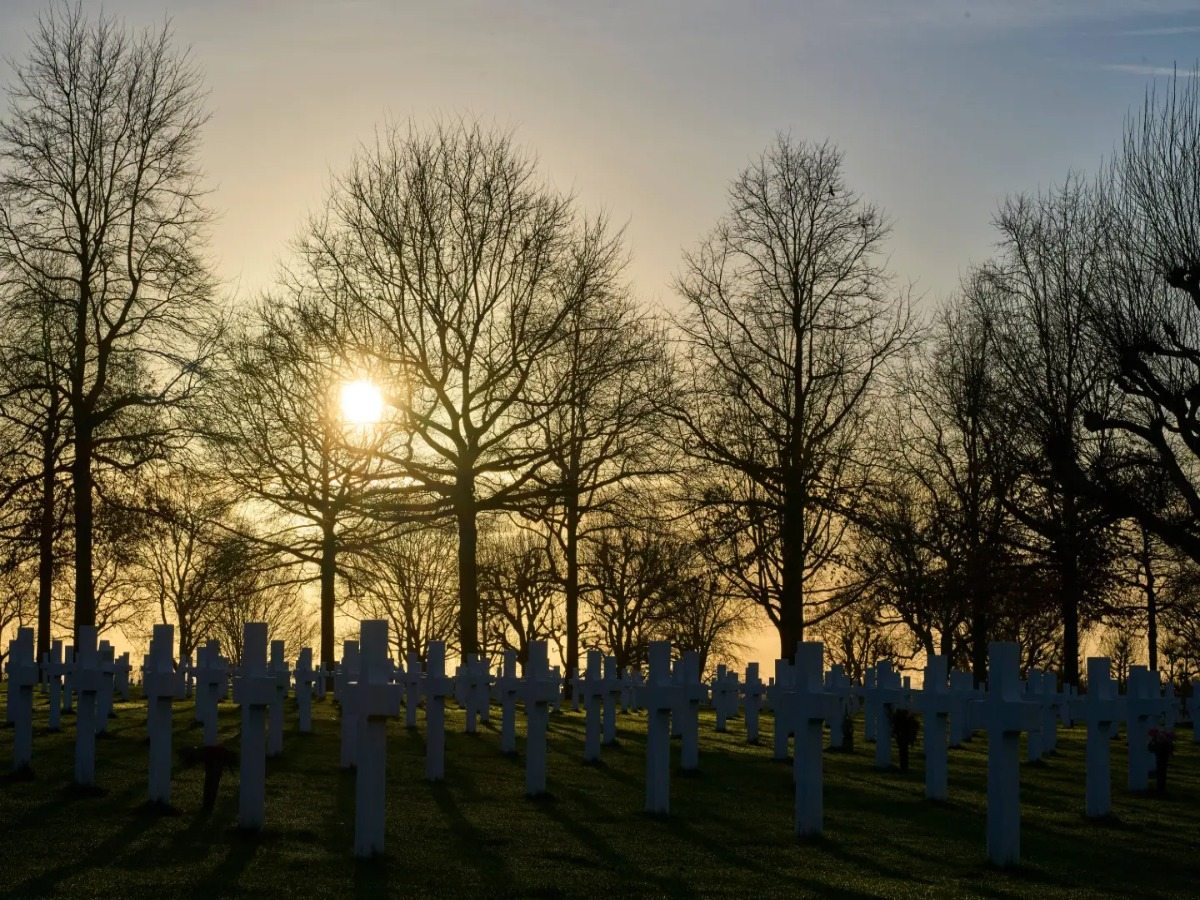
The panels were taken down earlier this year from the visitor center at the American Cemetery in Margraten, where more than 8,300 U.S. service members are buried. The cemetery sits near the borders of Belgium and Germany and has long been cared for by local Dutch families who see the site as a sacred reminder of liberation during World War II.
The decision came months after President Donald Trump signed executive orders ending diversity, equity, and inclusion initiatives across federal agencies. “Our country will be woke no longer,” Trump said during a March address to Congress.



READ ALSO: Trump administration unveils $2B U.N. aid plan amid push for sweeping reforms
The American Battle Monuments Commission, the U.S. agency responsible for overseas military cemeteries, removed the displays without any public announcement. The action has since attracted massive criticism from Dutch officials, descendants of American soldiers, and residents who regularly tend the graves.
One of the removed panels told the story of George H. Pruitt, a 23-year-old Black soldier buried at Margraten who died in 1945 while trying to save a fellow serviceman from drowning. The other detailed racial segregation within the U.S. military during World War II.
U.S. Ambassador to the Netherlands Joe Popolo appeared to defend the decision after the controversy became public. “The signs at Margraten are not intended to promote an agenda that criticizes America,” he wrote on social media following a visit to the site. He later declined to comment further.
During World War II, about one million Black Americans served in the U.S. military. Most were placed in segregated units and assigned labor-intensive duties, though some fought in combat. In the winter of 1944 and 1945, during a period known in the Netherlands as the Hunger Winter, an all-Black unit was tasked with digging thousands of graves at Margraten.
Among those troubled by the removal is Cor Linssen, now 79, the son of a Black American soldier and a Dutch woman. He grew up about 30 miles from the cemetery and learned later in life who his father was.
“When I was born, the nurse thought something was wrong with me because I was the wrong color,” he told The Associated Press. “I was the only dark child at school.”
Earlier this year, Linssen and other children of Black American soldiers, now in their seventies and eighties, visited the cemetery to see the displays.
“It’s an important part of history,” Linssen said. “They should put the panels back.”
For months, the reason behind the removal remained unclear. That changed when the Jewish Telegraphic Agency and Dutch News obtained internal emails through a U.S. Freedom of Information Act request. The documents showed that the decision was directly tied to the Trump administration’s rollback of DEI policies.
Neither the White House nor the American Battle Monuments Commission responded to questions about the findings, the Associated Press indicated in a report. Previously, the commission said the panel addressing segregation “did not fall within (the) commemorative mission.” It also stated that the Pruitt display had merely been “rotated” out.
READ ALSO: Judge orders Trump administration to restore disaster funds cut from Democratic states
The replacement exhibit now highlights Leslie Loveland, a white American soldier killed in Germany in 1945 and buried at Margraten.
Theo Bovens, chair of the Black Liberators foundation and a Dutch senator, said his organization had not been informed about the removal, despite having helped push for the displays to be installed in 2024.
“It is strange,” he said. “Something has changed in the United States.”
Bovens, who lives near Margraten, is part of a long-standing local tradition in which residents adopt graves and care for them year-round. Families often pass the responsibility down through generations, and there is currently a waiting list to adopt the resting places of American soldiers.
Local officials have formally demanded that the panels be reinstated. In November, a Dutch television program recreated the exhibits and placed them outside the cemetery, but police removed them shortly afterward. The producers are now searching for a permanent location.
The Black Liberators Foundation is also working to establish a lasting memorial for Black soldiers who died helping to free the Netherlands.
In the town square of Eijsden-Margraten, a small park bears the name of Jefferson Wiggins, a Black soldier who helped dig graves at the cemetery at just 19 years old. In a memoir published posthumously in 2014, Wiggins described burying white soldiers he was forbidden to socialize with while they were alive.
“When Black soldiers came to Europe in the Second World War, what they found was people who accepted them, who welcomed them, who treated them as the heroes that they were. And that includes the Netherlands,” said historian Linda Hervieux, whose book “Forgotten” documents the experiences of Black troops who fought on D-Day and the discrimination they faced at home.
She said the removal of the panels fits a broader pattern.
READ ALSO: Remembering the black liberators who fought and freed the Dutch from the marauding Nazis
“It follows a historical pattern of writing out the stories of men and women of color in the United States.”