

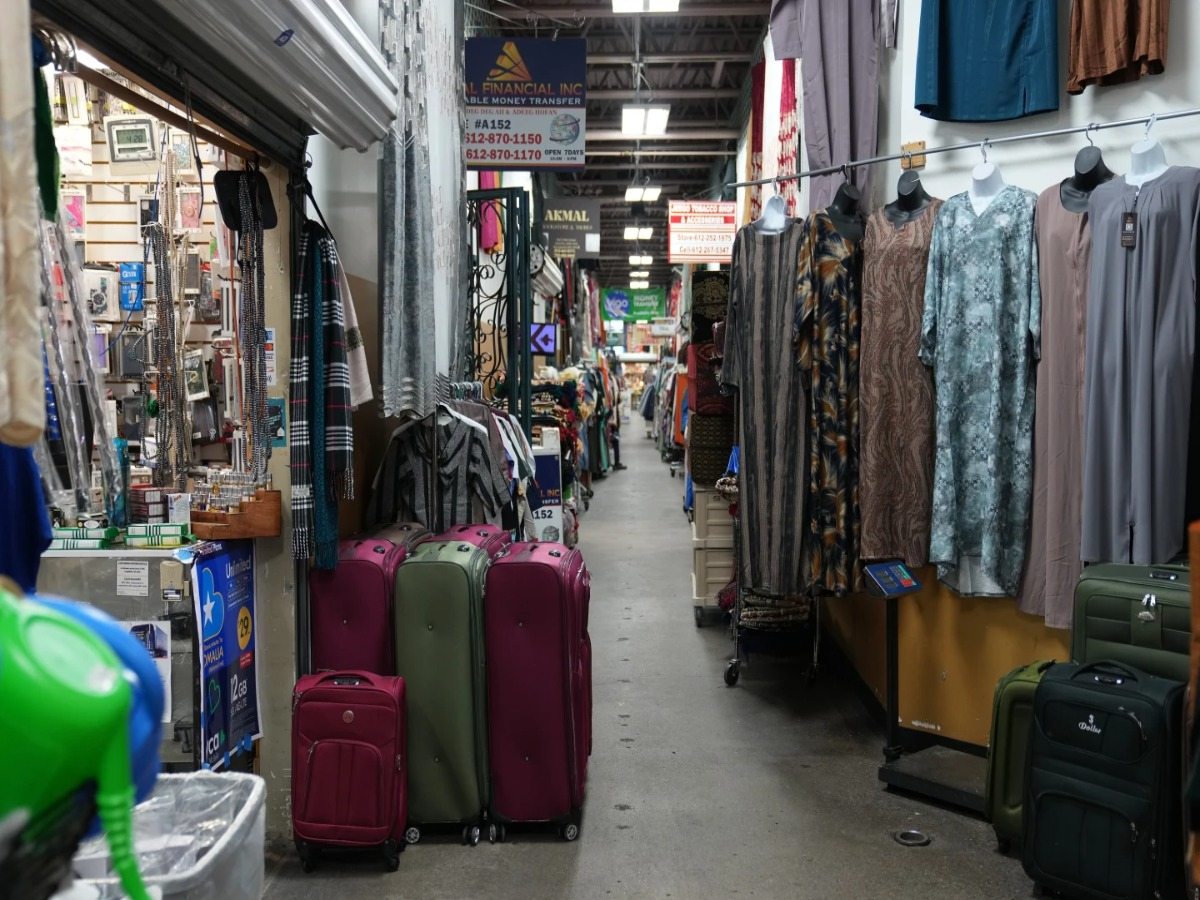
On a recent afternoon, the long corridors of Karmel Mall in south Minneapolis felt suspended in time. Gates were pulled down, lights dimmed, and entire stretches of storefronts sat silent inside one of the country’s most important centers of Somali-owned commerce.
The mall, which houses more than 100 small businesses, normally buzzes with shoppers moving between clothing stores, bakeries, travel agencies, insurance offices, and accountants. On Thursday, that rhythm was gone. A faint smell of fried food lingered in the air, the heating system rumbled steadily, and soft Quran recitations drifted from a handful of open shops. Beyond that, the hallways were largely empty.
Many vendors sat alone behind counters, waiting for customers who rarely appeared. Business owners said fear of federal immigration enforcement has spread through the community, keeping people away regardless of their legal status. Some shopkeepers no longer open at all, convinced no one will come, AP reported.



READ ALSO: Somali migrants to lose deportation protections under Trump plan
“It’s been like this for three weeks now,” said Abdi Wahid, who works at his mother’s convenience store inside the mall. “Everywhere it’s all been closed up, all the stores.”
Karmel Mall is more than a shopping center. It serves as an economic anchor and social hub for Minnesota’s Somali community, the largest in the United States. The sprawling complex also includes housing, a mosque, and Quran classes, reinforcing its role as a gathering place as well as a source of livelihoods.
The anxiety gripping the mall reflects a broader unease among immigrants across the Twin Cities as the Trump administration expands its immigration enforcement under an initiative known as Operation Metro Surge. Workers and customers alike are increasingly reluctant to leave their homes or show up for their jobs.
At the same time, President Donald Trump has repeatedly singled out the Somali community in recent months following high-profile fraud cases in Minnesota involving defendants with Somali roots. Since December, Trump has publicly derided the community, calling them “garbage” and saying “they contribute nothing.”
Wahid said the change inside the family business has been stark. Early afternoons once brought 15 to 20 customers. Now, hours can pass without a single sale.
Although Wahid is a U.S. citizen, he said the fear extends far beyond undocumented immigrants. Even citizens are staying away, especially after the killing of Renee Good and an ICE raid at Roosevelt High School in south Minneapolis.
“I think that caused a lot of people to not even want to come,” he said, because they could be targeted “just because of their race.”
READ ALSO: Minnesota’s Somali community shocked as Trump intensifies his hostility
In a statement, Homeland Security assistant secretary Tricia McLaughlin said law enforcement relies on “reasonable suspicion” when making arrests, consistent with the Fourth Amendment.
“A person’s immigration status makes them a target for enforcement, not their skin color, race or ethnicity,” she said.
Upstairs, the impact is just as severe. Bashir Garad, who runs Safari Travel & Accounting Services, said the crackdown has all but erased his customer base. Clients who once planned trips abroad are now canceling, worried they may not be allowed back into the United States.
“They see a lot of unlawful things going on in the city,” Garad said. “They look at something bad, and then they think some bad things may happen to them.” Most of his clients are East African, and nearly all are U.S. citizens, yet hesitation remains widespread.
“The government is not doing the right thing,” he said. “If there’s a criminal, there’s a criminal. Regardless, there are ways to find the criminal, but to marginalize the community’s name, and a whole people, that is unlawful.”
Electronics seller Ibrahim Dahiye said winter slowdowns were once predictable. This year, he said, the downturn feels unprecedented.
“But now it’s totally different. No one comes here. All the stores are closed, few are open,” Dahiye said.
Since the enforcement push began, he estimates his business has lost about $20,000 a month. To cover rent, he said, he has begun pooling money with others. Most of his employees have stopped coming to work, too afraid to risk exposure.
Dahiye tapped his jacket pocket as he spoke, explaining that he now carries his passport everywhere.
“I don’t know what we can do,” he said. “We believe in Allah, but we can’t do anything.”