
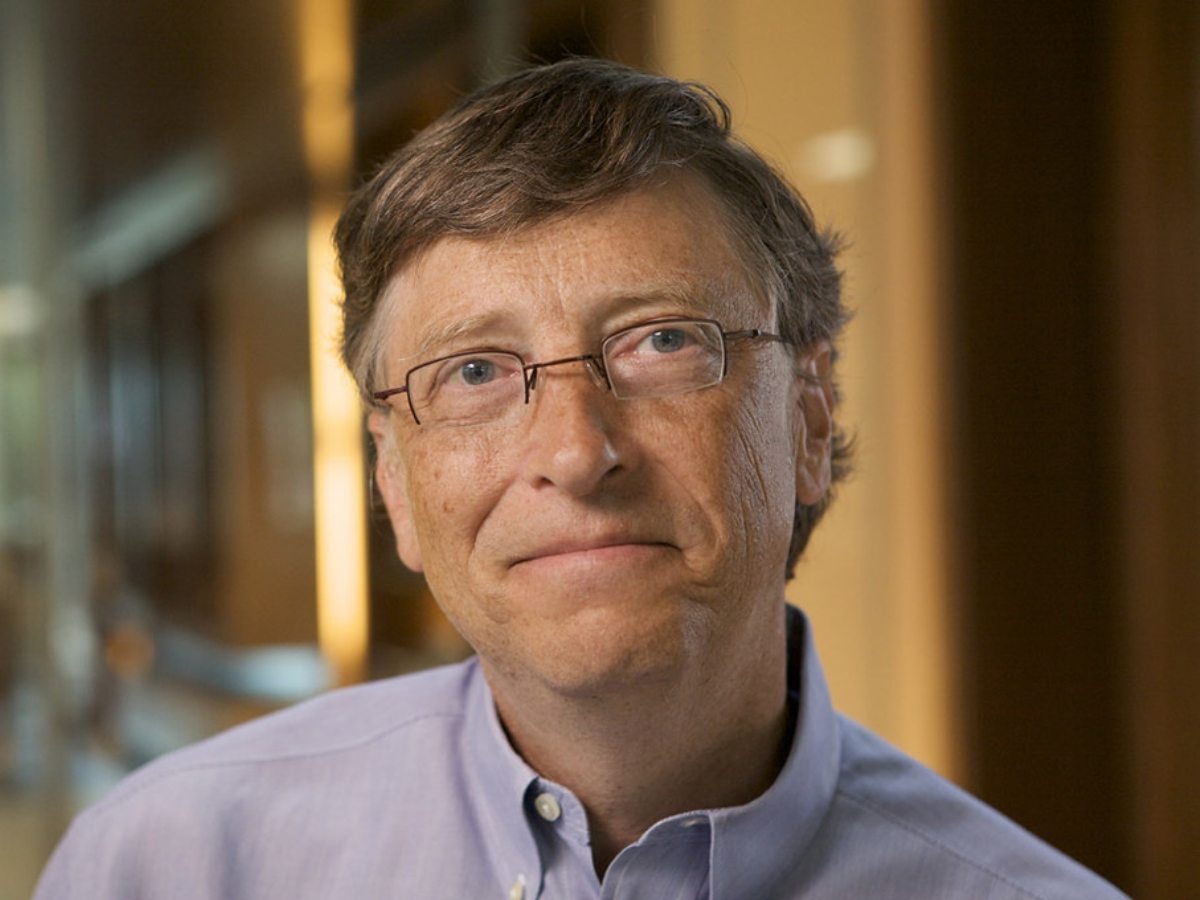
The Gates Foundation and OpenAI have launched “Horizon 1000,” a $50 million initiative to integrate AI into healthcare systems across sub-Saharan Africa. The partnership, funded jointly by the two organizations with technology and technical support, aims to equip 1,000 primary healthcare clinics with AI tools by 2028.
Bill Gates announced the initiative on his blog, Gates Notes, stating that he views AI as a “game changer” for expanding access to quality care and closing the global health equity gap, as reported by Fortune.
The initiative is set to launch in Rwanda. It will involve direct collaboration with African leaders to pilot the use of AI in healthcare settings. A core principle of the foundation is to ensure that new technologies reach developing regions without decades of delay.
RELATED STORIES



In line with this, the partnership aims to serve 1,000 primary healthcare clinics and their surrounding communities by 2028.
Gates wrote on the blog, “A few years ago, I wrote that the rise of artificial intelligence would mark a technological revolution as far-reaching for humanity as microprocessors, PCs, mobile phones, and the internet.”
He added, “Everything I’ve seen since then confirms my view that we are on the cusp of a breathtaking global transformation.”
According to Gates, the project is a response to the severe and ongoing shortage of healthcare workers in poorer regions. This shortage is a major obstacle that threatens to undermine 25 years of progress in global health.
Although significant strides have been made, such as halving child mortality and better controlling diseases like polio and HIV, the lack of personnel remains a critical vulnerability.
Rwanda, the first nation to benefit from the Horizon 1000 initiative, highlights the extent of the challenge. The country has only one healthcare worker per 1,000 people, which is significantly lower than the World Health Organization’s (WHO) recommended ratio of four per 1,000.
Gates observed that at the current rate of recruitment and training, it would take 180 years to bridge this gap.
“As part of the Horizon 1000 initiative, we aim to accelerate the adoption of AI tools across primary care clinics, within communities, and in people’s homes,” Gates wrote. “These AI tools will support health workers, not replace them.”
Gates agreed with the view of Rwanda’s Minister of Health, Dr. Sabin Nsanzimana, who described AI as the third major discovery to transform medicine, following vaccines and antibiotics, during the launch of an AI-powered Health Intelligence Center in Kigali.
READ ALSO: Tracy Morgan donates over $200K to feed 19K families, talks health and career
Gates noted, “If you live in a wealthier country and have seen a doctor recently, you may have already seen how AI is making life easier for health care workers. Instead of taking notes constantly, they can now spend more time talking directly to you about your health, while AI transcribes and summarizes the visit.”
He added that these capabilities would help create systems to solve “generational challenges” that were previously impossible to tackle in countries with severe infrastructure limitations.
Sub-Saharan Africa is currently grappling with a shortfall of nearly 6 million health care workers, a gap so significant that conventional hiring and training efforts cannot resolve it soon. This severe deficit forces overwhelmed staff to manage a high volume of patients with inadequate administrative support or up-to-date clinical guidance.
The resulting impact is serious. The World Health Organization (WHO) estimates that poor quality of care contributes to 6 million to 8 million deaths annually in low- and middle-income countries.
The Gates Foundation plans to spend the next few years putting this project into action, working closely with governments and innovators across sub-Saharan Africa. Bill Gates also announced an upcoming visit to the region to observe these AI solutions firsthand.
READ ALSO: U.S. officially withdraws from WHO, stirring global health debate