
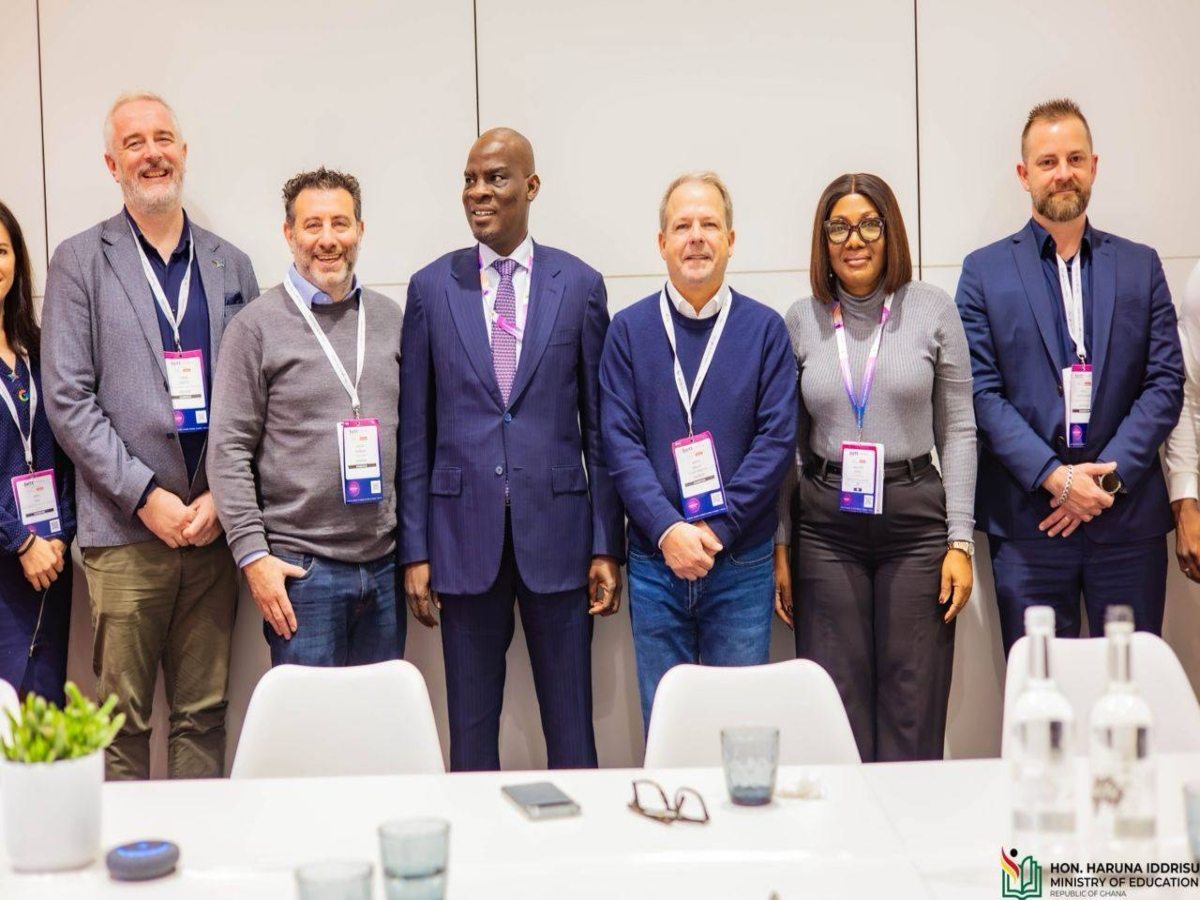
The Ghanaian government has partnered with Google, the University of Ghana, and GDI Hub to enhance accessibility in education and digital services through the introduction of new AI education tools. These tools will feature improved speech recognition for Ghanaian languages, specifically Twi, Ewe, and Dagbani.
The initiative was announced by Education Minister Haruna Iddrisu in a Facebook post. “During our engagement, I emphasized the importance of including Hausa, a language spoken widely across Ghana and West Africa. Integrating Hausa will deepen regional inclusion and further strengthen Ghana’s leadership as an AI innovation hub on the continent,” Iddrisu said in the post.
The AI education tools, as reported by iAfrica, are designed to detect local accents and linguistic variations. By considering non-standard speech within a real-world context, the tools will offer a more inclusive and accurate learning experience for users nationwide.




READ ALSO: Google Agrees To $50M Settlement In Employee Lawsuit
The partnership will develop learning materials in compliance with Ghana’s national curriculum, including instruction on using AI responsibly in teaching and learning, Iddrisu noted in the Facebook post. According to the post, these tools will be available to users without data charges to ensure economic status isn’t a barrier.
“I am also pleased to share that I received firm assurance from Google’s Director of Operations for Africa and the Gemini lead that Google’s education tools will be deployed in Ghana on a zero-rated basis. This includes curriculum-aligned content and resources on the responsible use of AI in teaching and learning, ensuring access for all learners regardless of location or income. Ghana is not just participating in the AI revolution; we are helping to shape it for Africa,” Iddrisu’s post added.
Despite the announcement’s emphasis on inclusion and diversity, the Ga-Dangme Traditional Council voiced criticism, expressing their disappointment that the Ga language was not included in the project.
The council wrote in a statement, “We wish to express our profound disappointment regarding the Ministry of Education’s exclusion of the Ga language from its initiative to enhance educational access through AI tools developed in local languages.”
They added, “While we acknowledge the Ministry’s efforts, we find the exclusion of the Ga language to be discriminatory and unacceptable. If this issue remains unaddressed, it may exacerbate the marginalization of the Ga and Ga-Dangme communities in the Greater Accra region, where the seat of government and the Ministry of Education are situated. The ramifications of this linguistic exclusion can lead to significant psychological, social, and economic detriment to the Ga community over time. It undermines self-esteem, fosters social isolation, perpetuates systemic disunity, and diminishes cultural diversity.”
READ ALSO: Sergey Brin: Google Boss Pays $700 Million In Shares To Key Beneficiaries
The group demanded clarification on whether the minister’s exclusion was an oversight. They warned the Ministry that if the exclusion was intentional, they would actively oppose the initiative with a massive demonstration and legal action to prevent this act of discrimination.
Meanwhile, this announcement is a continuation of Google’s five-year commitment to invest in Africa, with the aim of strengthening the continent’s digital infrastructure.
The tech giant dedicated $37 million in 2025 to assist students and researchers across Africa. This investment was intended to guarantee their participation in the development of AI and its application in key sectors, including climate resilience, agriculture, healthcare, and education.
READ ALSO: Meet the founder of Akina, the Google for Black women