
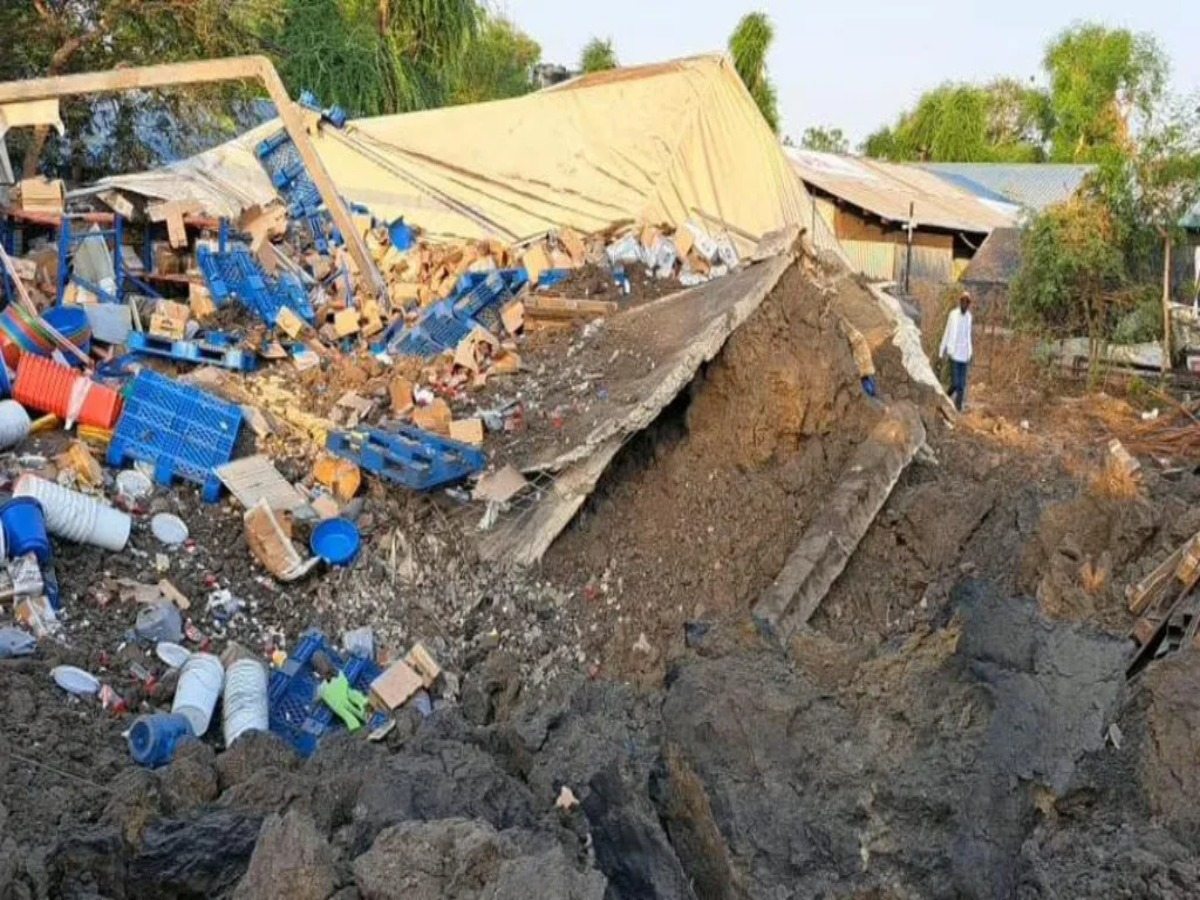
Air strikes have struck a hospital in South Sudan’s Jonglei state, leaving an unspecified number of aid workers unaccounted for, according to medical charity Doctors Without Borders (MSF).
The facility, located near the Ethiopian border and operated by MSF, was reportedly struck overnight on Tuesday. The organization said the assault was carried out by South Sudan government forces. Authorities in the country have not yet responded to the allegation.
The violence extended beyond Lankien, as MSF disclosed that its health center in Pieri, also in Jonglei state, was attacked and looted by unidentified individuals later that same day. The organization said the destruction left the center “unusable for the local community”.



READ ALSO: Aid blocked, hunger rising as violence grips South Sudan’s Jonglei
Amid the chaos, MSF staff were forced to evacuate alongside residents. “Our colleagues had to flee with the community and their fate and whereabouts are still unknown,” the medical organization said.
Renewed hostilities have been escalating across Jonglei, driven by clashes between troops loyal to President Salva Kiir and forces aligned with First Vice-President Riek Machar. Machar has been suspended from office following accusations that he attempted to topple Kiir’s administration.
The resurgence of violence has heightened fears that South Sudan could slip back into a nationwide civil war. The country, which gained independence in 2011, remains fragile after years of instability.
Humanitarian conditions in Jonglei are already severe. The United Nations estimates that roughly 280,000 people have been displaced since December due to ongoing battles and aerial bombardments. The region is also considered one of the country’s most food-insecure areas, with critical healthcare shortages.
MSF said it had received prior intelligence warning of a possible strike in the Lankien area, prompting staff to move patients out of the hospital hours before the attack. The precaution likely prevented greater casualties.
“One staff member was injured, and the hospital’s main warehouse was destroyed along with medical supplies,” the group said in a statement.
Lankien has recently emerged as a focal point of clashes between government and opposition fighters. The destruction of essential resources has severely undermined medical operations in the area.
“The hospital’s main warehouse was destroyed during the attack, and we lost most of our critical supplies for providing medical care,” the group added.
READ ALSO: South Sudan’s new offensive explained: What’s at stake for civilians
While no group has officially claimed responsibility for the bombing, MSF pointed out the government’s unique military capabilities. “The government of South Sudan armed forces are the only armed party with the capacity to perform aerial attacks in the country.”
MSF said it currently serves as the sole healthcare provider for approximately 250,000 residents across Lankien and Pieri. The charity warned that the damage inflicted on its facilities threatens to leave vast populations without access to medical treatment.
“While we are aware of the enormous needs in the country, we find it unacceptable to be a target for attacks,” said Gul Badshah, MSF’s operations manager in a BBC report.
The organization also highlighted a pattern of violence against humanitarian services. It reported eight deliberate attacks on its operations in South Sudan last year alone. These incidents forced the shutdown of two hospitals in the Greater Upper Nile region and halted routine healthcare services in Jonglei, Upper Nile and Central Equatoria states.
Humanitarian work has faced further obstacles since December, when South Sudanese authorities imposed access restrictions on opposition-controlled parts of Jonglei. MSF said the limitations have significantly hindered the delivery of life-saving medical aid.
The political rivalry between Kiir and Machar has repeatedly fueled instability. Their forces first clashed in 2013, plunging the young nation into a brutal civil war just two years after independence.
Although a peace agreement signed in 2018 formally ended the conflict, which claimed nearly 400,000 lives, implementation has remained incomplete. Tensions between the two leaders have continued to simmer, aggravated by ethnic divisions and periodic outbreaks of violence.
READ ALSO: South Sudan president fires interior minister, sparking fears of peace deal collapse
Machar is now facing trial on allegations including murder, treason and crimes against humanity. He has denied all charges.