

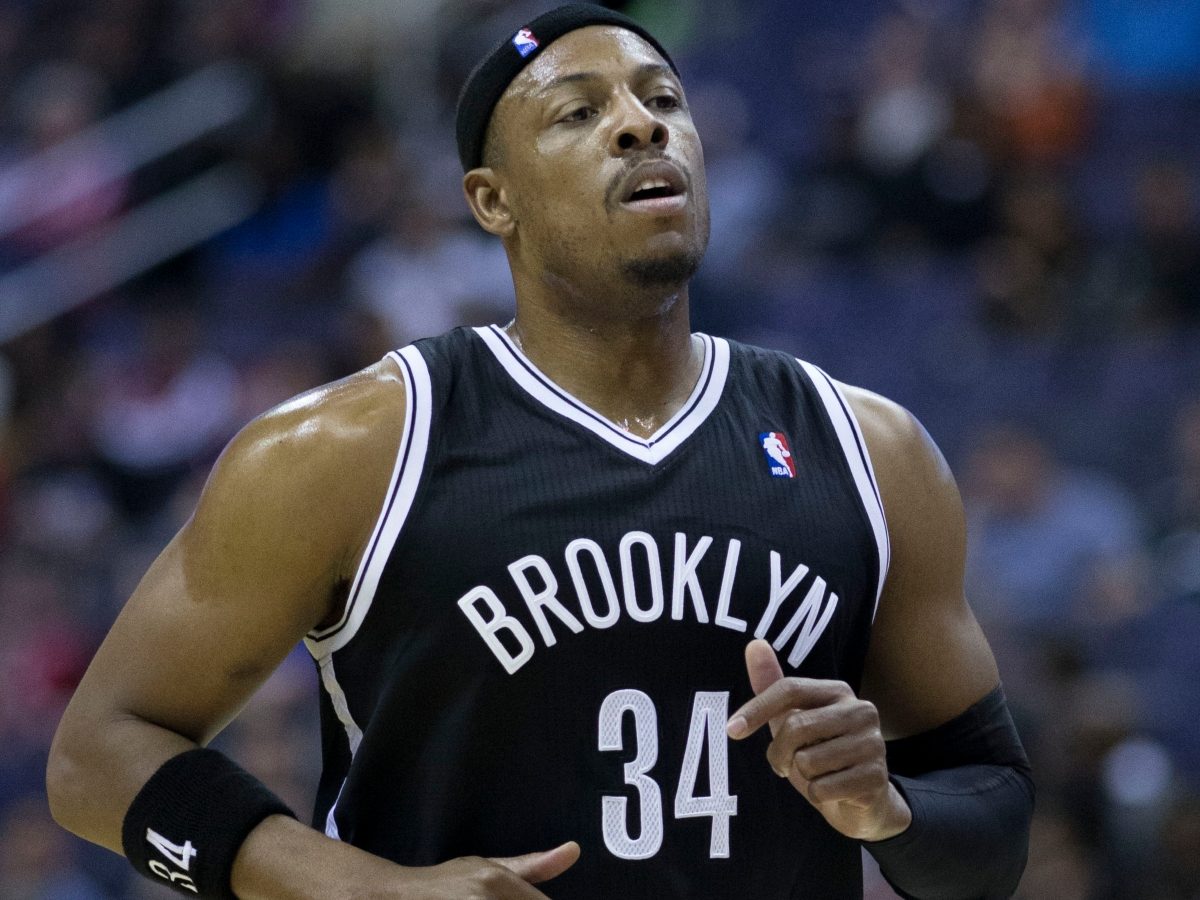
Even though Paul Pierce made over $195 million during his Hall of Fame NBA career, he was shocked when his first $1 million paycheck vanished so quickly.
On Shannon Sharpe’s Club Shay Shay, Pierce detailed how the money disappeared, highlighting that even professional athletes, despite earning what seems like a fortune, can struggle financially and live paycheck to paycheck.
A league lockout instantly reduced his first million to $500,000. The 48-year-old said, “We had a lockout, so cut that in half. So then it’s 500,000. Taxes, cut that in half. Yeah. So really all I had was about like 200. So knock that down.”
RELATED STORIES



Necessary expenses, such as renting an apartment in L.A. or Boston for between $2,500 and $3,000 at the time, quickly depleted the remaining funds. By the end of his first year, Pierce estimated he only had about $10,000 left. As a result, he “could barely afford to give his mother anything substantial and didn’t buy her a house ’till, like, my third year.”
Even a massive $80 million maximum contract didn’t prevent his money from vanishing rapidly. That sum was “halved to $40 million after taxes, and further reduced by agent fees. Major purchases included a house. “So I spent like four or five million on the house. State taxes on that,” he said.
READ ALSO: Former NBA star Paul Pierce explains why he feels marriage is for poor and old people
Another large and ongoing expense was placing family members on the payroll, costing roughly half a million dollars. As Pierce noted, “which every half a million costs you a million. And so it can go faster than you think.”
The former NBA star went into detail about the constant pressure of lifestyle expenses—the “Side Girl” tax. Nights out, frequently involving bottle service, often cost $5,000 per outing.
Pierce confessed to financially supporting multiple “girlfriends,” which involved paying “$2,000 per month for rent for an apartment,” buying them a small car, and funding extravagant vacations, sometimes for four or five women simultaneously.
“This is my girl. You know, I don’t want her to live with me, but I’ll make sure she got her apartment. Get her a little car to get around. This is my girl, I got her a little something. Then you’re going to go on at least one trip.”
These trips often included stays in luxurious places like the penthouse suite at The Ritz, where standard rooms were $800 a night.
He stressed the vital importance of this type of financial planning, especially since most players in the league earn significantly less.
Piece remarked, “Man, people don’t know, if you ain’t got them endorsements… I was fortunate enough to have some endorsements, so I used to use my endorsement pay for that, put my NBA money over here, you know what I’m saying? But like for the guys who ain’t making max deals, man, you look up after five, six years, you look up and like, man, I’m check to check. That happens a lot.”
Drafted by the Boston Celtics in 1998, the California native later earned his only championship ring with the team in 2008. According to Spotrac, his initial four-year contract was valued at $6.3 million, which averaged out to an annual salary of $1.6 million.
An NBA career comes with significant financial challenges, including various taxes (jock, state, local), agent fees, supporting friends and family, and the long-term impact of current financial decisions.
To help players manage this, the NBA made financial literacy classes a mandatory part of its Rookie Transition Program (RTP). This program is overseen by Jamila Wideman, the NBA’s senior vice president of player development.
The league states the RTP was created to “promote the personal, professional, and social development and aspirations of NBA players.”
While the RTP covers many important topics, financial literacy is a top focus. The educational sessions are more than just typical money management classes.
Wideman explained that they provide “a framework for decision making as players get their first checks,” and the curriculum is constantly updated to meet the rookies’ changing needs.
“One thing that’s true in all of our programming, we try to pay attention to how the guys coming in change over time,” Wideman told Complex in a 2021 interview. “As we better understand what skills and capacities they are already coming to the table with, what we’re seeing in many ways is young guys coming into the league—there’s a range—but some guys are savvy and are probably in some ways more prepared than generations ago.”