
In 1989, Lincoln Coffie was living with a foster family while a senior in high school in Jamaica. His father had died when he was 13 and he was now preparing for a school trip to Miami, Florida, when his foster parents advised him not to return to Jamaica when the trip was over since his home country had nothing better to offer him.
“I was supposed to be graduating that June,” Coffie told kdhnews.com in an interview in December 2025. “I was what you call in Jamaica the Head Boy, which is like the valedictorian here (top-ranked student).
“In Jamaica, the students would go to Miami every year to compete in different sporting activities. I came up to do the shot put and discus. The family I was living with had three children and they pretty much said, ‘We’re going to send you on this trip, but we don’t have plans for your future, so just don’t come back. There’s really nothing here for you after you graduate school in a few months.’
“One of their sons was the same age as myself, and they would have had to try and send two boys to college. They said they would try and coordinate with some family (members) I had in America to come pick me up from the school trip. I had an aunt and uncle living in New York, and there was an aunt in Florida.
“The way I saw it then was they were trying to help my future. The way they put it to me, I didn’t feel like they were doing me a disservice. I didn’t think it was vindictive or anything like that. I knew they were doing something to try and help me, instead of putting me out of their family. I was looking forward to what was ahead of me … my future. I would have been on the streets in a couple months after I left school because there was no plan for me. So this was my way to have some kind of future.”
Coffie ended up living with an aunt and uncle in New York — relatives he had never met. They picked him up from Miami and helped him start work to make some money for himself.
From working in construction to completing high school, Coffie realized that he was facing homelessness after going to work at a cousin’s mechanic shop.
“I remember my first paycheck as a construction worker … my aunt held the money for me, even though I didn’t know it would be indefinitely,” he said. “I never got that money back, and several other paychecks.
“I didn’t have any I.D. — my teacher had held onto my passport — so I couldn’t start school. I was finally able to get some school paperwork from Jamaica and got my passport back from the teachers. It was a big deal to get that back. Then I started back to school in 10th grade at James Monroe High School in the Bronx.”
Coffie had no green card or Social Security number while working at his cousin’s mechanic shop in the south Bronx. The Jamaica native also began selling toys for a while on the city streets.
“Walking Queens Boulevard selling Sesame Street toys,” Coffie said. “One day, I came home and the feds had raided the house. They (his cousins) were selling heavy drugs out of the house (and) I didn’t even know. I was so naïve. Two weeks before this happened, I had met this lady in Astoria, Queens, when I was selling toys on the street, and I ended up going to live with her and her two kids in the projects. I didn’t have anywhere else to go.
“I was able to save some money, and one of my aunts knew a lawyer in the Bronx and he got me a Social Security card for $1,500, and an American birth certificate. That was the first official (documentation) that I had. The Social Security number actually came from the Social Security office. I don’t know how he did it, but it came in the mail, and I still have that same number today. When I got my citizenship, they told me to keep it because it was legal and already in the system.
Coffie subsequently got a driver’s license and began working in Manhattan, parking cars. “That was my first job on the books,” he said.
“It was a big turning point for me. I still couldn’t travel to Jamaica, but at least I could get a job.” While doing this job, Coffie got married and the woman began the paperwork for his green card, he recalled.
Two years after their marriage in 1993, Coffie got his green card; however, he still had pending issues to solve.
“We were not in a good place. Our marriage wasn’t going well,” he said. “I think the big challenge was that I couldn’t convince her that I was with her because I loved her. Her family was telling her I was only with her because of the green card.
“Now, the first phase of the green card is a two-year temporary, before you get the 10-year green card. If my marriage didn’t prove (to be) sound, I would have risked my green card (and having) the whole process reversed.”
Since he was worried that his marriage might fail and he could lose the temporary green card, Coffie started seeking choices.
“I could stay in New York and risk everything falling apart, but if I went into the military, I felt like I would be taken care of, as far as my green card,” he said. “The military was like a safe haven for me to keep things together.
“My wife was OK with it because I was the breadwinner and with me being gone, she was going through financial stuff, too. At the end of the day, we got health insurance (and) she came down to Kentucky with me for basic training.”
Coffie went on to join the U.S. Army and used the G.I. Bill to go to college after his service. Fort Hood was his first and only duty station; he arrived there in June 1996 and served in the 1st Cavalry Division, including a short-term deployment to Kuwait in 1997. He later graduated from medical school, completing Baylor in December 2002 with a bachelor’s degree in forensic science before heading to the University of Texas Medical Branch in Galveston, where he graduated in 2007.
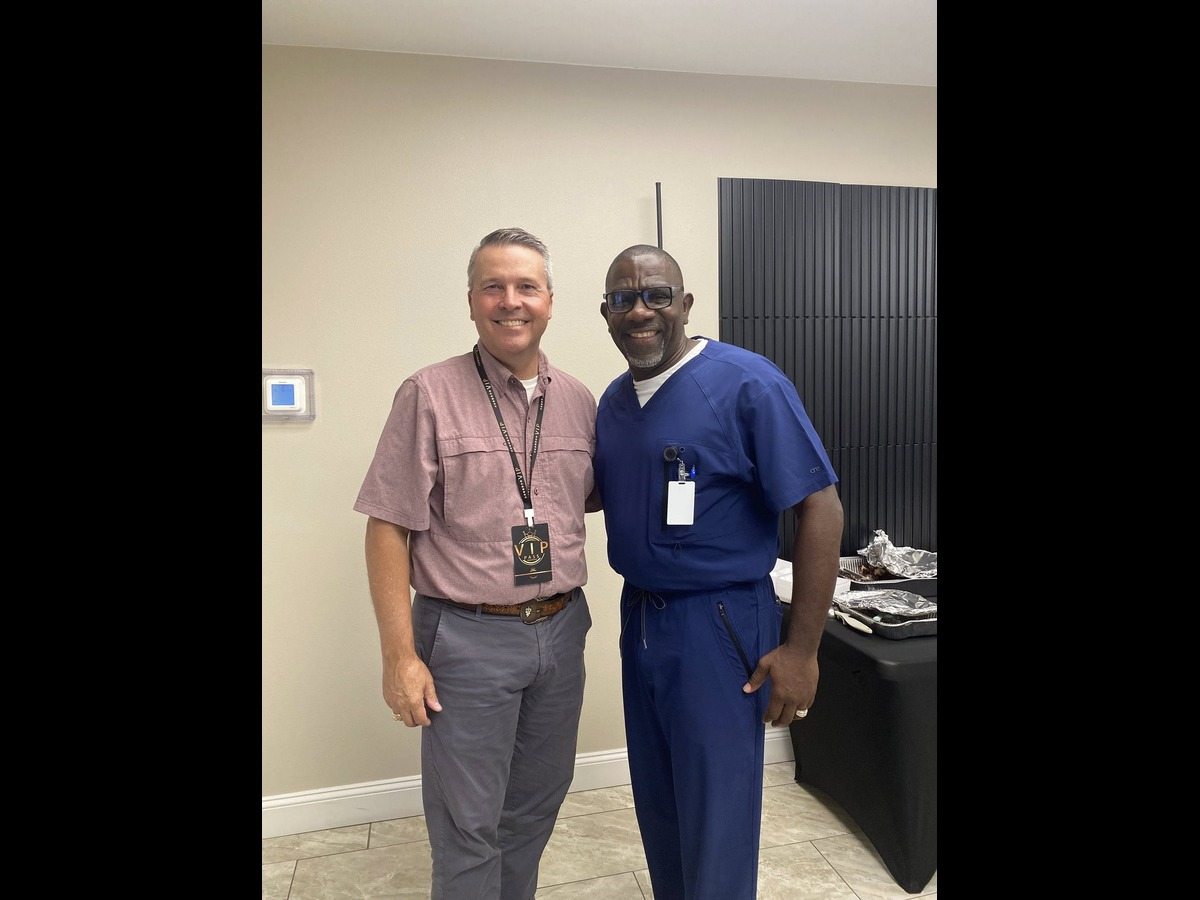
The 54-year-old now lives in Killeen, where he owns an urgent care clinic and other businesses, including an auto repair shop.
He said of his achievements: “It’s all due to nobody but God. I look back and I say I know there is a God. For me, there has to be a God in heaven. I’m 54 years old, and I say to myself, ‘How could I have made it to where I am now?’”
The United States remains the top destination for international migrants from the Caribbean. There are over 1 million people of Jamaican descent living in the United States, according to recent estimates.
All in all, more than 42.4 million immigrants live in the United States to pursue opportunities and dreams. Many of these immigrants believe in the American Dream and are optimistic about achieving it despite the political climate and threats they face almost every day. Coffie is already living that dream.