

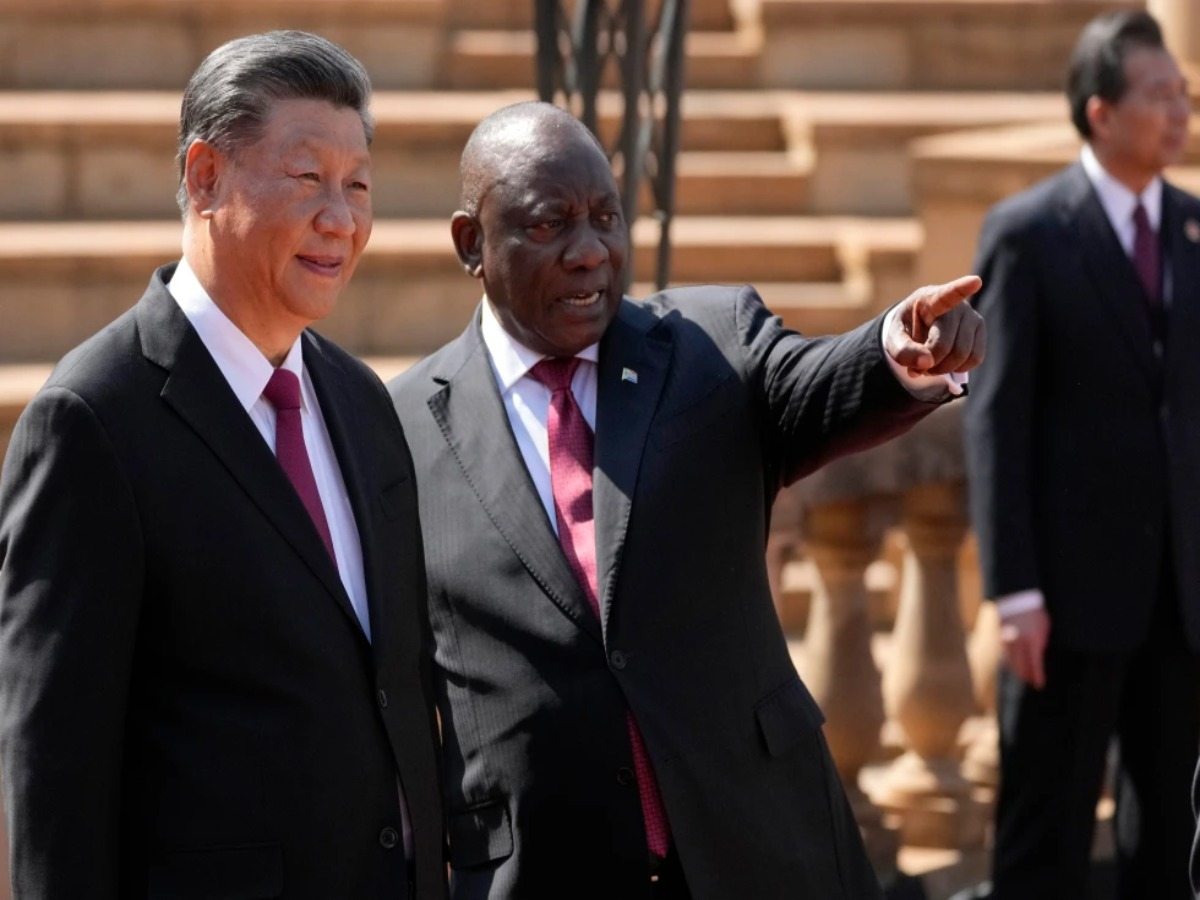
China and South Africa have taken a fresh step toward deepening economic ties, unveiling a framework that could open China’s vast consumer market to selected South African products while expanding Chinese investment in Africa’s most industrialized nation. The move comes as South Africa reassesses its trade options following steep U.S. tariffs and strained relations with the U.S. under President Donald Trump.
South Africa’s Ministry of Trade and Industry said the newly signed framework sets the stage for formal negotiations on a comprehensive trade agreement. Officials say the proposed arrangement would allow certain South African exports, including fruit, to enter China duty-free. The ministry indicated it aims to wrap up negotiations by the end of March.
Under the expected terms, China would secure wider opportunities to invest in South Africa. Chinese automakers have already made significant inroads into the local market, with sales climbing rapidly in recent years.
RELATED STORIES



READ ALSO: South Africa expels Israel’s top envoy as diplomatic row deepens
Tensions with the United States have accelerated South Africa’s push to diversify trade partnerships. The Trump administration imposed 30% tariffs on selected South African imports as part of its reciprocal tariff strategy, placing South Africa among countries facing some of the highest levies. South African authorities say discussions with U.S. officials are ongoing in hopes of securing improved trade conditions.
The planned China deal forms part of a broader trend among countries seeking to cushion the impact of the United States‘ hardline trade stance. The announcement followed Trump’s recent decision to temporarily renew a long-standing U.S.-Africa trade arrangement. The African Growth and Opportunity Act, which has significantly benefited South Africa, was extended only until the end of the year, with indications it will be reshaped to align with the administration’s America First agenda.
China already occupies a central position in South Africa’s trade network, serving as its largest partner for both imports and exports. Across Africa, China’s economic footprint has continued to expand, particularly in mining operations tied to critical minerals essential for advanced technology manufacturing.
“South Africa looks forward to working with China in a friendly, pragmatic and flexible manner,” the trade ministry said.
Trade and Industry Minister Parks Tau, who traveled to China to formalize the framework, said the agreement is expected to strengthen key sectors of South Africa’s economy, including mining, agriculture, renewable energy and technology, the AP reported.
READ ALSO: Historic South Africa–hosted G20 adopts declaration without the United States
Diplomatic friction between South Africa and the U.S. has also deepened. The Trump administration has accused South Africa of adopting an anti-American foreign stance and tolerating violent attacks against a white minority population. South African officials have firmly rejected claims that white Afrikaner farmers are being systematically targeted to force them off their land, calling the accusations unfounded.
The tensions heightened further after Trump excluded South Africa from participating in the Group of 20 meetings hosted by the United States this year.
Trade flows between China and South Africa remain heavily driven by natural resources and manufacturing. South Africa’s primary exports to China include gold, iron ore and platinum-group metals. Meanwhile, Chinese automakers have significantly expanded their presence in South Africa, with industry estimates indicating a rise in market share from approximately 2.8% in 2020 to between 11% and 15% last year.
READ ALSO: Radio presenter arrested in South Africa for alleged recruitment of fighters for Russia
China’s BYD overtook Elon Musk’s Tesla in 2025 as the world’s biggest electric vehicle maker.