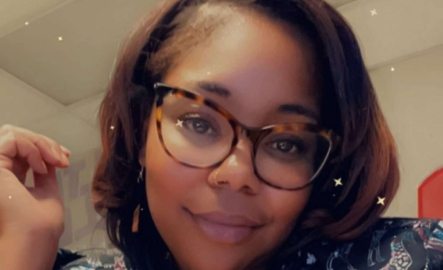

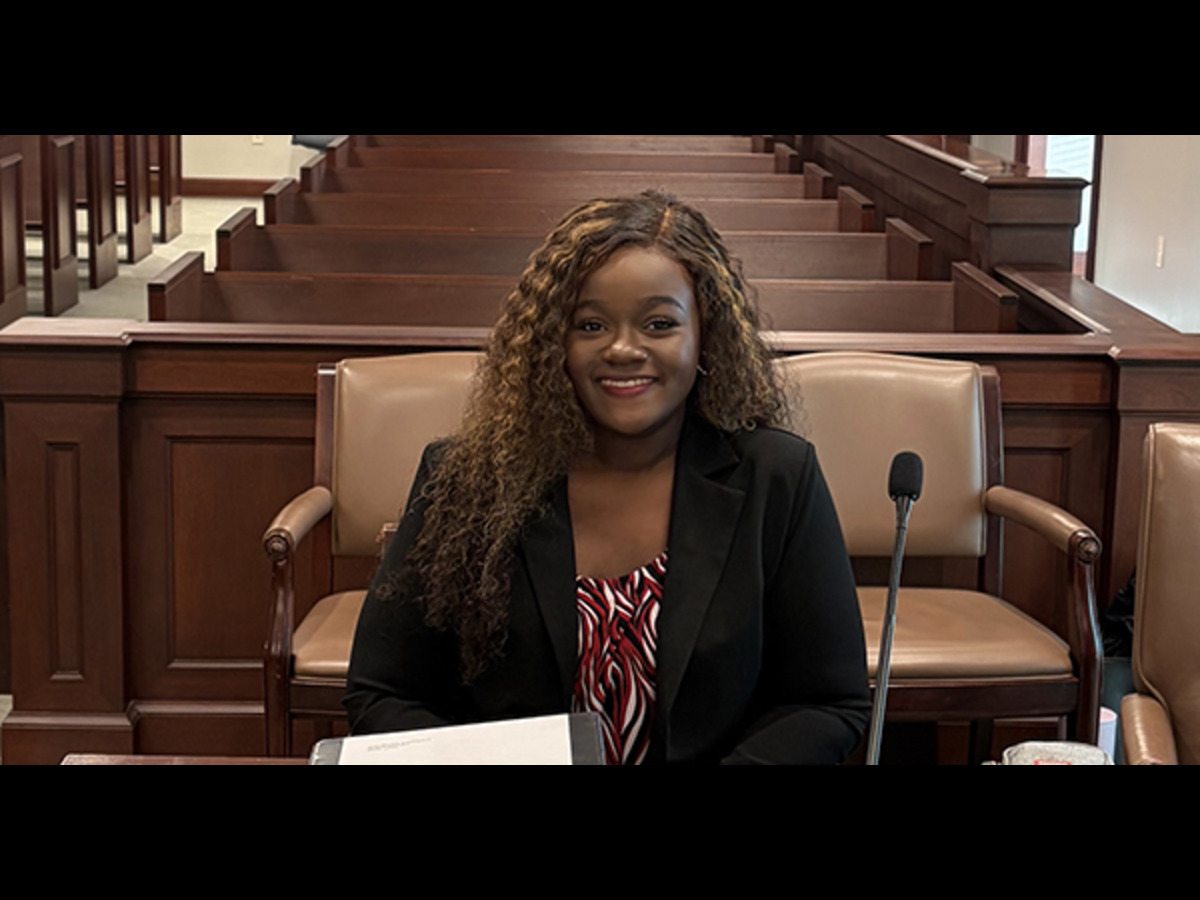
Christian “Cece” Worley’ had never heard of endometriosis before when a professor told her she might have the condition after she had begun missing classes due to period pain while in college.
That severe pain began around age 12 when she started having her menses. Her mother often gave her ibuprofen to ease the pain, but that only worked in high doses. In college, she missed a lot of classes because she couldn’t get out of bed when the pain was unbearable.
Worley contacted the school’s accommodations office and was sad to hear that period cramps didn’t warrant accommodations. It was during this period that a professor, who was concerned about her condition, told her that she might have endometriosis, a gynecological problem.



Endometriosis affects an estimated 6.5 million to over 11% of reproductive-aged women in the United States, per research. It is caused when tissue similar to one’s uterine lining is inside the pelvis or abdomen. This can lead to painful and heavy periods and, in some cases, fertility problems.
A common gynecological disease, women in the U.S. will suffer from symptoms of endometriosis for about 10 years before receiving a diagnosis.
Worley went through almost the same situation as her endometriosis went undiagnosed for years, even after her professor highlighted the symptoms for her. At 19, she got married but couldn’t conceive. Instead of examining the real cause of her painful periods, her fertility specialist paid attention to weight loss, as Worley had become overweight at the time.
Due to her fertility issues, Worley had been taking sick days from work for fertility appointments. She decided to ask her employer if she could work remotely on the first day of her menstrual cycle each month. Her employer refused, telling her that she was taking too much sick time, which showed “poor work ethic.” Her boss also told her that there would be “no accommodations,” adding that further discussion on the matter would result in “disciplinary action up to and including termination.”
These words inspired Worley to file a discrimination lawsuit for endometriosis.
In December 2025, Worley won the first case in North Carolina to recognize endometriosis as a disability under the Americans with Disabilities Act (ADA), as reported by USA Today.
She reached a near six-figure settlement in her lawsuit against the North Carolina Department of Public Safety (NCDPS). The 27-year-old had then been employed by the state as a Juvenile Court Counselor Trainee.
Worley alleged in her amended complaint that NCDPS refused to accommodate her under the ADA in May 2022 after she asked for accommodations for symptoms of her endometriosis.
While requesting days off from her employer, Worley was worried that she would not be promoted to Juvenile Court Counselor at the end of her two-year trainee program. After her boss denied her request, Worley started to draft her resignation letter, giving one week’s notice. Her last day was May 19, 2022.
Worley initially filed a complaint with the Department of Employment Services but lost.
“I felt defeated because I just felt like this institution was going to be against me, and every other institution is going to be,” Taylor said. She appealed her claim and won after almost a year.
She was subsequently inspired to pursue an Equal Employment Opportunity Commission (EEOC) charge. After seeking advice from various lawyers, she was told that she didn’t have a winning case.
“The lawyers were saying that the law surrounding endometriosis and the ADA is not fully developed. It’s too interpretive. So at the beginning it really did seem like a losing battle,” she said.
Worley went on to represent herself. “I knew that I wasn’t alone in this fight, and I knew that there were hundreds of other women who also suffer from this,” she said. “If there was any time to be able to make a change, it could be now.”
Still, Worley didn’t expect to win. Everything that happened next surprises her to date.
For the first time, a court ruling in North Carolina recognized endometriosis as an ADA disability.
“Not only does it validate hundreds of millions of women’s experiences that this pain is real, but it also gives them something to look to legally,” said Worley. “When they’re in HR offices, they can say, ‘Hey, this is something that can be accommodated under the ADA, so what can be done for me in my situation?'”