

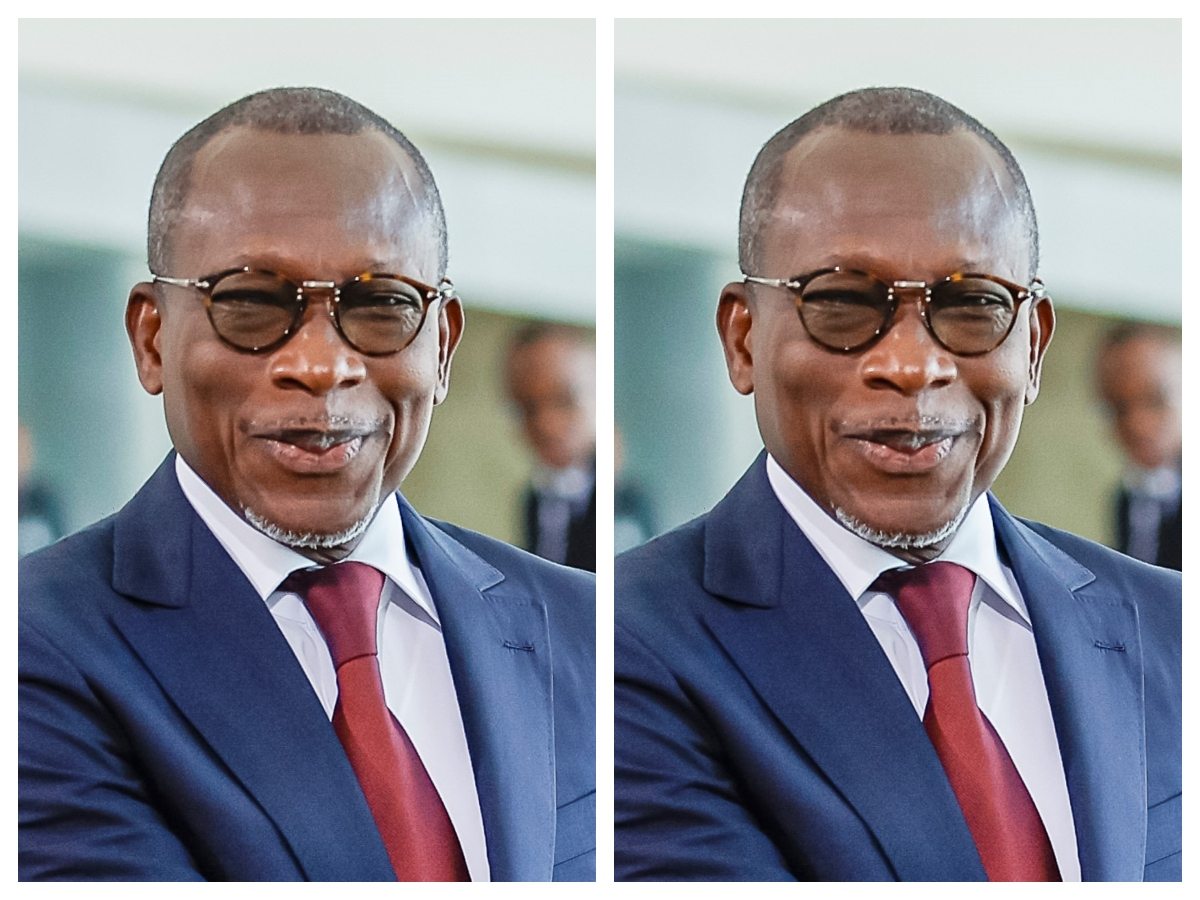
President Patrice Talon on Sunday condemned a failed attempt to overthrow Benin’s government. He spoke publicly for the first time after gunfire rattled parts of Cotonou, the country’s administrative capital.
In a televised address to the nation, Talon condemned the mutiny and offered sympathy to those affected, while assuring the public that efforts were underway to restore full order and stability. His remarks came hours after soldiers appeared on state television to announce the dissolution of the government in what they described as a takeover attempt.
“I would also like to take this opportunity to express my condolences to the victims of this senseless adventure, as well as to those still being held by the fleeing mutineers,” Talon said. “I assure them that we will do everything in our power to find them safe and sound.”
RELATED STORIES



READ ALSO: With 2026 election looming, Benin adopts major political overhaul
Earlier on Sunday, a group of uniformed men identifying themselves as the Military Committee for Refoundation briefly took control of the national broadcaster. The announcement, which suggested a coup was in progress, prompted concern across the region, where military seizures of power have become increasingly frequent in recent years.
Interior Minister Alassane Seidou later declared the uprising defeated, stating that loyalist forces had regained control. Talon’s whereabouts were not disclosed at the time, and he initially remained silent as the situation unfolded.
“In the early morning of Sunday, Dec. 7, 2025, a small group of soldiers launched a mutiny to destabilize the state and its institutions,” Seidou said in a video message posted on Facebook. “Faced with this situation, the Beninese Armed Forces and their leadership, true to their oath, remained committed to the republic.”
Talon did not release details on casualties or possible hostages following the attempted coup.
The Economic Community of West African States responded swiftly, describing the action as “a subversion of the will of the people of Benin.” The regional bloc said it authorized the deployment of troops from Nigeria, Sierra Leone, the Ivory Coast, and Ghana to bolster Benin’s military and protect constitutional rule.
Nigeria’s President Bola Tinubu applauded his country’s armed forces for supporting Beninese authorities. According to a statement by presidential spokesperson Bayo Onanuga, Benin requested assistance twice, seeking both air and ground support.
“It took some hours before the government’s loyal forces, assisted by Nigeria, took control and flushed out the coup plotters from the National TV,” Onanuga said.
READ ALSO: Trump lauds Congo–Rwanda leaders as U.S.-brokered peace plan takes shape
Local media reported that 13 soldiers involved in the plot were arrested, citing sources close to the presidency. Questions remain over the fate of the group’s alleged leader, Lt. Col. Pascal Tigri. The Military Committee for Refoundation had earlier claimed Tigri was appointed head of the body. While sporadic gunfire was reported and troops were seen patrolling parts of Cotonou, calm largely returned after the coup attempt collapsed.
Broadcast signals to state television and public radio, which were briefly cut off, were later restored, AP reported.
Benin has a history of political crisis following independence from France in 1960, with a series of coups before the country embraced multi-party democracy in 1991 after years under Marxist-Leninist leader Mathieu Kérékou. Since then, the nation has largely avoided the instability seen elsewhere in the region.
Talon, who has led the country since 2016, is scheduled to leave office in April after the presidential elections. His preferred successor, former Finance Minister Romuald Wadagni, is widely viewed as the front-runner. Opposition figure Renaud Agbodjo was barred from contesting after the electoral commission said he failed to secure enough endorsements.
Political tensions have persisted in recent years. In January, two associates of Talon were handed 20-year prison sentences over accusations linked to an alleged 2024 coup plot. Last month, lawmakers approved changes extending presidential terms from five to seven years while maintaining a two-term limit.
READ ALSO: U.S. targets Nigerians linked to anti-Christian violence with new visa restrictions
The attempted coup in Benin comes amid a series of disruptions across West Africa. Just last month, Guinea-Bissau’s president, Umaro Embalo, was ousted after a disputed election in which rival candidates each claimed victory.