
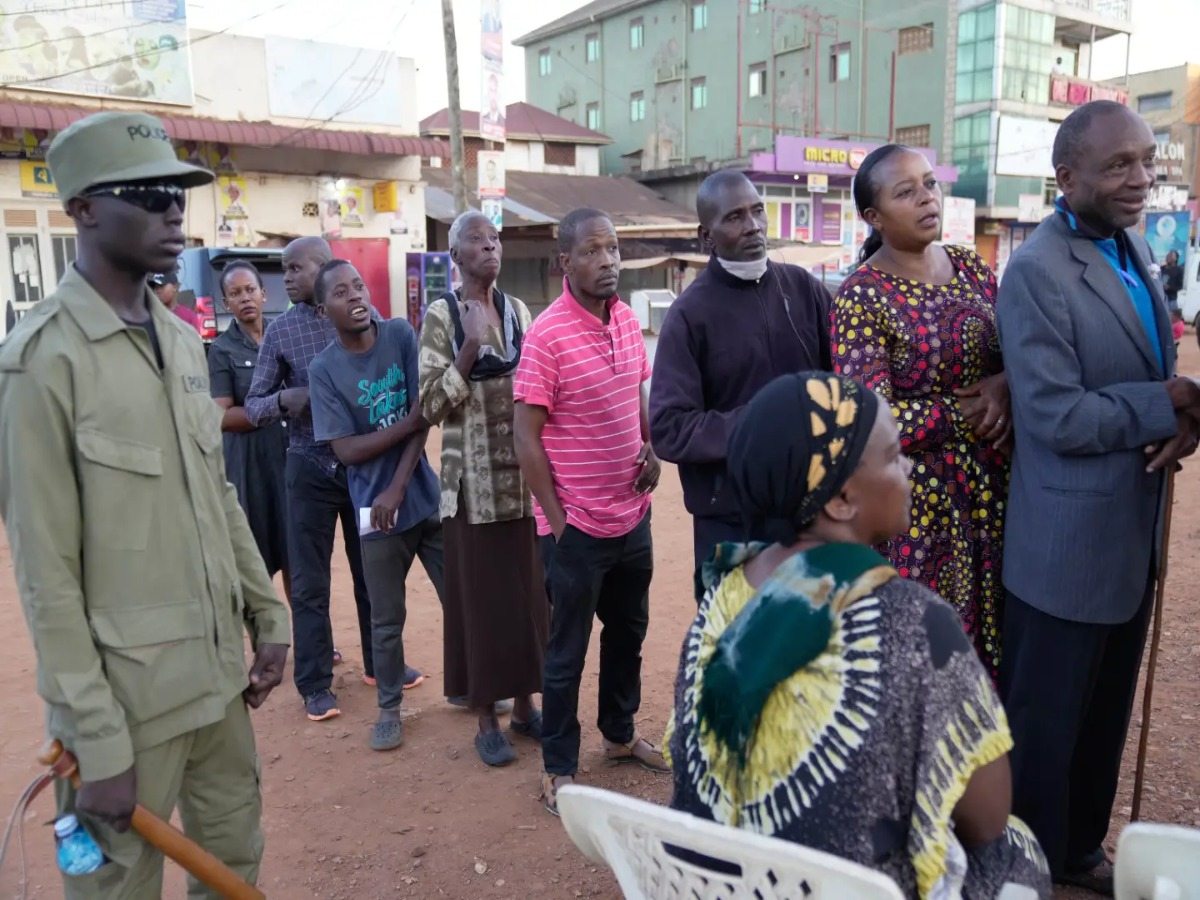
Ugandans headed to the polls Thursday as the country’s presidential election opened under strained conditions, with voting beginning amid an ongoing nationwide internet blackout and widespread complaints about delays at polling stations.
In several locations, voters formed long queues as polling centers opened late. Election materials arrived after the official 7 a.m. start time, frustrating people who had gathered early to cast their ballots.
President Yoweri Museveni, who has ruled Uganda since 1986, is seeking another term at age 81. He is facing seven challengers, among them Robert Kyagulanyi, the pop star turned opposition politician widely known as Bobi Wine, who has campaigned on promises of political reform.
RELATED STORIES

READ ALSO: Soldiers patrol streets, internet cut as Uganda prepares to vote
Uganda has a population of about 45 million, with 21.6 million registered voters. The electoral commission says polls are scheduled to close at 4 p.m., with final results required by the constitution to be announced within 48 hours.
At some polling stations, tempers flared as voters waited. Umaru Mutyaba, serving as a polling agent for a parliamentary candidate, said the situation was testing people’s patience.
“We can’t be standing here waiting to vote as if we have nothing else to do,” he said.
Opposition lawmaker Ssemujju Nganda, who is seeking reelection in Kira municipality, told The Associated Press he had already spent three hours in line.
According to Nganda, the delays were compounded by malfunctioning biometric voter identification machines. He warned the disruptions could discourage participation, particularly in urban areas where opposition parties draw strong support.
“It’s going to be chaos,” he said.
Uganda has never experienced a peaceful handover of presidential power since gaining independence from Britain more than 60 years ago. Museveni already holds the third-longest tenure of any leader on the African continent and is attempting to extend his rule into a fifth decade.
Critics argue that unseating him through the ballot box remains a steep challenge. They say his grip on power has increasingly relied on the military, which is led by his son, Muhoozi Kainerugaba.
The contest marks a rematch between Museveni and Wine, who emerged as his most prominent rival during the 2021 election. That race saw a turnout of 59%, with Wine winning 35% of the vote against Museveni’s 58%, the smallest margin of victory the president has recorded since he first ran for office three decades ago.
Concerns intensified in the days leading up to the vote, with observers warning about transparency, the growing role of the military in politics, fears of dynastic succession and opposition efforts to guard against ballot manipulation.
On Tuesday, the government communications agency ordered a shutdown of internet services, citing the spread of misinformation, risks of electoral fraud and incitement to violence. The blackout has disrupted daily life and affected key sectors, including banking and digital payments.
Security was visibly tightened ahead of the election, with soldiers deployed across major towns and cities throughout the week.
Amnesty International accused Ugandan security forces of carrying out a “brutal campaign of repression,” pointing to a Nov. 28 opposition rally in eastern Uganda where the military sealed off exits and fired on supporters, killing one person.
At his final campaign rally on Tuesday, Museveni called on voters to turn out in large numbers.
“You go and vote, anybody who tries to interfere with your freedom will be crushed. I am telling you this. We are ready to put an end to this indiscipline,” he said.
Late Wednesday, electoral commission chairperson Simon Byabakama appealed for calm and mutual respect as voting got underway.
“Let us keep the peace that we have,” Byabakama said. “Let us be civil. Let us be courteous. Let’s be tolerant. Even if you know that this person does not support (your) candidate, please give him or her room or opportunity to go and exercise his or her constitutional right.”
During the campaign period, authorities also suspended the operations of several civil society organizations. That Group, a well-known media watchdog, shut its offices on Wednesday after the interior ministry accused it in a letter of engaging in activities “prejudicial to the security and laws of Uganda.”
READ ALSO: Uganda election nears as security forces face accusations of brutal opposition crackdown
Meanwhile, veteran opposition leader Kizza Besigye, who has contested the presidency four times, remains behind bars. He has been detained since February 2025 after being charged with treason.