

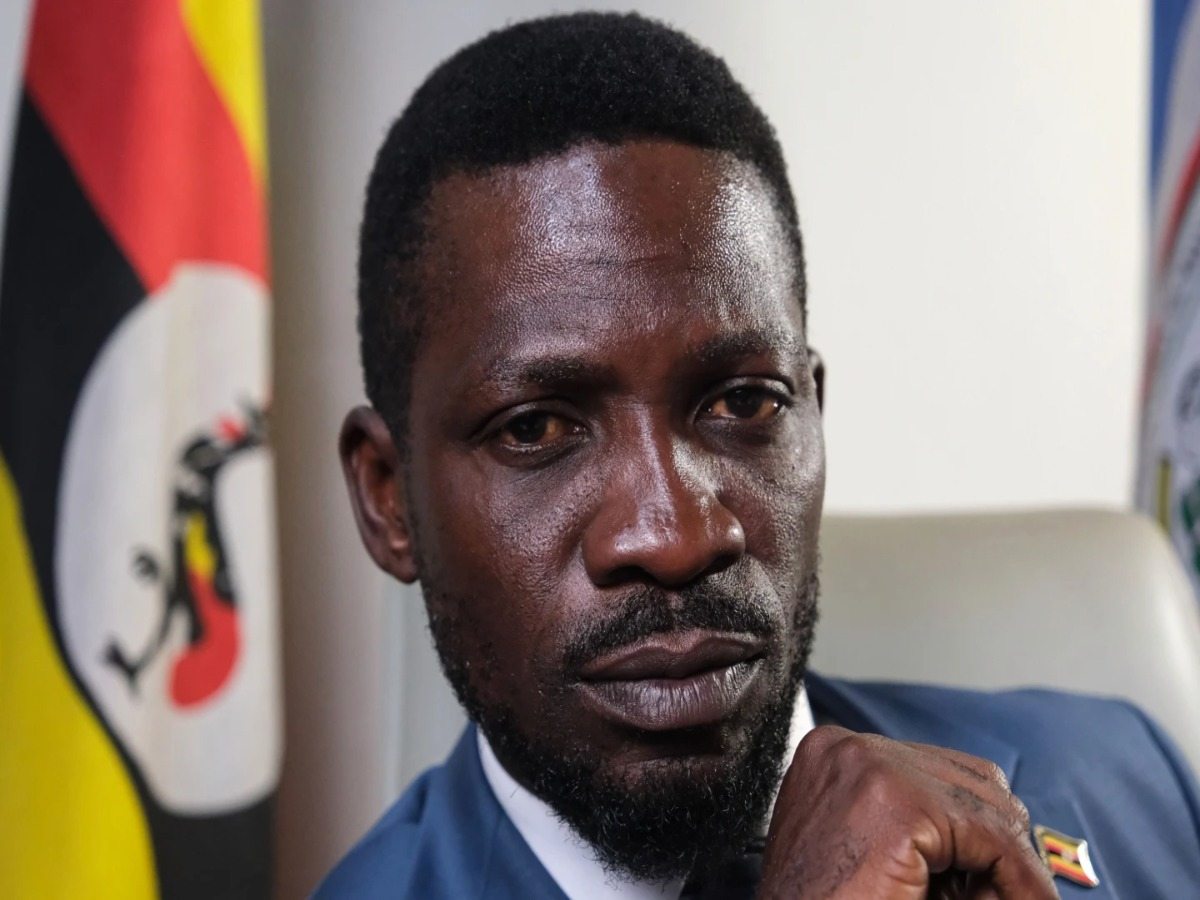
Uganda’s leading opposition contender, Bobi Wine, now campaigns dressed for combat. A flak jacket and helmet have become routine as he moves from rally to rally, a visible acknowledgment of the gunfire that has shadowed his political rise. The protective gear, however, does nothing to blunt the tear gas that frequently engulfs crowds wherever he appears.
Wine is taking on President Yoweri Museveni, who has held power since 1986 and is seeking another term in elections scheduled for Jan. 15. Over nearly four decades, Museveni has reshaped Uganda’s political system to entrench his rule. Constitutional term limits and age caps were eliminated, opponents have been detained or sidelined, and security forces are omnipresent at opposition gatherings as the president pursues a seventh electoral victory.
A former pop star turned lawmaker, Wine, whose given name is Kyagulanyi Ssentamu, says the conditions this time are even harsher than during his first presidential bid in 2021. That campaign saw him repeatedly beaten by police, his clothing torn, and dozens of supporters locked up.
RELATED STORIES


READ ALSO: Museveni, Uganda’s authoritarian leader of nearly 40 years, declares reelection run
Speaking recently with The Associated Press, Wine said the election environment has deteriorated further. He alleged that “the military has largely taken over the election” and claimed at least three of his supporters have been killed during violent incidents linked to his campaign.
“It has been very violent. There’s been a lot of impunity to the extent that we are denied the right to use the public roads,” he said. “We are hounded by security and followed by over 40 police and military cars. Everywhere I go to campaign, (the) day before, the military comes, beats up people, intimidates them, warns them against attending the rallies I address.”
Amnesty International has reiterated those concerns, saying the widespread use of tear gas, pepper spray, beatings, and other abuses amounts to “a brutal campaign of repression” in the run-up to the vote.
Museveni, for his part, has defended the conduct of the security forces. In a New Year’s Eve address, he said he had advised police and soldiers to deploy tear gas more aggressively against what he labeled “the criminal opposition.”
“Using tear gas for rioters is both legal and non-lethal,” Museveni said in a televised speech. “It doesn’t kill. It is much better than using live bullets.”
On the ground, security units, particularly the military, have repeatedly shut down Wine’s rallies, forcing supporters to flee into nearby ditches and wetlands. Critics contrast that treatment with Museveni’s own campaign, which proceeds uninterrupted and without visible restrictions on his movements.
READ ALSO: How Mamdani’s New York City mayoral victory is inspiring Uganda’s youth
Opposition figures argue that the election has become a procedural exercise designed to legitimize Museveni’s continued rule, rather than a genuine contest capable of producing political change in the East African nation of about 45 million people.
Wine, the most prominent among the seven opposition candidates, has urged his followers to remain steadfast in the face of intimidation. While stopping short of calling for street protests, he has encouraged voters to turn out in large numbers and cast what he describes as “protest votes” against the ruling party.
In his AP interview, Wine detailed incidents he said left at least three people dead at his events, including one man allegedly shot by the military and another run over by a military vehicle. Such cases rarely face consequences, he argued, because electoral officials, police, and soldiers “serve the sitting government.” Police spokesman Kituuma Rusoke said he was not aware of the alleged incidents.
Museveni is Africa’s third-longest-serving leader and now seeks to push his presidency into a fifth decade. He originally seized power as the head of a guerrilla movement that promised to restore democracy after years of civil war and the brutal dictatorship of Idi Amin.
Ironically, Museveni once criticized African leaders who clung to office too long. Years later, lawmakers loyal to him removed the final constitutional barrier, age limits, clearing the way for what critics warn could become a life presidency.
Concerns about dynastic succession have grown as Museveni’s son, army chief Muhoozi Kainerugaba, openly expresses interest in replacing his father. Museveni has no widely accepted successor within the leadership of the ruling National Resistance Movement, heightening fears of hereditary rule.
Although Museveni has won six elections, nearly all were clouded by violence and accusations of vote manipulation. Over time, he has fallen out with many former allies from the bush war era, some of whom accuse him of abandoning the struggle’s original ideals. Among them is Kizza Besigye, once Museveni’s personal doctor, who has been jailed for more than a year and repeatedly denied bail on treason charges.
Besigye was long the face of Uganda’s opposition before Wine, now 43, emerged as a different kind of challenger, appealing strongly to younger voters. Wine commands significant support among urban, working-class communities, and his party holds more parliamentary seats than any other opposition group.
That support translated into results in 2021, when Wine won 35% of the vote. Museveni prevailed with 58%, his weakest showing yet, cementing Wine’s status as a credible threat to the long-ruling establishment.
Museveni has responded by portraying Wine as a tool of foreign interests and questioning his loyalty to Uganda. “Mr. Kyagulanyi and his evil foreigners that back him fail to understand that Uganda is a land of spiritual and political martyrs,” he said in his New Year’s Eve remarks.
The political climate has also tightened around civil society. Last week, Sarah Bireete, a vocal government critic and head of the Center for Constitutional Governance, was arrested and charged over allegations that she illegally shared data linked to the national voters’ registry. The claims have yet to be substantiated.
A magistrate ordered her remanded until Jan. 21, prompting condemnation from civic leaders who said the move was aimed at silencing her commentary ahead of the vote. Before her arrest, Bireete told the AP that Museveni’s Uganda was “a military dictatorship,” not a democracy.
“The evidence is out for everyone to see that indeed Uganda can no longer claim to be a constitutional democracy,” she said.
Uganda has never experienced a peaceful transfer of presidential power since gaining independence six decades ago, a history that looms large as Museveni ages and increasingly relies on a security apparatus led by his son.
Kainerugaba has previously warned that force could be used against Wine, including a widely condemned social media post last year in which he threatened to behead him.
Museveni “can’t credibly claim to oppose repressive tactics that his own administration has employed for years,” said Gerald Bareebe, a Ugandan associate professor of politics at Canada’s York University, referring to the president’s guidance to security forces.
READ ALSO: Besigye’s party launched in Uganda as jailed opposition leader faces treason charges
Bareebe added that even some figures within the ruling party believe the clampdown has gone too far. They, too, “are outraged by the brutal tactics employed by the police and military against innocent civilians,” he stated.