

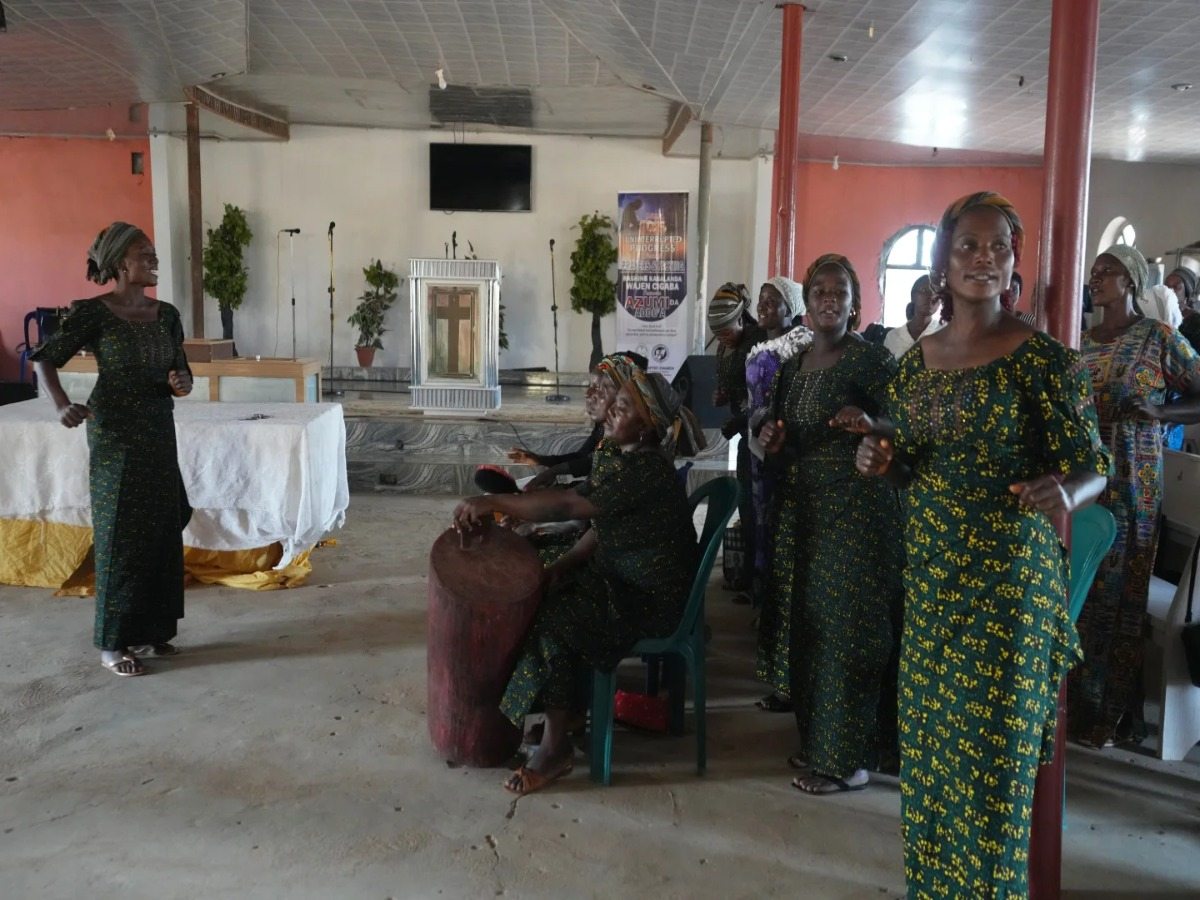
The United States on Wednesday announced a new round of visa restrictions targeting Nigerians linked to a series of deadly attacks on Christian communities. Penalties will be extended to their immediate family members. The U.S. State Department said the decision responds to rising concerns over worsening violence across Nigeria.
Officials tagged the measure as part of a broader attempt to address what American leaders describe as an increasingly dangerous environment for religious minorities. The issue has gained renewed political attention in the United States, particularly after President Donald Trump publicly condemned what he called “the killing of Christians” by “radical Islamists.”
Trump further escalated his rhetoric last month, saying he had instructed the Pentagon to draft plans for possible military action in Nigeria following allegations of increased persecution.
RELATED STORIES



READ ALSO: Nigeria’s defence minister resigns amid kidnapping ordeal
U.S. Secretary of State Marco Rubio described the latest step as a direct response to violence linked to extremist groups and other armed factions operating in the country. “The United States is taking decisive action in response to the mass killings and violence against Christians by radical Islamic terrorists, Fulani ethnic militias, and other violent actors in Nigeria and beyond,” Rubio said in a statement shared on X.
Rubio also indicated that the same visa policy could apply to other governments or individuals responsible for abuses of religious freedom, framing the restrictions as part of a new approach under the Immigration and Nationality Act.
The announcement follows the U.S. government’s recent designation of Nigeria as a “country of particular concern” under the International Religious Freedom Act. How the new restrictions will operate in practice remains uncertain, since the State Department already has the authority to block entry for human rights violators.
Nigeria appears on a list of nations that the U.S. considers high risk for religious repression, alongside China, Cuba, Eritrea, Iran, Myanmar, North Korea, Nicaragua, Pakistan, Russia, Saudi Arabia, Tajikistan and Turkmenistan.
READ ALSO: How President Tinubu is fighting back against Nigeria’s abductions
Violence in Nigeria is driven by a complex mix of triggers. Some attacks are motivated by religion and have affected both Christians and Muslims. Others stem from disputes between farmers and herders, competition over land and waterways, ethnic rivalries, separatist movements or communal power struggles.
The country’s population of about 220 million people is nearly evenly divided between Christians and Muslims. Insecurity has persisted for years, heightened by the Boko Haram extremist group, which aims to impose its own interpretation of Islamic law and has also targeted Muslims who do not conform to its views.
In central Nigeria, armed criminal gangs have expanded their operations, carrying out kidnappings for ransom and contributing to the country’s heightened instability, AP reported.
READ ALSO: Nicki Minaj uses UN platform to champion safety for Christians in Nigeria