

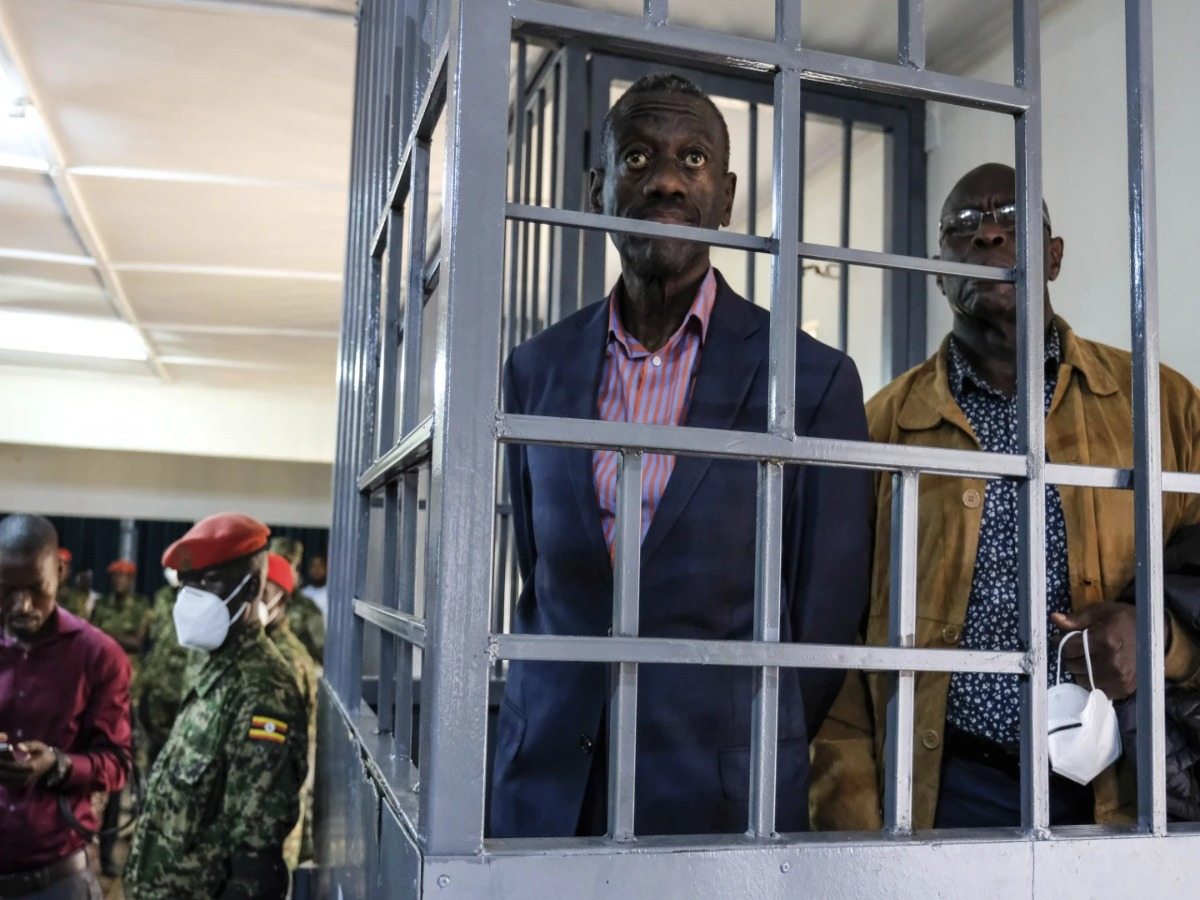
Uganda’s opposition community is raising fresh alarm over the condition of veteran politician Kizza Besigye, saying his health has sharply declined while he remains in custody at a high-security prison in Kampala.
According to the People’s Front for Freedom, Besigye was transported overnight to a medical facility in the capital, prompting fears about his physical state. In a statement issued Tuesday, the party said his health “has reached a critical and deteriorating state,” and called for his personal doctors and family to be granted full and unhindered access.
Besigye, once the most visible face of opposition politics in Uganda before the emergence of Bobi Wine, is being held in a maximum-security facility as he awaits trial on treason charges. He has dismissed the accusations as politically driven.

READ ALSO: Besigye’s party launched in Uganda as jailed opposition leader faces treason charges
“It is a tragedy that a man who has dedicated his life to the health and freedom of others is being denied his own right to medical dignity,” the People’s Front for Freedom said. “We hold the regime and the prison authorities fully accountable for his well-being.”
Prison officials have pushed back against claims of a medical crisis. Frank Baine, a spokesperson for the Uganda Prison Service, insisted Besigye’s condition was stable and described the hospital visit as routine. “It was a general checkup,” Baine said, according to AP’s report. “This morning he was doing his exercises.”
Besigye, a former military colonel and trained physician, last ran for president in 2016. After that contest, he argued that participating in elections had become futile under what he described as an authoritarian system sustained by the security forces.
His detention was on the back of another disputed election. President Yoweri Museveni, in power since 1986, was declared the winner of last week’s presidential vote with 71.6% of the ballots cast. Wine, his nearest challenger, officially received 24.7% of the vote but rejected the results as fraudulent.
The election period was marked by a prolonged internet shutdown and widespread problems with biometric voter identification machines. Pro-democracy groups have long argued that such technology is essential to curb abuses including ballot stuffing.
Museveni, now 81, has consolidated his decades-long rule through constitutional changes that eliminated presidential term limits and age caps. Several political rivals have been imprisoned or pushed out of public life, reinforcing concerns about the shrinking space for opposition politics.
READ ALSO: “They have not seen our full strength” – Museveni tells supporters after win
Besigye’s political journey is deeply intertwined with Museveni’s own history. He once served as the president’s military assistant and personal doctor before becoming one of his fiercest critics. He later led the Forum for Democratic Change, for years the country’s most prominent opposition party.
He has been in custody since November 2024 over allegations that he conspired to overthrow the government. Museveni’s son, Gen. Muhoozi Kainerugaba, who serves as army chief and has openly expressed ambitions to succeed his father, has accused Besigye of plotting to assassinate the president and previously said he should be hanged.
Museveni has defended the prosecution, saying Besigye must answer for “the very serious offenses he is alleged to have been planning,” and has urged “a quick trial so that facts come out.”
Supporters of the detained opposition figure argue the case is designed to sideline him at a sensitive moment, as Uganda faces questions about its political future after Museveni. With no clear successor within the ruling National Resistance Movement, many Ugandans anticipate an uncertain and potentially volatile transition whenever the long-serving president eventually leaves office.
READ ALSO: Museveni secures seventh term as Bobi Wine rejects Uganda’s disputed election result