
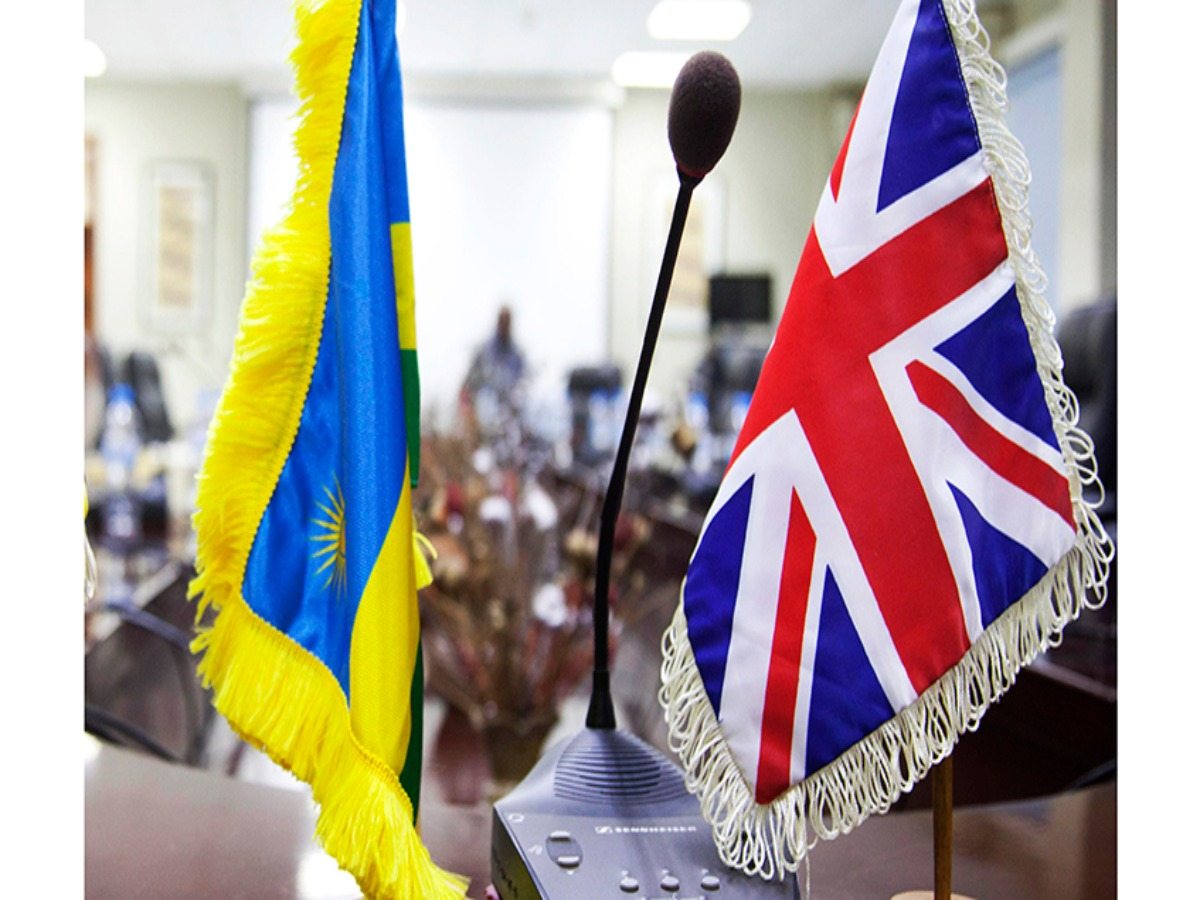
Rwanda has moved the dispute over its collapsed asylum agreement with Britain into international arbitration, saying the United Kingdom owes money after abruptly abandoning the deal that was meant to send asylum seekers to the East African country.
Rwanda said on Tuesday it has launched proceedings at the Permanent Court of Arbitration in The Hague, intensifying a row that has simmered since the UK government walked away from the arrangement last year.
The agreement formally took effect on April 25, 2024, under then Prime Minister Rishi Sunak. But the policy barely had time to begin before it was scrapped. In July 2024, Keir Starmer, newly installed as prime minister, declared the plan “dead and buried” shortly after his Labour government assumed office.

According to Rwanda, that decision came without consultation.
READ ALSO: Trump lauds Congo–Rwanda leaders as U.S.-brokered peace plan takes shape
“He did so without prior notice to Rwanda, contrary to the spirit of the partnership that had always characterized the agreement,” the Rwandan government said in a statement.
Under the deal, Britain committed to paying Rwanda in exchange for hosting asylum seekers who had entered the UK illegally. In practice, the scheme never gathered momentum. Only four people travelled to Rwanda voluntarily before the political shift in London brought the project to a halt.
The policy had already faced major legal headwinds. In 2023, the UK Supreme Court ruled the arrangement “unlawful,” finding that it breached both domestic and international law and ordering the government to abandon it. That judgment has since fueled debate over whether any financial claims can survive the collapse of a contract deemed illegal.
Some legal analysts argue that such claims should fail. Others disagree. Jonathan Musangwa, a Rwandan expert in international law, says Britain cannot rely solely on a domestic court ruling to excuse nonperformance of an international agreement.
“A domestic judgment may prevent the government from continuing to implement the scheme internally, but it does not by itself terminate the treaty or erase obligations that already exist between the states,” Musangwa told The Associated Press.
He said the critical issue is whether the UK properly ended or suspended the agreement under its own terms or under the Vienna Convention on the Law of Treaties.
READ ALSO: Rwanda confirms arrival of 7 U.S. deportees under migration pact
“If it did not, an arbitral tribunal may still find an internationally wrongful act and consider questions of responsibility and reparation, even though domestic courts found otherwise,” he said.
In its filing, Rwanda accuses the UK of breaching the treaty’s financial provisions and Article 18, as well as violating Article 19 by declining to resettle vulnerable refugees.
British officials have previously acknowledged the scale of the costs. Former Home Secretary Yvette Cooper said the failed plan had already involved £290m in payments to Rwanda.
In November 2024, the UK asked Rwanda to waive two scheduled payments of £50m each, due in April 2025 and April 2026, arguing that the request was made in anticipation of formally terminating the treaty.
Rwanda says it was open to that approach, but only if the agreement was officially ended and fresh financial terms were negotiated.
“Discussions between Rwanda and the United Kingdom did not, however, ultimately take place, and the amounts remain due and payable under the treaty,” Rwanda said.
READ ALSO: Rwanda vs Belgium vs Congo: The Breakup That Could Reshape Africa
The British government has since drawn a firm line, making clear that it does not intend to release any further funds under the abandoned deal.