
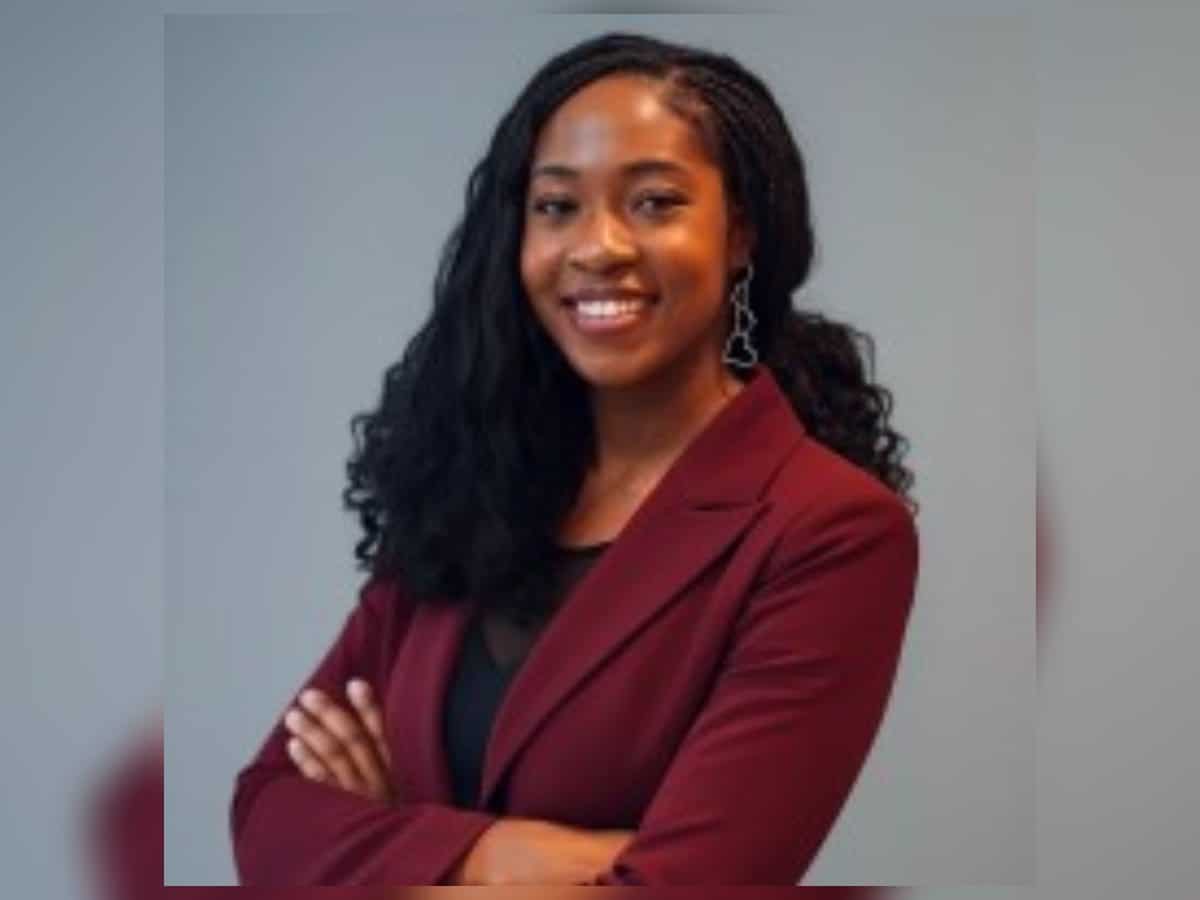
Chisom Okwor, a Google software engineer and founder, is transforming hair braiding with her new automated handheld braiding device—Braidiant.
She told AfroTech, “I started to realize, as a Black woman, we all know the struggles with hair. Hair braiding takes time. We do it very often, and there’s no technology in that space … In the U.S., hair braiding is also not accessible. If you walk into any salon here in Nairobi, any salon, your hair can be done. That’s not the case in the U.S. There are very specific salons that cater to textured hair and textured hair needs. This is an interesting opportunity. This is a huge market.”
Okwor has successfully secured substantial funding for her product. This includes a notable $20,000 grant from Pharrell Williams’ Black Ambition Prize, alongside an additional $6,000 received from pitch competitions at The University of Texas at Austin, such as the Texas Venture Lab.

The young inventor first developed a passion for hair braiding during a gap year after high school in Nigeria, where she completed a hair-braiding apprenticeship.
READ ALSO: Meet the two Black hairstylists responsible for Michelle Obama’s legendary styles
After moving to the U.S., she earned a bachelor’s degree in computer science from Fisk University on a full-ride scholarship. However, to cover her living and travel expenses, she braided hair on campus as a side hustle.
This experience prompted her to explore technological solutions for the challenges hair braiders encounter.
Okwor explained, “You see people spend upwards of $600, $1,000 getting braids done, and the experience a lot of times can be subpar, takes hours, and people try to get their hair done themselves. It takes them two days, three. And I was like, this is something that can definitely be automated with technology.”
Drawing on her expertise in both engineering principles and computer-aided design hardware, Okwor began developing an innovative, automated hair-braiding solution. To quickly realize her vision and refine the design, she used the four 3D printers she owned to create her initial prototypes.
By the time Okwor founded Braidiant in 2024, she had already developed a “working well” prototype of an automated braiding solution in 2022.
Braidiant was established to bring automated braiding technology to market. Okwor invested in almost every braiding device available to inform the development of future product versions, noting that many of the existing devices were not designed for coily or kinky hair.
This process helped Braidiant improve its automated handheld braiding device, which can be used to braid hair with extensions and with different textures.
However, it is not currently equipped for cornrows or for more intricate styles.
“The art form of hair braiding is always going to be there,” Okwor said. “There’s so many elaborate styles that a device cannot replicate. I think it’s good we keep that. Sometimes I just want a crazy style for an event. But that’s different from wanting to get a protective style done to go about my day.”
Okwor explained that the device’s initial launch focuses on hairstylists, offering both health and financial benefits. These advantages include reducing pain, providing convenient tools for healthier hair, helping stylists prevent injuries, enabling stylists to double their income, preventing talent loss, and increasing economic mobility within the African community.
This device has the potential to lessen the physical strain on stylists’ hands and wrists caused by manual braiding and twisting, which could aid in preventing conditions such as carpal tunnel syndrome, tendonitis, or arthritis.
Okwor is currently pursuing a master’s degree in artificial intelligence at the university and is expected to graduate in December 2026.
As manufacturing preparations are underway, Okwor is contemplating launching a crowdfunding campaign.