

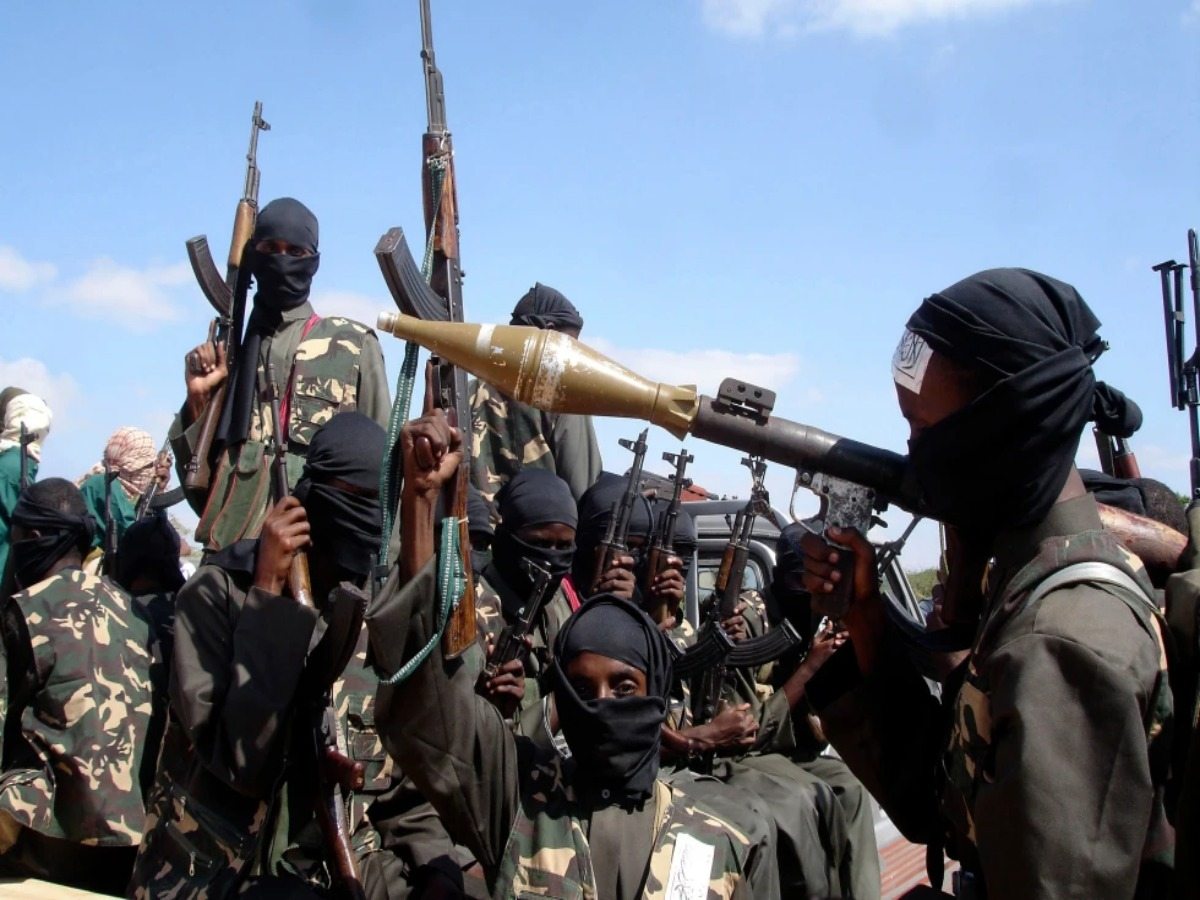
Somalia’s government says the balance in its protracted war with al-Shabab is beginning to tilt.
Backed by intensified U.S. airstrikes and broadened ground offensives, officials argue that the campaign has moved beyond containment to recovery. They point to reclaimed towns, disrupted bomb factories and the targeting of senior operatives within the al-Qaeda-linked network as evidence that the insurgent group is under sustained pressure.
The shift comes at a delicate juncture. African Union peacekeepers are steadily reducing their footprint, handing over greater responsibility to Somali forces nearly 20 years after al-Shabab first rose to prominence as an insurgent movement.


READ ALSO: Somalia refutes U.S. allegation of food aid warehouse demolition
Al-Shabab took shape in the mid-2000s as the armed faction of the Islamic Courts Union before pledging allegiance to al-Qaeda. At its height, the group controlled large swaths of southern and central Somalia, including sections of Mogadishu.
Although African Union troops forced the militants out of the capital in 2011, al-Shabab recalibrated. It pivoted to asymmetric warfare, deploying suicide bombers, orchestrating assassinations and maintaining an underground financial system that U.N. monitors say generates millions of dollars each year through taxation and extortion.
The U.S. has conducted air operations in Somalia for over a decade. In 2020, President Donald Trump ordered most American troops withdrawn. Two years later, President Joe Biden authorized their return, restoring a consistent advisory and counterterrorism presence.
Somali officials credit that renewed engagement, particularly enhanced aerial surveillance and strike capacity, with altering battlefield dynamics.
Authorities say government troops have recaptured territory in Lower Shabelle, Hiiraan, Middle Shabelle and parts of Jubbaland, areas that had remained under militant control for years.
Omar Ali Abdi, Somalia’s state minister for defense, told The Associated Press that locations in Lower Shabelle, including Jilib Marka, Gendershe, and Dhanaane, which had long served as al-Shabab strongholds, are now in military hands.
He also pointed to advances in Hiiraan, citing Taydaan and Yasooman, as well as operations near Masjid Ali Gaduud in Middle Shabelle. In Jubbaland’s Kudhaa area, Abdi said coordinated offensives by regional Darawiish units and the U.S.-trained Danab special forces resulted in dozens of militant deaths and the seizure of vehicles.
Al-Shabab has not publicly acknowledged those setbacks. Independent confirmation remains difficult because access to many of the contested zones is restricted.
Across its area of responsibility, U.S. Africa Command, or AFRICOM, conducts airstrikes aimed at al-Shabab leaders, training compounds and weapons infrastructure in coordination with Somalia’s federal authorities.
READ ALSO: U.S. halts Somalia aid after alleged seizure of food meant for the poor
Abdi said recent air missions destroyed sites used to assemble improvised explosive devices and eliminated vehicle-borne bombs before they could be deployed. Somali intelligence services, he added, supply vetted targeting data.
AFRICOM maintains that it undertakes precision operations and evaluates potential civilian harm before strikes. Rights groups have previously criticized U.S. actions over alleged civilian casualties. The command has acknowledged some incidents and says it reviews such claims.
Mogadishu-based security analyst Abdullahi Ahmed Ali said the expansion of aerial surveillance and strike capability altered what had previously been a more evenly matched fight.
In earlier stages of the conflict, he noted, both sides relied on comparable ground weaponry. The government’s deficit lay in sustained airpower and continuous reconnaissance.
With expanded drone coverage, Somali forces can now pinpoint underground hideouts and supply corridors that once proved elusive. After air assets degrade those positions, advancing ground troops face fewer obstacles.
Officials also say drones provide early alerts of militant activity near Mogadishu, where al-Shabab continues to stage bombings despite tighter security measures.
The renewed offensive coincides with the phased drawdown of the African Union Transition Mission in Somalia. As international peacekeepers scale back, Somali forces are expected to fill the vacuum.
Analysts argue that this makes intelligence sharing and air support from foreign partners even more vital.
Yet the security campaign follows overlapping strains: recurring drought linked to climate variability, political friction between federal and regional leaders, and funding gaps that hamper both security operations and humanitarian relief.
Security specialists caution that battlefield victories alone are insufficient. In previous offensives, al-Shabab reentered areas after government units withdrew or failed to establish lasting administrative control.
Somali authorities report that thousands of al-Shabab fighters have been killed since the latest push intensified, including dozens in recent operations in Kudhaa and other locations. Those figures have not been independently verified.
Control of territory remains fluid, particularly in rural districts. While the government’s footprint appears to have widened, al-Shabab retains the capacity to operate across broad areas of central and southern Somalia.
Officials insist the strategy extends beyond combat. Operations will continue in partnership with international allies, blending ground assaults, intelligence coordination and reconstruction in recaptured towns.
According to Abdi, the government plans to rebuild homes and deliver aid in newly captured areas to prevent al-Shabab from reestablishing control.
READ ALSO: 750,000 in Somalia to lose U.N. food assistance due to funding collapse
Even so, al-Shabab remains among Africa’s most durable militant organizations. Sustaining recent gains will depend not only on military pressure but on whether Somalia can secure, administer and provide services in territories once dominated by the insurgents as peacekeepers step aside.