

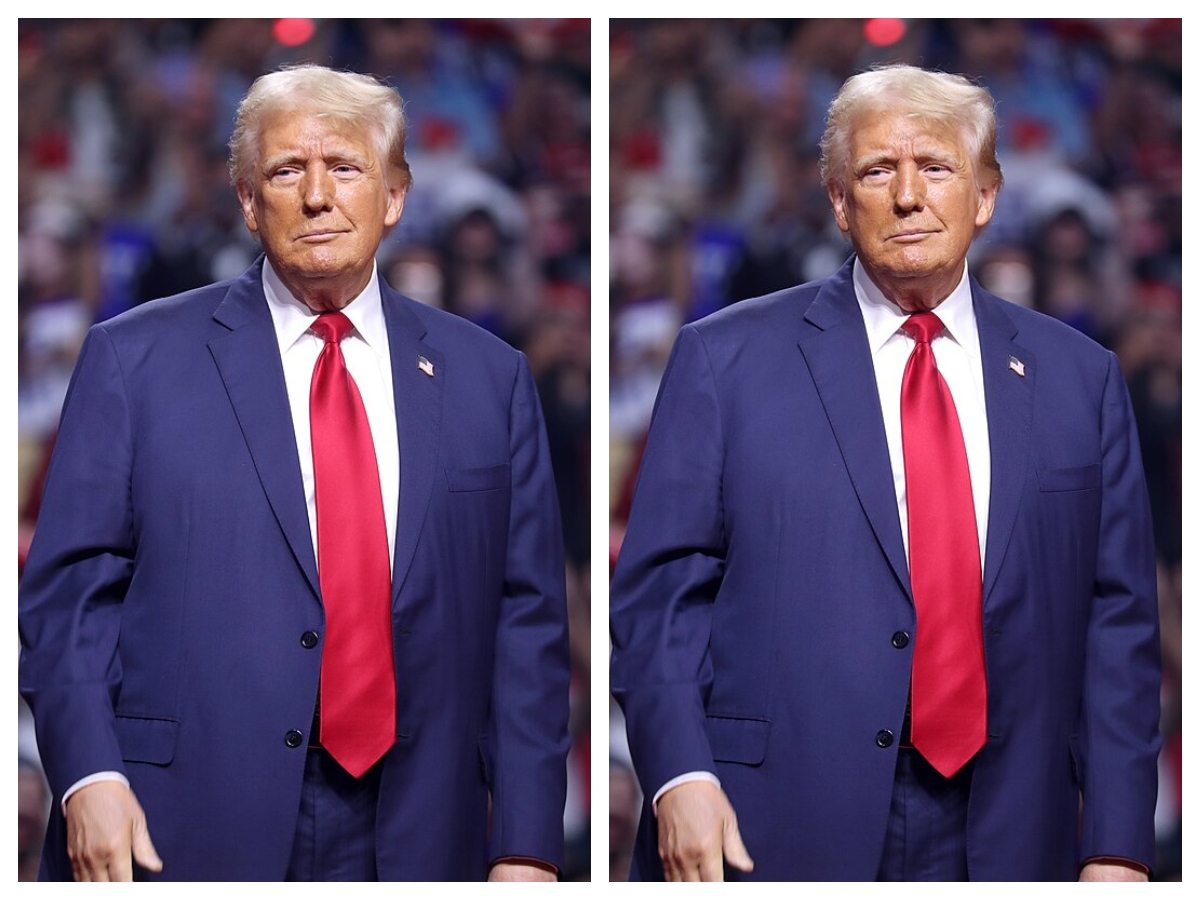
The Supreme Court has delivered a major setback to President Donald Trump’s trade agenda, striking down the sweeping global tariffs he imposed under emergency powers and igniting an extraordinary public rebuke from the president himself.
In a 6-3 ruling on Friday, the justices concluded that Trump overstepped his authority when he used a decades-old emergency statute to levy broad “reciprocal” tariffs on nearly every country. The majority held that the Constitution reserves the power to tax to Congress, not the White House.
Trump reacted with open anger. He said he was “absolutely ashamed” of some justices who ruled against him, branding them “disloyal to our Constitution” and “lapdogs.” At one point, he suggested the possibility of foreign influence, though he offered no evidence.

READ ALSO: Trump administration seeks swift Supreme Court reversal on tariff powers
“Their decision is incorrect,” he said. “But it doesn’t matter because we have very powerful alternatives.”
Despite the loss, Trump vowed to press ahead, promising a new global 10% tariff under a separate statute that allows trade measures for up to 150 days. The law has never before been used to impose tariffs, but the president insisted it would still enable him to “charge much more” than before.
Chief Justice John Roberts, writing for the majority, was unequivocal about the constitutional boundary. “The Framers did not vest any part of the taxing power in the Executive Branch,” he wrote.
The ruling invalidates tariffs imposed under the International Emergency Economic Powers Act, a 1977 law typically used for sanctions. While previous presidents invoked the statute dozens of times, none had used it to impose import taxes. Roberts emphasized that history in rejecting the administration’s interpretation.
“And the fact that no President has ever found such power in IEEPA is strong evidence that it does not exist,” he wrote.
Justices Brett Kavanaugh, Samuel Alito and Clarence Thomas dissented. Kavanaugh defended the legality of the policy, even while acknowledging the political debate around it.
“The tariffs at issue here may or may not be wise policy. But as a matter of text, history, and precedent, they are clearly lawful,” Kavanaugh wrote.
Trump applauded the dissent, calling the 63-page opinion “genius.”
The majority also leaned on the major questions doctrine, which requires clear congressional authorization for actions of vast economic and political consequence. Roberts stated plainly: “There is no exception to the major questions doctrine for emergency statutes.” The court’s three liberal justices joined the majority but did not sign onto that section of the opinion.
The financial implications are immense. Federal data show the Treasury collected more than $133 billion in import taxes under the emergency law as of December. Over a decade, the impact has been projected at roughly $3 trillion. Yet the court left unresolved whether businesses can reclaim the billions already paid.
“The Court says nothing today about whether, and if so how, the Government should go about returning the billions of dollars that it has collected from importers. But that process is likely to be a ‘mess,’ as was acknowledged at oral argument,” Kavanaugh wrote.
READ ALSO: Appeals court rules Trump overstepped authority on sweeping tariffs
Major retailers and small businesses alike have already sought refunds in lower courts. Costco is among the companies lining up to recover tariff payments.
The case marked the first major test of Trump’s economic agenda to reach a final decision at the Supreme Court. Lower courts had already rejected his use of emergency powers. Although he appointed three of the current justices during his first term and has recently secured interim victories on matters ranging from federal workforce changes to funding disputes, the tariffs fight tested the limits of executive authority in a direct and lasting way.
Vice President JD Vance described the ruling as “lawlessness” in a post on X.
Opponents of the tariffs, however, hailed the outcome as a constitutional reset. Neal Katyal, representing a coalition of small businesses, called it a “complete and total victory.”
“It’s a reaffirmation of our deepest constitutional values and the idea that Congress, not any one man, controls the power to tax the American people,” he said.
The legal resistance to Trump’s tariff strategy extended beyond Democratic-led states. Libertarian and pro-business organizations, often aligned with Republican priorities, also challenged the policy. Public polling has suggested that tariffs lack broad support, especially as voters remain concerned about prices and affordability.
The administration had argued that trade policy falls squarely within the president’s foreign affairs authority, an area where courts traditionally tread lightly. Roberts, joined by Justices Neil Gorsuch and Amy Coney Barrett, rejected that framing, stating that foreign policy implications do not override constitutional limits on taxation.
The immediate impact on ongoing trade negotiations remains uncertain. European Commission spokesman Olof Gill said officials are seeking clarification from Washington.
“We remain in close contact with the U.S. Administration as we seek clarity on the steps they intend to take in response to this ruling,” he said, adding that the bloc would continue advocating for lower tariffs.
Businesses affected by the tariffs reacted with relief. The National Retail Federation said the decision provides “much needed certainty.”
Rick Woldenberg, CEO of Illinois-based toy maker Learning Resources, welcomed the ruling but expects further maneuvering from the White House. “Somebody’s got to pay this bill. Those people that pay the bill are voters,” he said in an AP report.
Ann Robinson, owner of Scottish Gourmet in Greensboro, North Carolina, said she was “doing a happy dance” after hearing the news. The 10% baseline tariff on U.K. imports had cost her about $30,000 during the fall season.
READ ALSO: Trump’s tariffs under fire as 12 states file lawsuit
Uncertain about what comes next, she is choosing celebration over caution for now. “Time to schedule my ‘Say Goodbye to Tariffs’ Sale!”