

African leaders used a gathering in Algiers on Sunday to revive a long-standing demand for the world to formally acknowledge colonial-era abuses, treat them as crimes under international law and pursue reparations for the harm inflicted across the continent.
The conference, hosted in Algeria’s capital, brought together diplomats and senior officials intent on advancing an African Union initiative first endorsed earlier this year. The AU’s resolution seeks a coordinated continental stance on how justice and reparations should be approached for communities still living with the consequences of colonization.
In opening the conference, Algerian Foreign Minister Ahmed Attaf drew on his country’s painful past under French rule to argue that compensation and the recovery of seized assets are overdue. A structured legal approach, he said, would ensure restitution is viewed as “neither a gift nor a favor.”
RELATED STORIES




“Africa is entitled to demand the official and explicit recognition of the crimes committed against its peoples during the colonial period, an indispensable first step toward addressing the consequences of that era, for which African countries and peoples continue to pay a heavy price in terms of exclusion, marginalization and backwardness,” Attaf declared.
While modern international law prohibits practices such as torture, apartheid and slavery, and bars the acquisition of territory by force, colonialism is notably absent from these conventions. That omission dominated conversations at the AU’s February summit, where leaders examined proposals to define colonization as a crime against humanity and develop a unified approach to reparations.
The economic devastation of colonial rule remains a central grievance. Historians and economists say Africa’s losses run into the trillions, as European powers extracted gold, diamonds, rubber and other resources, routinely employing violent methods while enriching themselves at the expense of local populations.
Pressure has also grown for European museums to return the thousands of African cultural objects taken during the colonial era, a push that many African governments view as inseparable from broader justice demands.
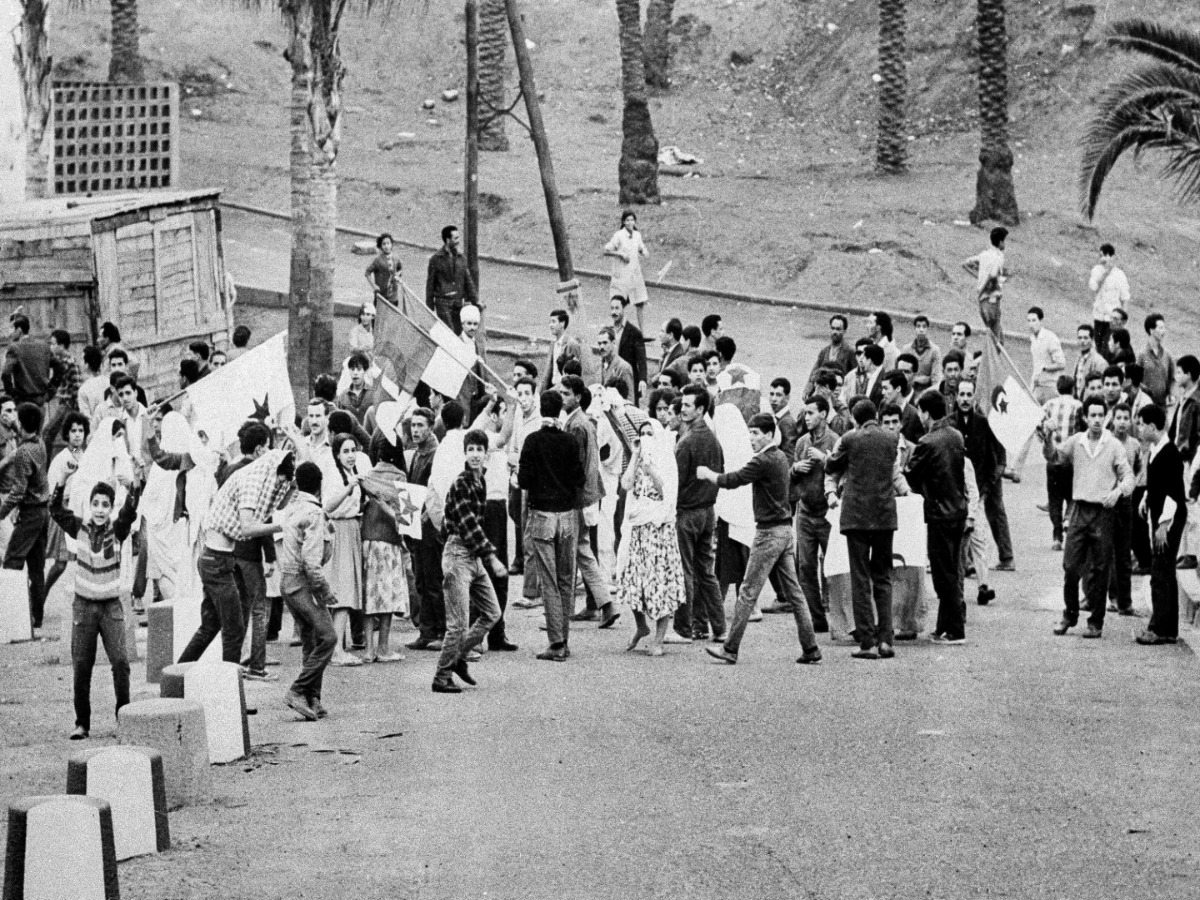
Attaf indicated that Algeria was a deliberate choice for the venue. The country endured some of the harshest forms of French domination and fought a protracted and bloody war for independence. Nearly a million European settlers held enormous privileges while Algerians faced discrimination, conscription and repression. Hundreds of thousands lost their lives in the revolution, as French forces used torture, mass disappearances and village destruction in an attempt to maintain control.
READ ALSO: U.S. to host crucial peace signing between the presidents of Congo and Rwanda
“Our continent retains the example of Algeria’s bitter ordeal as a rare model, almost without equivalent in history, in its nature, its logic and its practices,” Attaf said.
That historical experience has shaped Algeria’s stance on Western Sahara, a territory once colonized by Spain and now at the center of a dispute between Morocco and the pro-independence Polisario Front. Attaf described the issue as one of incomplete decolonization, echoing the African Union’s official position, even as more African states line up behind Morocco’s claim. He called Western Sahara “Africa’s last colony” and praised the Sahrawi people’s efforts “to assert their legitimate and legal right to self-determination, as confirmed — and continuously reaffirmed — by international legality and UN doctrine on decolonization.”
For decades, Algeria has urged that colonial crimes be addressed through international legal mechanisms, though its leaders often navigate the matter cautiously to avoid reigniting tensions with France, where the memory of the war remains politically delicate.
French President Emmanuel Macron in 2017 labeled parts of the colonial history a crime against humanity, but he declined to issue a formal apology and urged Algerians not to remain anchored to past grievances.
Mohamed Arezki Ferrad, who is a member of Algeria’s parliament, told The Associated Press that any compensation must go beyond symbolic gestures. He pointed out that France has still not returned several looted Algerian artifacts, including Baba Merzoug, a 16th century cannon kept in Brest.