

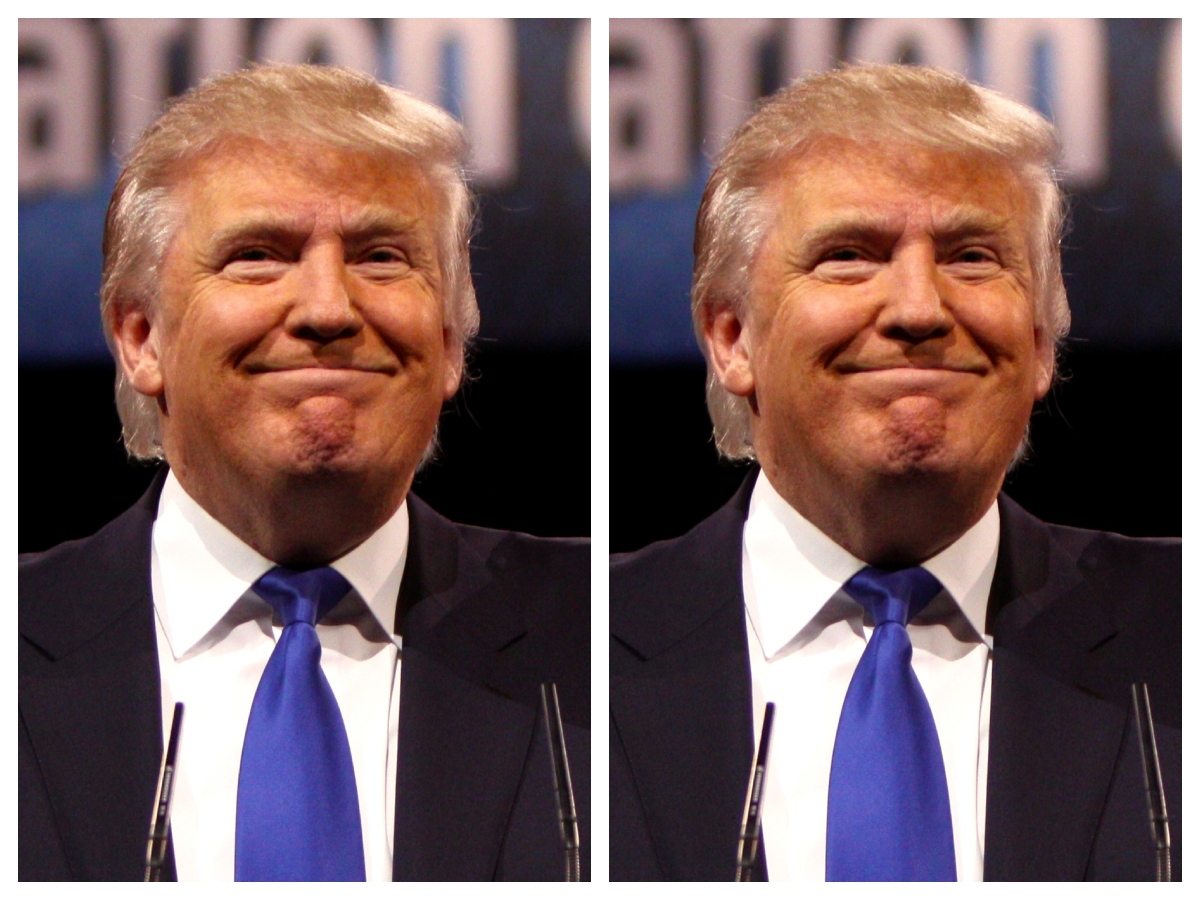
A Miami judge has tossed out a legal challenge to Miami Dade College’s decision to hand over a coveted parcel of downtown land for President Donald Trump’s future presidential library.
The ruling clears the path for the former real estate developer turned president to plant a signature monument tied to his political ascent along Biscayne Boulevard, a stretch long prized by builders and investors.
The lawsuit was filed by Marvin Dunn, a retired professor and historian of Black life in South Florida, who accused the college’s board of failing to provide proper public notice and breaching Florida’s open government law when it voted in September to give away the nearly three-acre property. The land sits in the heart of downtown Miami and is among the last major undeveloped sites in the area.
RELATED STORIES



READ ALSO: Trump halts green card lottery after Brown and MIT shootings
The parcel’s value was central to the dispute. A 2025 assessment by the Miami-Dade County property appraiser pegged the land at more than $67 million. One real estate expert suggested its true market potential could run far higher, estimating it could fetch hundreds of millions more given its location on a palm-lined boulevard overlooking Biscayne Bay.
Circuit Judge Mavel Ruiz initially sided with Dunn, temporarily blocking the land transfer in October and setting the case on a path toward trial next August. That pause halted the college’s ability to formally convey the property while the legal challenge unfolded.
That changed on Thursday. Ruiz ruled in favor of Miami Dade College, dismissing the complaint without prejudice after the board revisited the issue earlier this month during a public meeting that stretched more than four hours and drew impassioned testimony from critics and supporters alike.
Ruiz stressed that her decision rested strictly on procedural grounds, not on the politics or symbolism surrounding the project.
“This court is not deciding whether this is wise, whether the transaction is appropriate for one president or another, or for a library, or for a petting zoo. That is not what the court is here to decide,” Ruiz said.
Lawyers for the college argued throughout the case that the board had complied with state law. Even if there had been a defect, they said, it was resolved when trustees repeated the vote in full public view.
READ ALSO: Federal judge temporarily freezes Trump rules restricting lawmakers’ ICE access
“The board has redone the vote just as plaintiff asked, and has considered this anew, truly deliberated on it and has again conveyed the land to the state,” said Jennifer Hernandez, an attorney for the college.
Although Dunn did not prevail, Ruiz singled out the personal cost he absorbed to pursue the challenge. She disclosed that he leveraged his home to meet a court-ordered bond requirement tied to the earlier injunction that froze the land transfer.
Ruiz described Dunn as someone “willing to put themselves, their money and their home on the line for the better good,” adding, “and I thank you.”
The land’s path to the Trump library has involved several layers of government action. After Miami Dade College approved the transfer in September, the property was passed to a fund overseen by Republican Gov. Ron DeSantis and the Florida Cabinet. Those officials then voted to move the land again, placing it under the control of the Trump family by deeding it to the foundation established for the library.
That foundation is run by three trustees: Eric Trump, Michael Boulos, who is married to Tiffany Trump, and James Kiley, an attorney for the president.
READ ALSO: Appeals Court keeps Trump’s National Guard mission in Washington alive
Eric Trump has said the planned library will be “one of the most beautiful buildings ever built” and “an Icon on the Miami skyline.” Real estate experts note that, under existing zoning, the site would typically be suited for a high-rise condominium, a prospect one analyst described as a potential “cash cow” given the land’s unmatched location.