

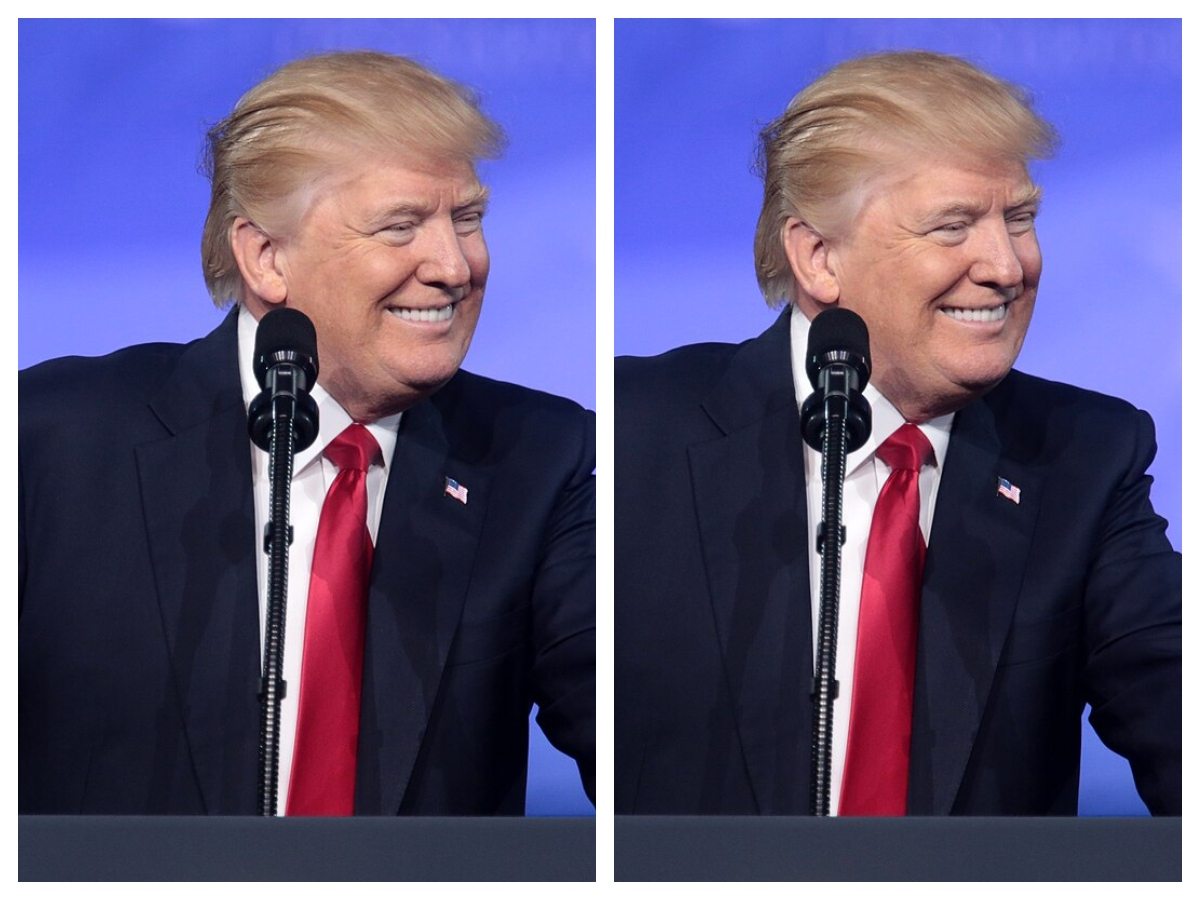
President Donald Trump welcomed guests to the White House on Wednesday for a Black History Month reception, an event that occurred on the heels of a fresh controversy. Less than two weeks earlier, he had drawn bipartisan condemnation for sharing a social media video that portrayed former President Barack Obama and former first lady Michelle Obama as primates in a jungle. The post was later deleted after intense backlash, though Trump has said he does not intend to apologize.
At the reception, Trump made no mention of the video or of Obama, the country’s first Black president. Instead, he tagged the evening as a tribute to Black achievement and perseverance.
“We celebrate Black History Month. We honor the memory of those who came before us by continuing their legacy,” he said.


READ ALSO: Trump deletes video depicting Obamas as primates after rare bipartisan backlash
He singled out several well-known Black figures who have supported him, including boxer Mike Tyson, whom he credited with defending him against accusations of racism. Trump also referenced rapper Nicki Minaj, commenting on her appearance and describing her skin as “so beautiful” while remarking on the length of her fingernails.
Several members of his administration joined him onstage, among them Housing and Urban Development Secretary Scott Turner and White House pardon czar Alice Marie Johnson. Johnson delivered a forceful endorsement of the president.
“As you look out upon this sea of Black Americans, this president hears you. This president cares for you. Don’t let anyone tell you that this president right here, Donald Trump has not — is not for Black America,” Johnson said. “Because he is.”
Trump used the occasion to outline policies he argued have benefited Black communities. As reported by the AP, He cited legislation he signed last year eliminating federal income taxes on tips and defended his decision to deploy National Guard troops “to bring back safety” in cities with large Black populations, including Washington, New Orleans and Memphis, Tennessee.
The event followed another social media post from Trump a day earlier, in which he said he has been “falsely and consistently called a Racist by the Scoundrels and Lunatics on the Radical Left.” That message was intended as a tribute to the Rev. Jesse Jackson, who died Tuesday.
Asked about the post, White House press secretary Karoline Leavitt said earlier Wednesday: “There is a lot this president has done for all Americans, regardless of race. And he has absolutely been falsely called and smeared as a racist.”
Although Trump has marked Black History Month throughout his presidency, his broader record on diversity has drawn scrutiny. His administration has moved aggressively against diversity, equity and inclusion initiatives, programs that expanded job access for many Black Americans in government and the private sector. Trump has labeled DEI efforts “discrimination” and has pushed to eliminate them across federal agencies while urging businesses to follow suit.
READ ALSO: 9 Trump policies that will hurt Black Americans
At the same time, he has presented himself as a supporter of historically Black colleges and universities. On Wednesday, the White House highlighted a $500 million allocation to HBCUs announced last year. That infusion of funding came largely from federal dollars redirected from institutions serving high percentages of Hispanic students. The Education Department had pulled $350 million from grant programs supporting colleges with certain Hispanic and minority enrollment thresholds, arguing those initiatives were unconstitutional.
Since returning to office, Trump has also taken aim at how American history is taught. At the start of his second term, he asserted that some African American history lessons promote hostility toward the country and signed an executive order aimed at “restoring truth and sanity to American history.” The administration has relied on that directive to remove materials from national parks that it said “inappropriately disparage Americans past or living,” including certain Black history displays.
Even as the Defense Department announced that official resources would no longer be used to observe cultural awareness months, Trump issued a proclamation recognizing February as Black History Month.
Last year’s White House reception for Black History Month was held shortly after another executive order formally dismantled the federal government’s diversity, equity and inclusion programs.
READ ALSO: Trump administration prepares to withhold federal grants from some Democratic states