

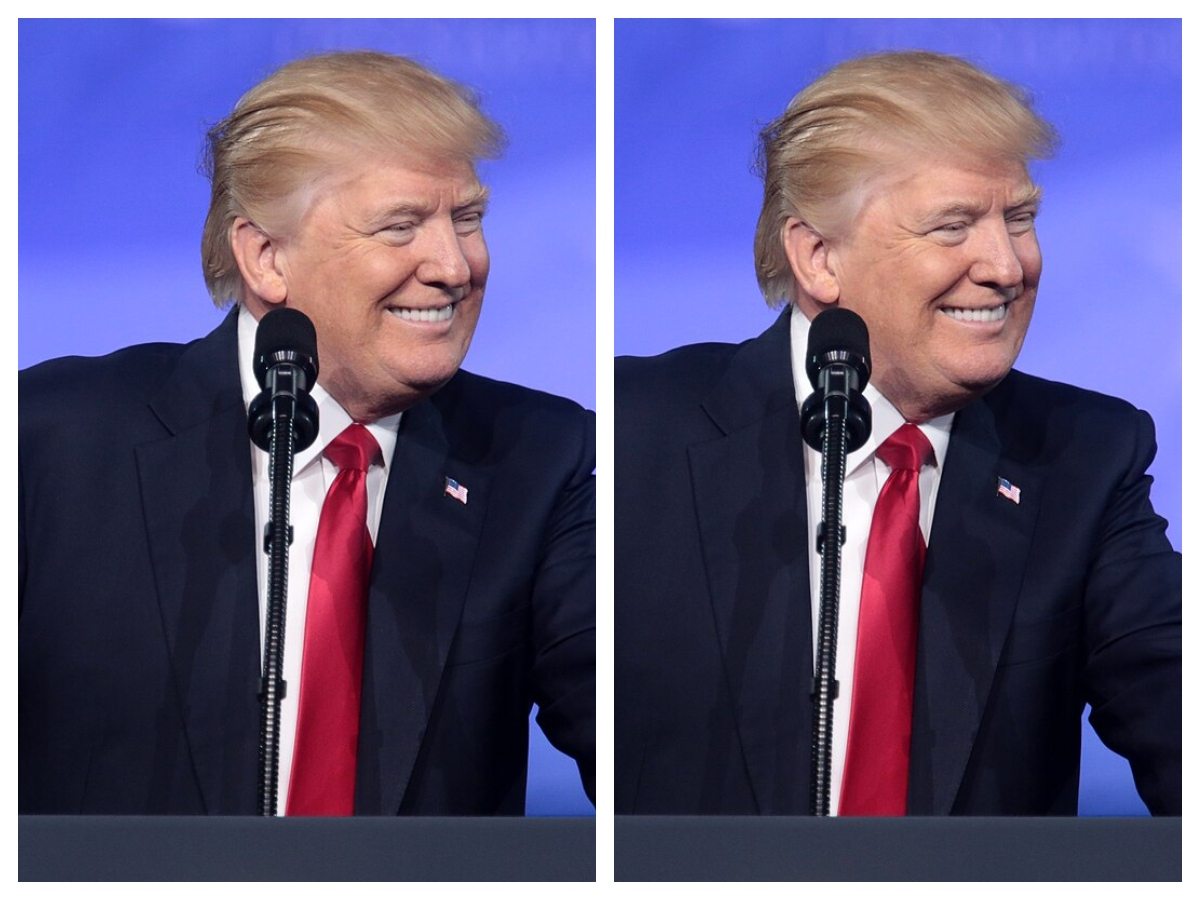
President Donald Trump on Tuesday unveiled an extensive proposal linking Venezuela’s oil reserves to the aftermath of a dramatic U.S. military operation that captured Nicolás Maduro, saying Caracas would supply between 30 million and 50 million barrels of crude to the United States, with profits earmarked “to benefit the people” of both nations.
The announcement came as the White House prepared to host senior executives from major U.S. oil firms later this week. According to a person familiar with the plans, who requested anonymity, representatives from Exxon, Chevron, and ConocoPhillips are expected to attend a Friday meeting focused on Venezuela’s oil sector, AP reported. The Trump administration has been pressing Caracas to open its struggling but resource-rich industry to deeper American investment and technical expertise.
The oil pledge landed following a violent fallout inside Venezuela. Earlier Tuesday, officials in Caracas said at least 24 Venezuelan security officers were killed during the overnight U.S. raid that seized Maduro and transferred him to the United States to face drug trafficking charges. Acting President Delcy Rodriguez responded forcefully after Trump warned earlier in the week that she would suffer consequences worse than Maduro’s if she failed to remake Venezuela along lines aligned with U.S. interests, including granting American companies access to its energy sector.



READ ALSO: Venezuela in U.S. hands? Trump signals leadership role after Maduro capture
Speaking to officials from the agricultural and industrial sectors, Rodriguez dismissed the threats. “Personally, to those who threaten me: My destiny is not determined by them, but by God,” she said.
Venezuela’s attorney general, Tarek William Saab, said “dozens” of officers and civilians were killed during the weekend strike in Caracas and announced that prosecutors would examine the deaths as a possible “war crime.” He did not clarify whether his figures referred solely to Venezuelans.
Cuba has also acknowledged losses. Havana previously confirmed that 32 Cuban military and police personnel stationed in Venezuela were killed in the raid, identifying them as members of the Revolutionary Armed Forces and the Ministry of the Interior.
The Pentagon said seven U.S. service members were wounded during the operation. Five have since returned to duty, while two remain in recovery. A U.S. official speaking on condition of anonymity said the injuries included gunshot and shrapnel wounds.
In the days following the raid, Venezuela’s military released a video tribute on Instagram honoring fallen security personnel. The footage showed their faces superimposed over black-and-white scenes of troops, U.S. aircraft over Caracas and armored vehicles destroyed by explosions. At the same time, streets that had been largely empty since Maduro’s capture briefly filled with crowds waving flags and dancing to patriotic music during a state-organized rally backing the government.
“Their spilled blood does not cry out for vengeance, but for justice and strength,” the military wrote in the post. “It reaffirms our unwavering oath not to rest until we rescue our legitimate President, completely dismantle the terrorist groups operating from abroad, and ensure that events such as these never again sully our sovereign soil.”
Trump’s oil announcement carries significant financial weight. With crude trading around $56 a barrel, the proposed transfer could be valued at up to $2.8 billion. The United States consumes roughly 20 million barrels of oil and petroleum products daily, meaning the Venezuelan supply would amount to as much as two and a half days of national demand, according to the U.S. Energy Information Administration.
Despite holding the world’s largest proven crude reserves, Venezuela currently produces about one million barrels per day, a fraction of U.S. output, which averaged 13.9 million barrels per day in October. Venezuela’s government did not immediately respond to requests for comment on Trump’s statement.
The renewed focus on Venezuelan oil also intersects with regional tensions. ExxonMobil is developing a massive offshore project in neighboring Guyana, a discovery made in 2015 that reignited a long-standing territorial dispute after Venezuela moved to revive claims over the Essequibo region, which makes up roughly two-thirds of Guyana’s land area. Venezuelan officials, including Rodriguez, have accused Guyana’s leadership and ExxonMobil of wrongdoing, and lawmakers in Caracas previously floated a ban on future operations in Venezuela by companies active in Guyana.
READ ALSO: Trump claims victory in Venezuela after Maduro’s capture
Domestically, Trump used remarks at a House Republican retreat in Washington to brush aside Democratic criticism of the military operation, noting that former President Joe Biden had also supported efforts to arrest Maduro on drug trafficking charges. He complained that Democrats were unwilling to credit what he described as a successful mission, despite bipartisan consensus that Maduro was not Venezuela’s legitimate leader.
“You know, at some point, they should say, ‘You know, you did a great job. Thank you. Congratulations.’ Wouldn’t it be good?” Trump said. “I would say that if they did a good job, their philosophies are so different. But if they did a good job, I’d be happy for the country. They’ve been after this guy for years and years and years.”
Maduro was indicted in the United States in 2020, accused of leading a decades-long narco-terrorism and cocaine trafficking conspiracy. In the final days of Biden’s presidency, U.S. officials raised the reward for information leading to Maduro’s arrest after he claimed a third term despite evidence he lost the most recent election. The Trump administration doubled that reward to $50 million in August.
Public opinion in the United States remains divided. A Washington Post and SSRS poll conducted over the weekend found that about four in ten Americans approved of deploying U.S. forces to capture Maduro, while a similar share opposed the move and roughly two in ten were undecided. Nearly half of respondents opposed the United States taking control of Venezuela or installing a new government, and about nine in ten said Venezuelans themselves should decide their country’s leadership.
Maduro pleaded not guilty to federal drug charges in a U.S. court on Monday. He and his wife were captured early Saturday at a compound guarded by Cuban personnel.
Internationally, the operation has heightened concern that the U.S. is pursuing a more assertive posture in the Western Hemisphere. In recent days, Trump has revived calls for a U.S. takeover of Greenland, threatened military action against Colombia over cocaine trafficking, and warned that Cuba’s communist government is “in a lot of trouble.”
Colombia’s foreign affairs minister, Rosa Villavicencio, said she will meet with the U.S. Embassy’s charge d’affaires in Bogotá to lodge a formal complaint over recent threats. On Sunday, Trump said he was not ruling out an attack on Colombia and described its president as a “sick man who likes making cocaine and selling it to the United States.”
Villavicencio said Colombia is seeking to deepen cooperation with Washington, particularly on counternarcotics efforts. “It is necessary for the Trump administration to know in more detail about all that we are doing in the fight against drug trafficking,” she said.
European leaders also weighed in. France, Germany, Italy, Poland, Spain, and the United Kingdom joined Danish Prime Minister Mette Frederiksen in a statement defending Greenland’s sovereignty, emphasizing that decisions about the self-governing territory rest solely with Denmark and Greenland.
“Greenland belongs to its people,” the statement said. “It is for Denmark and Greenland, and them only, to decide on matters concerning Denmark and Greenland.”