
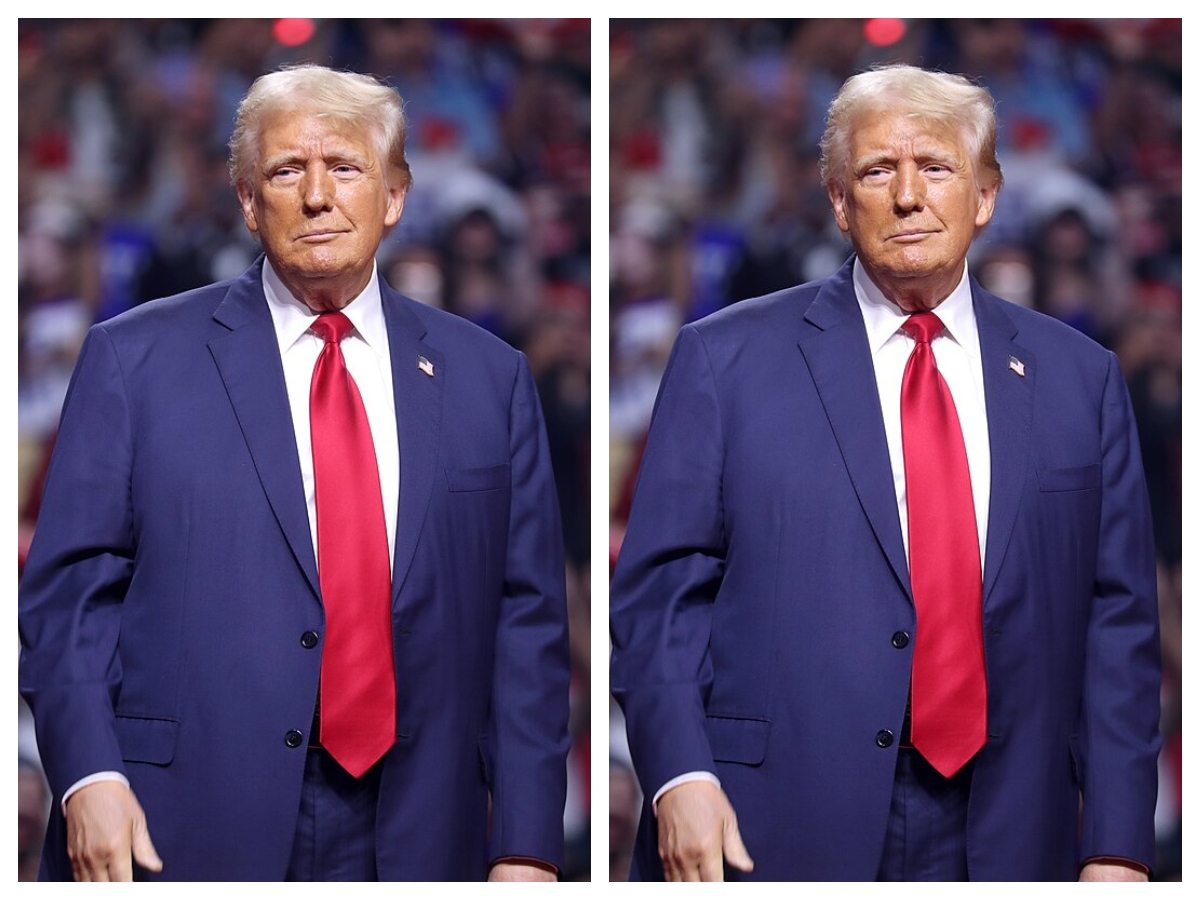
President Donald Trump opened up about America’s next steps in Venezuela on Saturday. He declared that the United States would temporarily oversee the oil-rich nation and sell its petroleum abroad following a covert military operation that removed Nicolás Maduro from power and forced him out of the country.
The capture of the Venezuelan leader marked the culmination of months of secret planning and heightening pressure by the Trump administration, resulting in the most forceful U.S.-led effort to topple a foreign government since the 2003 invasion of Iraq. The overnight operation, carried out without congressional approval, immediately ignited legal, diplomatic, and political backlash at home and abroad.
Within hours of Maduro’s capture, legal scholars questioned the authority underpinning the mission. In Caracas, Vice President Delcy Rodríguez demanded that the United States release Maduro, insisting he remained Venezuela’s legitimate president. Shortly afterward, Venezuela’s high court ordered Rodríguez to assume the role of interim president, despite her public refusal earlier in the day.
RELATED STORIES

READ ALSO: Trump claims victory in Venezuela after Maduro’s capture
Speaking to reporters, Trump said the leadership vacuum presented an opportunity for the U.S. to intervene directly, including rebuilding Venezuela’s oil infrastructure and exporting crude to foreign markets.
Maduro and his wife, Cilia Flores, were seized overnight at their residence on a military base and transported aboard a U.S. warship. The couple now face prosecution tied to a Justice Department indictment accusing them of participating in a narco-terrorism conspiracy.
A plane carrying Maduro touched down around 4:30 p.m. Saturday at an airport in New York City’s northern suburbs. Federal agents escorted him down the aircraft stairway and across the tarmac, with several officers recording the moment on their phones. He was then flown by helicopter to Manhattan, where a convoy including an armored vehicle transported him to a nearby Drug Enforcement Administration office.
Footage posted by a White House social media account showed Maduro smiling as two DEA agents held his arms and guided him through the building.
Authorities expected him to remain in custody while awaiting trial at a federal detention facility in Brooklyn. Officials did not immediately confirm his presence at the jail, though the same motorcade that delivered him from the heliport was later seen arriving at the facility Saturday evening.
The Trump administration described the operation as part of its broader effort to curb the flow of illicit drugs into the United States. Trump also pointed to what he described as additional benefits, including direct influence over Venezuela’s leadership and oil production. While he claimed the U.S. was already helping to run the country, there were no visible signs of American control on the ground.
Venezuelan state television continued to broadcast pro-Maduro messaging, showing supporters rallying in Caracas against the U.S. intervention.
“We’re going to run the country until such time as we can do a safe, proper and judicious transition,” Trump said during a news conference at Mar-a-Lago, adding that the “extremely successful operation should serve as warning to anyone who would threaten American sovereignty or endanger American lives.”
Maduro and other senior Venezuelan officials were first indicted in 2020 on narco-terrorism conspiracy charges. On Saturday, the Justice Department unveiled a new indictment against Maduro and Flores, describing their government as a “corrupt, illegitimate government” sustained by a cocaine trafficking network flooding the United States. Washington does not recognize Maduro as Venezuela’s lawful leader.
Trump later shared a photo online showing Maduro aboard the USS Iwo Jima, dressed in a sweatsuit and wearing a blindfold.
The operation followed weeks of intensified military pressure, including a buildup of U.S. forces off South America’s coast and attacks on vessels suspected of carrying narcotics through the eastern Pacific and Caribbean. Last week, the CIA carried out a drone strike on a docking area believed to be linked to Venezuelan drug cartels, the first confirmed U.S. strike on Venezuelan soil since operations began in September.
The extraction unfolded during the night and coincided with a series of air and missile strikes. Trump said the United States shut off “almost all of the lights” in Caracas as forces moved in. The timing mirrored the anniversary of the 1990 capture of Panamanian leader Manuel Antonio Noriega.
READ ALSO: Trump scraps $2.9 million chip transaction, flags China-linked security threat
Gen. Dan Caine, chairman of the Joint Chiefs of Staff, said U.S. forces had rehearsed for months, studying Maduro’s movements, habits, and surroundings in meticulous detail.
“We think, we develop, we train, we rehearse, we debrief, we rehearse again and again,” Caine said. “Not to get it right, but to ensure we cannot get it wrong.”
Multiple explosions echoed through Caracas early Saturday as low-flying aircraft passed overhead. Venezuelan officials accused the United States of striking both civilian and military targets, labeling the attack an “imperialist attack” and calling on citizens to protest.
The assault lasted less than 30 minutes. At least seven explosions sent residents rushing into the streets or posting videos online. Rodríguez said Venezuelan civilians and members of the military were killed, though she did not provide a number. Trump said some U.S. personnel were injured, but none died.
Verified video footage showed tracer fire and smoke filling the night sky in Caracas and an unidentified coastal city. In the capital, smoke rose from a military base hangar, and another installation lost power.
Although Venezuelan law places Rodríguez next in line for the presidency, she initially rejected the role during a televised address before the high court intervened.
“There is only one president in Venezuela, and his name is Nicolás Maduro Moros,” Rodriguez said.
Venezuela’s ruling party has governed since 1999, when Hugo Chávez came to power on promises of lifting the poor and launching a socialist revolution. Maduro succeeded Chávez after his death in 2013. His 2018 reelection was widely dismissed as illegitimate after opposition parties were barred. In the 2024 election, authorities declared Maduro the winner, but the opposition later produced evidence showing he lost by more than a two-to-one margin.
Reactions to his capture reflected Venezuela’s deep divisions. Supporters rallied in Caracas demanding his return, while others celebrated his removal.
At one demonstration, Caracas Mayor Carmen Meléndez joined chants calling for Maduro’s release.
“Maduro, hold on, the people are rising up!” the crowd shouted. “We are here, Nicolás Maduro. If you can hear us, we are here!”
Elsewhere in the city, armed civilians and militia members patrolled neighborhoods aligned with the ruling party. In other districts, streets remained largely empty, with some areas still without electricity.
“How do I feel? Scared, like everyone,” said Caracas resident Noris Prada in an AP report. “Venezuelans woke up scared, many families couldn’t sleep.”
In Doral, Florida, home to the largest Venezuelan population in the United States, crowds waved flags, shared food, and celebrated, chanting “Liberty! Liberty! Liberty!”
International and domestic scrutiny intensified as legal experts questioned the mission’s legality. At the request of Colombia, the U.N. Security Council scheduled an emergency meeting for Monday, according to a diplomat familiar with the plans.
Members of Congress from both parties also voiced concern. Lawmakers noted that no authorization for the use of military force covers U.S. operations against Venezuelan targets.
Rep. Jim Himes of Connecticut, the ranking Democrat on the House Intelligence Committee, said he had seen no justification for the strikes and demanded an immediate briefing on the administration’s strategy and legal rationale.