

The Underground Railroad was a large movement in North America consisting of several individuals who worked together to aid enslaved men and women in their escape from their captors. The freedom network began in the 1830s; there were homes, schoolhouses, churches and businesses which became known as “stations” along the route toward the north.
These homes provided temporary shelter for fugitive slaves before they continued the rest of their journey.
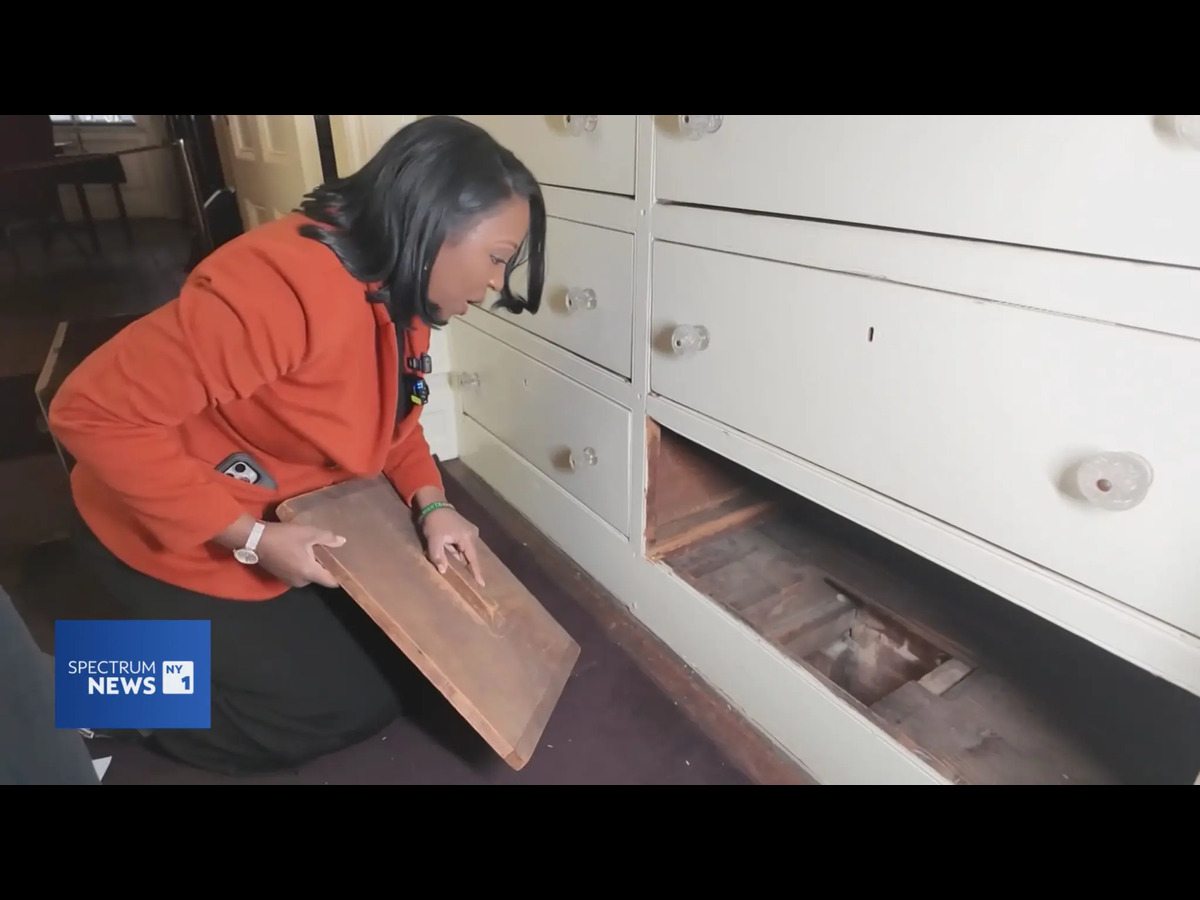
Now, archaeologists have found hidden inside a historic 19th-century house in Manhattan a secret sanctuary. The Merchant’s House, Manhattan’s first landmark building, was preserved as a museum to New York’s 19th-century history. Archaeologists discovered its link to the Underground Railroad when they looked beneath the drawers of a built-in dresser within the walls of a hallway that leads to bedrooms on the second floor of the building.

When they removed the heavy bottom drawer, they saw a rectangular opening cut into the floorboards. That opening led to an enclosed space about 2-by-2-feet. It further showed a ladder that leads down to the ground floor.
Architects and preservationists who investigated the building said to NY1 that they believe it was used as a “safe house” for people fleeing slavery in the South.
Michael Hiller, a preservation attorney and professor at Pratt Institute, said, “This is a generational find. This is the most significant find in historic preservation in my career, and it’s very important that we preserve this.”
Joseph Brewster, a tradesman, built the Merchant’s House in 1832 but sold it three years later to the Tredwell family, who lived there for about 100 years before it was turned into a museum after its sale at auction.
Historians believe that Brewster, a white man, was an abolitionist who built the hidden safe to help enslaved men and women escape. It was designed in such a way that it would be almost impossible for slave catchers or city marshals during that period to capture fugitive slaves. The Underground Railroad network, by the end of 1850, had helped over 10,000 slaves escape to freedom.
“Many New Yorkers forget that we were part of the abolitionist movement, but this is physical evidence of what happened in the South [during] the Civil War, and what’s happening today,” Manhattan Councilman Christopher Marte said.
“It’s a critical piece of the overall struggle for freedom and justice,” Manhattan Councilman Harvey Epstein said.
It is not clear if the Treadwell family knew about the safe or even used it. “Being an abolitionist was incredibly rare among white New Yorkers, especially wealthy white New Yorkers,” architectural historian Patrick Ciccone said. “[Brewster] was the builder of the house, and he was able to make these choices and design it.”
In 1965, Merchant’s House became the first building designated in the borough of Manhattan under the Landmarks Preservation law. The following year, officials recognized the building as a National Historic Landmark. Then, in 1977, it was listed on the National Register of Historic Places.