

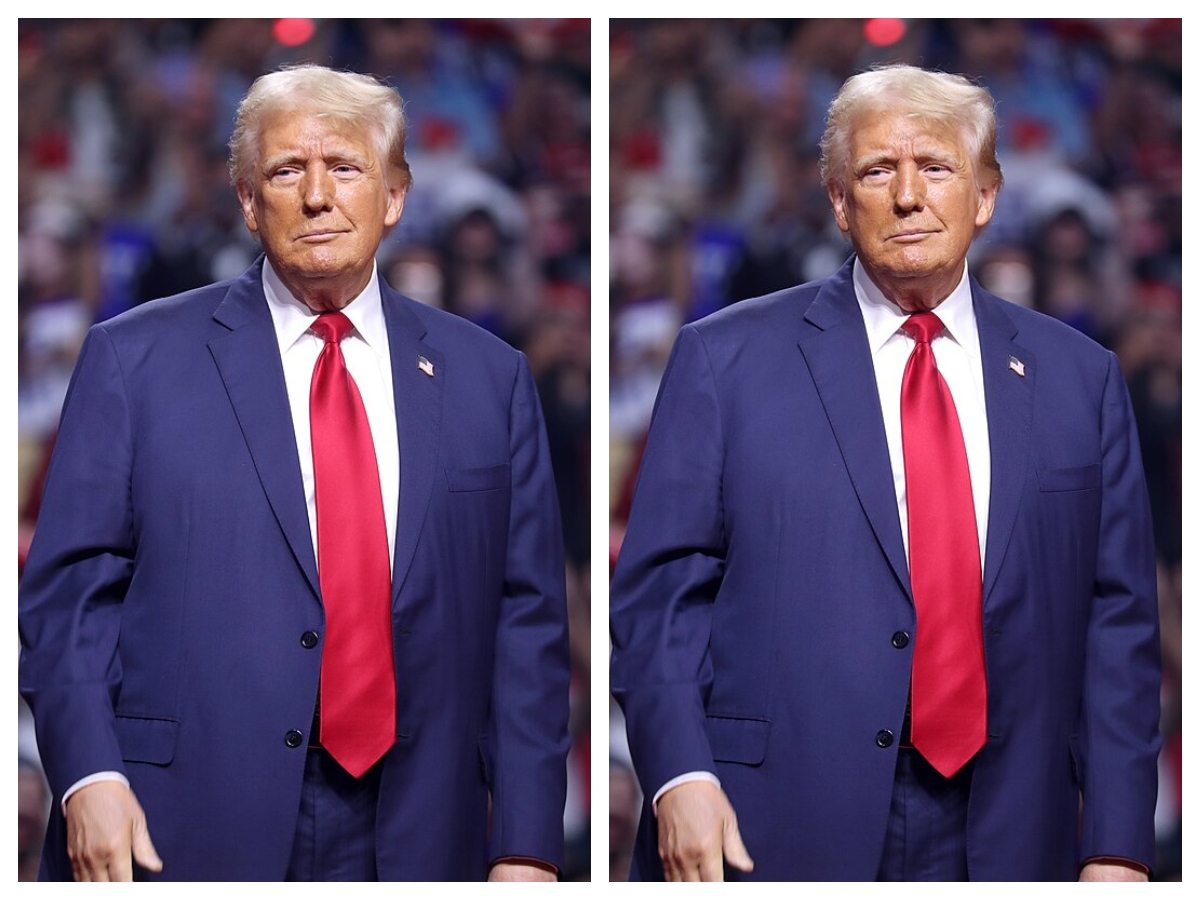
President Donald Trump on Saturday heightened his confrontation with Canada, warning he would slap a 100% tariff on Canadian imports if Canada follows through on a trade arrangement with China. The threat intensifies an already tense standoff with Prime Minister Mark Carney, who has increasingly positioned himself as a leading Western voice pushing back against Trump’s vision of global order.
In a social media post, Trump accused Carney of trying to turn Canada into a gateway for Chinese goods entering the U.S. market. “If he thinks he is going to make Canada a ‘Drop Off Port’ for China to send goods and products into the United States, he is sorely mistaken,” Trump wrote.
The president did not specify when the tariff would take effect, though he said it would be imposed “immediately” if Canada proceeded with the China deal. That agreement had been reached a week earlier and initially drew praise from Trump himself. The White House offered no further clarification.

READ ALSO: Denmark and Greenland draw red line on sovereignty after Trump drops tariff threats
Over the past year, Trump has pursued aggressive trade tactics against multiple partners. During that same period, Canada moved ahead with negotiations aimed at reducing tariffs on Chinese electric vehicles in exchange for lower Chinese import taxes on Canadian agricultural products. When that deal was announced, Trump said it was what Carney “should be doing and it’s a good thing for him to sign a trade deal.”
Dominic LeBlanc, the Canadian minister overseeing trade relations with the United States, said Canada and China had settled “several important trade issues” but stressed that the talks did not amount to a free trade agreement.
Trump’s latest warning occurred following a broader war of words with Carney, one that has turned into questions of sovereignty and alliance politics. Tensions have been heightened by Trump’s renewed push to acquire Greenland, a move that has unsettled NATO partners. Speaking earlier this week in Davos, Switzerland, Trump claimed that “Canada lives because of the United States.” Carney responded by arguing that his country could serve as proof the world need not submit to autocratic impulses. “Canada doesn’t live because of the United States. Canada thrives because we are Canadian,” he said.
Not long after, Trump rescinded an invitation for Carney to join a so-called “Board of Peace” that the president says he is forming to address global conflicts.
The Greenland proposal followed months of Trump publicly needling Canada over its independence and floating the idea that it should be absorbed into the United States as a 51st state. This week, he shared a doctored image online depicting a U.S. map that included Canada, Greenland, Venezuela, and Cuba as American territory.
Trump continued that tone in his Saturday message by referring to the Canadian leader as “Governor Carney.” He had previously used the same nickname for Carney’s predecessor, Justin Trudeau. Applying it to Carney emphasized how far their relationship has deteriorated.
READ ALSO: Trump drops Greenland tariffs after threats shake NATO and Europe
Daniel Béland, a political science professor at McGill University in Montreal, said the shift has been striking. “There was a sense Trump showed more respect for Carney than for Trudeau. Now, after Carney’s visit to China and, even more, his widely celebrated Davos speech, which clearly outshined and upset Trump, the gloves are off,” Béland said.
Carney has increasingly emerged as a rallying figure for countries seeking closer coordination to counter U.S. pressure under Trump. At Davos, speaking ahead of the U.S. president, he argued for collective action among mid-sized nations. “Middle powers must act together because if you are not at the table, you are on the menu,” he said, warning of coercion by major powers without naming Trump directly. His remarks drew significant attention and praise, eclipsing Trump’s presence at the World Economic Forum.
Carney went further, suggesting there had been a “rupture” between the United States under Trump and its traditional Western allies that could never be repaired.
In another Truth Social post on Saturday, Trump warned that “China will eat Canada alive, completely devour it, including the destruction of their businesses, social fabric, and general way of life.” He later added: “The last thing the World needs is to have China take over Canada. It’s NOT going to happen, or even come close to happening!”
Despite the rhetoric, Carney has yet to secure an agreement with Trump to roll back tariffs affecting major parts of the Canadian economy. Canada has so far been shielded from the most severe impacts by the Canada-U.S.-Mexico Agreement, which is due for review later this year.
Relations were further strained last fall when Canada aired a U.S. television advertisement criticizing American tariffs using the words of former President Ronald Reagan. Trump responded by halting trade talks and threatening an additional 10% tariff on Canadian imports, a step he ultimately did not take.
Canada’s approach to China has also evolved. Canada initially aligned closely with Washington, imposing a 100% tariff on Chinese electric vehicles and 25% tariffs on steel and aluminum. Beijing retaliated with 100% duties on Canadian canola oil and meal, as well as 25% tariffs on pork and seafood.
As Trump intensified pressure on allies, Canada’s foreign policy began to diverge from that of the United States, opening space for a thaw with China. Carney announced the latest tariff changes earlier this month during a visit to Beijing.
While acknowledging the depth and complexity of Canada’s ties with the U.S., Carney has said Canada remains at odds with China on issues such as human rights.
LeBlanc said Canada would seek to manage its trade relationships in a way that “benefits workers and businesses on both sides of the border.”
The economic stakes are significant. Canada is the leading export market for 36 U.S. states. Roughly 3.6 billion Canadian dollars, or about 2.7 billion U.S. dollars, in goods and services cross the border daily. Canada supplies about 60% of U.S. crude oil imports and 85% of its electricity imports, the AP reported.
READ ALSO: Federal judge orders Trump administration to keep child care aid flowing to five states
Canada is also the largest foreign source of steel, aluminum, and uranium for the United States, and it holds 34 critical minerals and metals that the Pentagon considers vital and is investing in for national security purposes.