

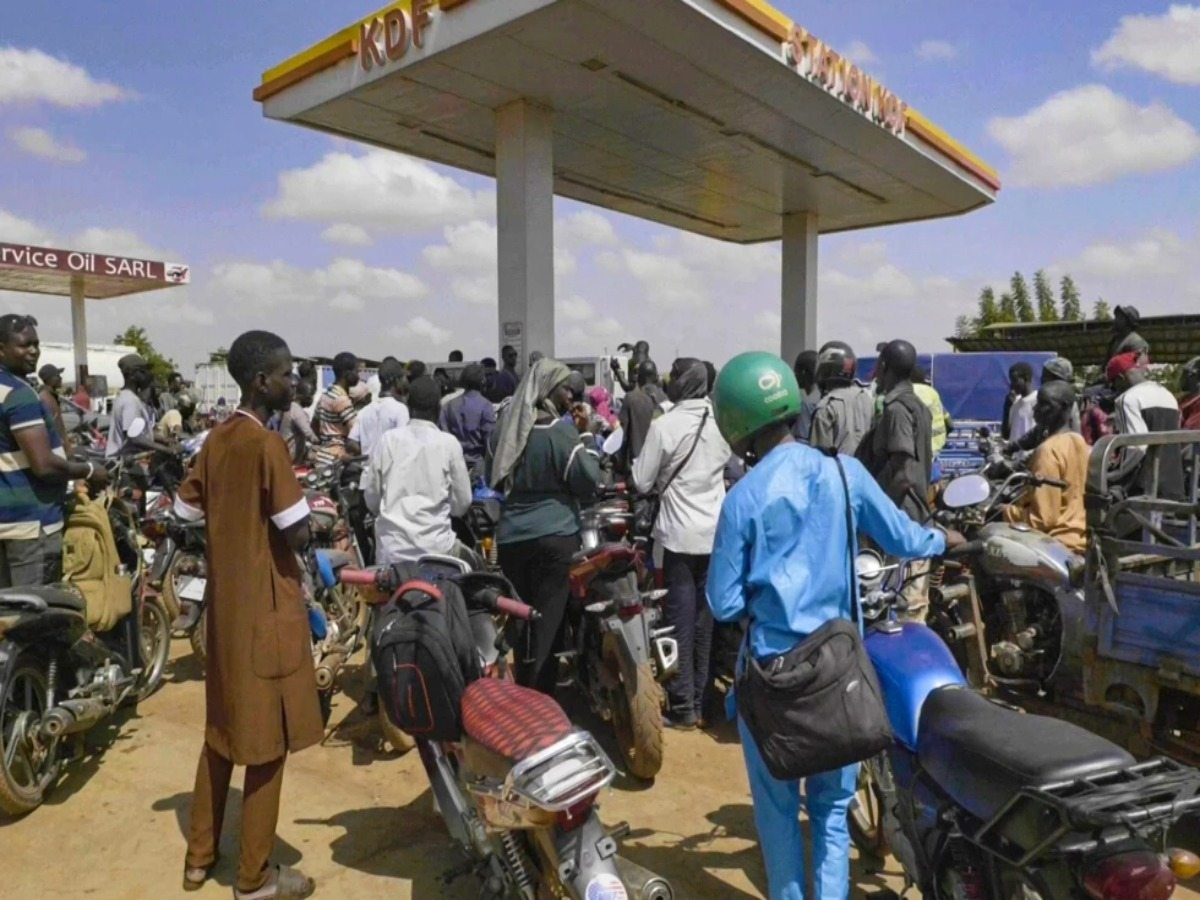
Mali is preparing to ration fuel after militant attacks in border regions have slashed deliveries, leaving long lines at gas stations and threatening daily life across the landlocked nation. The government tagged the new restrictions as a step to manage shortages, particularly ahead of Ramadan, but did not specify when the measures would begin.
Russian troops from the Africa Corps, Russia’s paramilitary force operating in West Africa, have recently started escorting fuel convoys to safeguard deliveries from attacks by al-Qaeda-linked groups. Since September, militants in Mali have increasingly targeted fuel trucks, burning over 100 vehicles and drastically reducing imports and distribution.
A Malian fuel importer told The Associated Press that the Africa Corps soldiers are already accompanying tanker trucks to shield them from militant assaults. He spoke on condition of anonymity due to the sensitive nature of Russia’s presence in Mali.
RELATED STORIES




READ ALSO: Mali, Burkina Faso hit back at U.S. with entry ban on Americans
“The insecurity on supply routes due to militant presence and activity will remain a challenge to the transportation of fuel in the coming weeks, and the stability of supplies will vary,” said Beverly Ochieng, a senior analyst with the consultancy Control Risks.
Since the May 2021 coup, Mali’s military government, like its neighbors in Burkina Faso and Niger, has shifted from relying on Western allies to seeking Russian assistance in its fight against jihadi groups affiliated with al-Qaida and the Islamic State.
The country’s fuel importers union reported that just over 2,000 tanker trucks have entered Mali so far this year, a sharp decline from the 6,000 per month that were arriving before the attacks. To address the crisis, officials said rationing would make fuel access more equitable, with vehicle plate registration and mandatory wait times. Cars will be allowed to refuel every 72 hours, while motorcycles can fill up every 48 hours.
Moussa Alassane Diallo, Mali’s trade and industry minister, told a union of petroleum importers that rationing would “give us complete control” over gas stations and let authorities “monitor the quantities of fuel sold.” Ibrahim Touré, head of the petroleum importers union, added, “We are committed to ending the fuel crisis as long as the military continues to escort our tanker trucks.”
Yet the restrictions have raised concerns among ordinary Malians, particularly taxi drivers, who rely on fuel for their livelihoods. “These measures may work for private cars, but for us taxi drivers, it’s going to be difficult because we don’t earn enough money to fill up our taxis every time we go,” said Oumar Coulibaly, a driver in Bamako. “We do a lot of trips, and we need fuel.”
READ ALSO: Militant fuel blockade forces Mali to close schools nationwide
Analysts say the move is also a political calculation, aimed at easing public frustration over the prolonged shortages.