
American history has often been written with a focus on the wrong heroes. Nowhere is that more apparent than in the history of race and slavery in America. We endlessly highlight Thomas Jefferson’s life, for example, but do not laud real heroes like John Brown. So it goes with the Second Underground Railroad.
The first Underground Railroad was run by such well-known heroines as Harriet Tubman, but we rarely hear about the Second Underground Railroad, created by the heroes who helped slaves escape by sea.
Years ago, I wrote a three-part article for AFROPUNK about slave revolts. One section was about slave revolts that took place on the high seas or before slaves left African harbors. The article — know your black history: part ii slave revolts by sea: relentless determination and the end of the myth of the Amistad — concentrated on telling the story of successful slave revolts at sea. This series also provides the context of how, at every level and every stage of the slave trade, enslaved people fought furiously against enslavement.

Before that, I had written an article investigating the contributions of black sailors to the development of the U.S. economy: Op-Ed: Black Sailors were essential to the development of the early U.S. It is only recently that I have been able to make the connection between black sailors and the Second Underground Railroad: the system of escaping slavery by sea. Many people know of the heroism of Robert Smalls, disguised as a Southern ship captain to commandeer a Confederate warship through enemy lines to free his family and other slaves from South Carolina. It is one of the most exciting and moving stories in American history. But many do not know the large number of slaves who escaped via Southern ports, travelling by sea to Northern ports and freedom.
As with the Underground Railroad, the Second Underground Railroad comprised secret communities and networks of anti-slavery activists and anti-slavery organizations. Sailors, both black and white, and ships were coordinated to free large numbers of enslaved people. Only recently have some of the secret records kept by abolitionists and anti-slavery organizations come to light. The stories are fascinating and heroic; the numbers are substantial.
First, let’s paint a different picture of slavery in the South.
The prevalence of escaping slavery by sea was acknowledged by laws passed against it as early as 1705 ( in the Virginia legislature) and 1710, in South Carolina. On a federal level, laws written into the Constitution show that the 40% of the signers who were slaveholders were obsessively terrified of enslaved people escaping.
The 1787 U.S. Constitution Article IV section 2 states “Anyone held in Service or Labour” would be returned to their enslaver by law. In 1793, Congress strengthened the law empowering magistrates and federal officials in all states to arrest fugitives and return them to their enslavers. The law also imposed fines of $500 ($15,000 in 2024 dollars) on anyone helping fugitives.
Slaveholders were equally afraid of free people of color, and especially black sailors helping or encouraging slaves to escape and revolt. Between 1822 and 1848, every Southern state implemented a Negro Seaman’s Act, basically “quarantining or arresting” free negro seamen during their ship’s time in port. One-third of all legislation in the U.S. after 1830 concerned slaves and free people of color. The most well-known was the Fugitive Slave Act of 1850, which required citizens to assist in returning enslaved runaways and increased penalties on those helping runaways.
All this legislation wasn’t created in a vacuum. Legislation was created because the successful escape of slaves was such a constant problem. It became a critical problem when the Southern cotton market’s growth became the economic engine of the Industrial Revolution in the U.S. and Europe, and increased international trade. Ninety percent of this trade was the transport of Southern goods by rivers and sea to Northern ports, the jumping-off point for shipping Southern products to the world.
None of the legislation worked to stem the tide of enslaved people escaping by sea.
The extensive number of enslaved people who escaped by sea is hard to calculate precisely. Some estimates have been suggested by author Marcus Rediker in his fabulous book Freedom Ship: The Uncharted History of Escaping Slavery by Sea. The Library of Congress estimates that enslavers placed 200,000 ads in newspapers for runaways between 1730 and 1865. This is just a fraction of the actual runaways during this period.
There were two types of runaways: petit marronage and gran marronage. Petit marronage was enslaved people who intended to leave for a short time to visit relatives, or to escape punishment. They could have been hunted down or returned on their own. Gran marronage was enslaved people who intended to escape slavery for good. For both of these types of escapes, brutal punishment was applied on their return. No matter what the punishment, tens of thousands of slaves escaped each year, with the large majority escaping after 1830.
Estimates range from 50,000 to 100,000, in numbering those who escaped by sea. Researcher Timothy D. Walker found that of 103 slave narratives about escaping, “more than 70 percent recount the use of ocean-going vessels as a means of fleeing slavery.” Because escaping slavery was so secretive, it would be common sense to assume that the reported numbers provide a very low estimate of the actual number of people who escaped.
Runaways were assisted by a complicated and secret communication network of sailors, dockworkers, maritime associations and societies, communities, and anti-slavery organizations. Some of these organizations included: the Vigilance Committees of Philadelphia and Boston, Stewards and Cooks Marine Benevolent Society, New York Committee of Vigilance, and the American Anti-Slavery Society, just to name a few.
But what helped to increase escape by sea was capitalism itself. As trade of Southern cotton increased beginning in the early 1800s, packet ships that linked Southern ports to Northern ports began to have regular schedules. Regularly scheduled shipping from Southern ports to Northern ports actually made planning and escaping by sea more predictable for enslaved people.
Once runaways reached Northern ports, they still faced the danger of capture by slave catchers who prowled port cities like New York and Philadelphia. This is where coordination with vigilance and anti-slavery groups and churches helped to assist and hide escaped slaves. These groups stepped in after escapees arrived in Northern ports, hiding them, providing protection from authorities and slave catchers or helping them find ocean-going to the UK and Europe, where slavery had been abolished. Many runaways were helped by maritime societies to join the terrestrial Underground Railroad in Northern port cities to flee to freedom in Canada.
Philadelphia was one place that drew runaways from the South. Its Quaker population established the country’s first anti-slavery organization in 1775: The Society for the Relief of Free Negroes Unlawfully Held in Bondage. In 1776, they outlawed slavery within their congregations and then advocated for the Gradual Abolition Act of 1780. Famous Philadelphian James Forten, who served as a sailor in the Revolutionary War, helped to establish the American Anti-Slavery Society in 1833, and was an important funder of William Lloyd Garrison’s anti-slavery newspaper The Liberator.
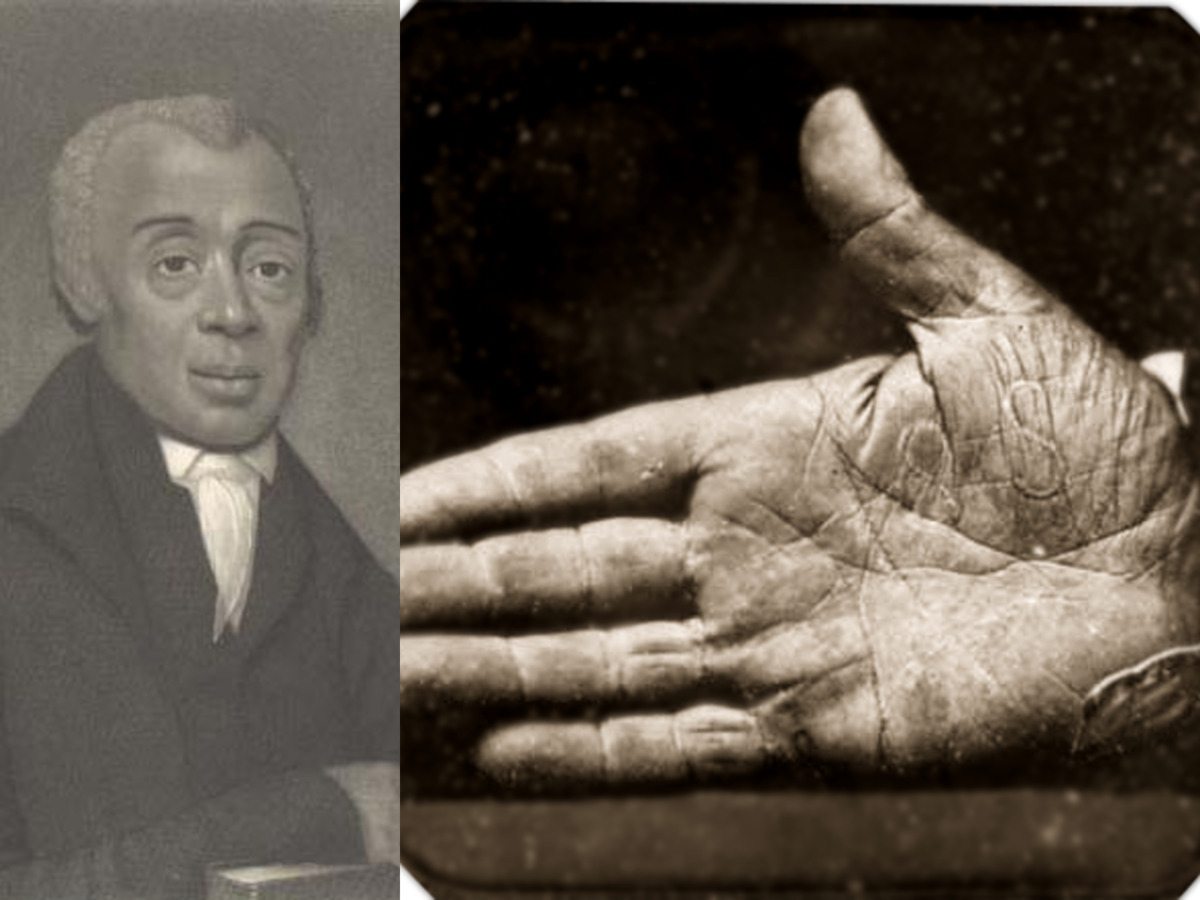
Two churches were important in making Philadelphia a mecca for people escaping slavery in the South. There are numerous stories of their congregation members providing aid and shelter to runaways who arrived in Philadelphia seeking freedom. The Mother Bethel African Methodist Church was established by Richard Allen in 1794. Allen had purchased his own freedom in 1780. The African Episcopal Church of St. Thomas was founded in 1792 by Absalom Jones. He was the first African American to be ordained as a priest in the Episcopal Church of the United States. He is listed on the Episcopal calendar of saints.
Johnathan Walker became famous as a maritime abolitionist when the government of Florida branded his hand with “S.S.” for “slave stealer” after he was captured at sea trying to sail seven enslaved men to freedom. A Quaker from a poor family, he went to sea at 18 and traveled the world, a coworker to multiethnic sailors. The heroic Walker, when confronted both in court and by a lynch mob in Florida, never wavered. Walker proudly testified not only that he had tried to free slaves but that he would continue to do so as long as slavery continued. The terror he described as his punishment during his imprisonment, and that he continued to say he would do it all again, puts him, in my opinion, at the pinnacle of American heroism. He lectured later in life after slavery was abolished, and acknowledged that the ordeals he survived were commonly experienced by thousands of enslaved people, making their survival all the more incredible and heroic.
Can this compare to some of the other Americans we call heroes?
Maybe, as critical consumers of history, and especially during Black History Month, instead of those we choose to call “American Heroes”, we need to consider a whole new group of people. These sailors, free people of color, churches, anti-slavery organizations and white people of goodwill — who risked fines, prison and their physical safety to help enslaved runaways escape and help undermine the genocidal institution of slavery — definitely should be put in that category.