

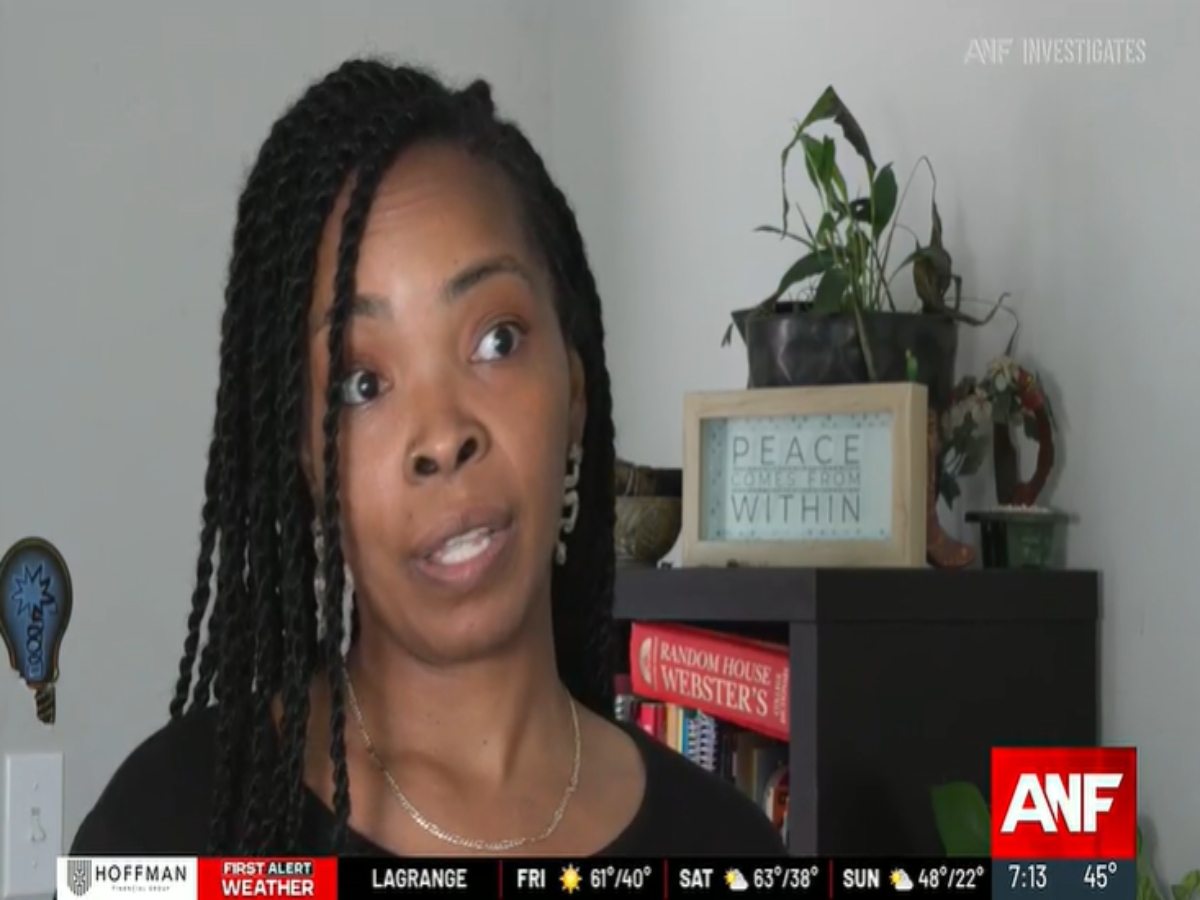
For over a year, Tiarra Logan, a tenant in metro Atlanta, struggled with her landlord over a sewage backup. She recently discovered that, during that entire time, her apartment’s heater had been blowing fecal matter into her living space.
She is now suing her landlord, Logan’s landlord, STAR Borrower SFR6 LP, a company created for financing single-family rentals, and the property manager, Invitation Homes. According to the Federal Trade Commission (FTC), Invitation Homes is the nation’s largest landlord of single-family homes.
“We shouldn’t be living like this,” Logan told Atlanta News First. The single mother and her four children are now living in a hotel for the holidays.
RELATED STORIES




Three years ago, Logan moved from California to Snellville seeking safety after domestic violence, stating, “I don’t have family here… I left California to come here for safety. It took me wanting to see something different for them, so that’s why I’m here.”
Her problems began in June 2024 when a persistent sewage smell emanated from the drains in her rental home.
“I complained, what’s going on? What’s that smell? They told me, ‘Just pour bleach down the drain. Everything’s going to be fine,’” Logan recounted. “I called, I sent emails, and then they finally sent someone out,” the upset mother added.
A sewage work order in September 2024 was canceled, followed by an October finding of a septic tank backup outside. Despite Invitation Homes stating the septic issue was fixed, the sewage odor and dark spots persisted near the bathroom pipes.
Logan claims that despite monthly reports and assigned contractors, the sewage leaks were never actually restored.
Logan described the extent of the damage, saying, “All the insulation had been soiled and then it dried.” She noted that even after drying, the material remained inside, leading to a persistent and foul odor. Her statement was supported by photographs that contractors had uploaded to her online portal.
Seeking to force repairs, Logan hired an attorney in March 2025. During this time, she also created a record of her children’s health issues.
“The reason I kept paying my rent was because I didn’t want my address exposed,” Logan said. “With an eviction being filed, your name can be searched and the address pops up.”
Logan also experienced multiple instances of wrong billing from Invitation Homes while dealing with the sewage problem. The unfair charges included maintenance fees, mandatory insurance she already had, and a double charge for one month’s rent.
Company employees instructed her to pay the wrong fees first and then dispute them, which led to her being charged late fees. Although some charges were eventually withdrawn, Logan received an eviction notice in July after she refused to pay the remaining contested fees.
In September, a Gwinnett County judge ruled in Logan’s favor, ordering the landlord to pay her $6,000 and complete the required property repairs.
“They never paid, and it’s been two and a half months since that court hearing,” Logan previously told Atlanta News First Investigates in November. “What they’re saying is, ‘Well, we’re just going to bill it to your account and basically give you credit for it.’”
Although Invitation Homes applied the $6,000 to her October 2025 rent, Logan needed the funds for her move because her exposed address had raised safety concerns.
“I don’t have the money to just come up with first and last,” she said. Logan has twice returned to the courthouse to file documents to enforce the judge’s order, but to no avail.
Although Logan’s renter’s insurance typically excludes septic issues, the insurer allegedly agreed to help.
In November 2025, an Invitation Homes contractor found sewage contamination in tenant Logan’s HVAC unit due to a septic tank problem.
“We were blowing fecal vapors throughout the home the entire time,” Logan said.
A contractor’s note, filed in her rental portal, documented a “sewage back up due to septic tank clogging outside of home.” The note explicitly stated the unit “smells like feces” and confirmed that “category 3 water” from an overflowing toilet had “dripped directly into the H-VAC unit.”
Logan moved her children to a hotel just before Thanksgiving, saying, “It’s just frustrating because I can’t give them a normal life.”
READ ALSO: Mom upset after she almost lost custody of her 5-year-old misdiagnosed with multiple STDs
She took this step because the water they were exposed to is highly contaminated “Category 3” water, according to flood safety experts. This type of water contains harmful pathogens, toxins, and other dangerous substances.
“We take the concerns raised by this resident seriously, have complied with court orders to date, and are actively working to resolve any outstanding issues,” an Invitation Homes spokesperson said.
Following the inquiry by Atlanta News First Investigates, Invitation Homes authorized about $500 in repairs, including removing the top layer of bathroom flooring and some garage insulation.
However, a contractor suggested replacing the subfloor and HVAC, as noted in his initial report. Separately, in September 2024, amidst a resident’s sewage problem, Invitation Homes settled with the FTC for $48 million.
The FTC accused the company of illegal practices, such as “frequently non-existent” maintenance and imposing “undisclosed junk fees,” leaving residents in “unacceptable—and sometimes dangerous—conditions,” like flooding and sewage backup.
In response to the settlement, Invitation Homes said, “We are proud of the work we do and stand by our practices, investing in our people, processes, and technology.”
In Georgia, landlords must provide habitable homes, although the legal definition is vague. Therefore, tenants must formally document all repair requests. The Safe at Home Act prevents landlords from retaliating against tenants for making these requests.
If a landlord fails to make necessary repairs, a tenant can sue in magistrate court, file a Fi Fa for a property lien if a judgment goes unpaid, or claim constructive eviction to end the lease. Mableton, Georgia, has adopted a local ordinance to clarify the definition of “habitable” and to improve enforcement.
In 2025, U.S. Sen. Jon Ossoff, D-Georgia, began an ongoing investigation into large, out-of-state companies buying Georgia homes. In May, he sent letters to five companies, including Invitation Homes, demanding inspections, maintenance, and repair data.