

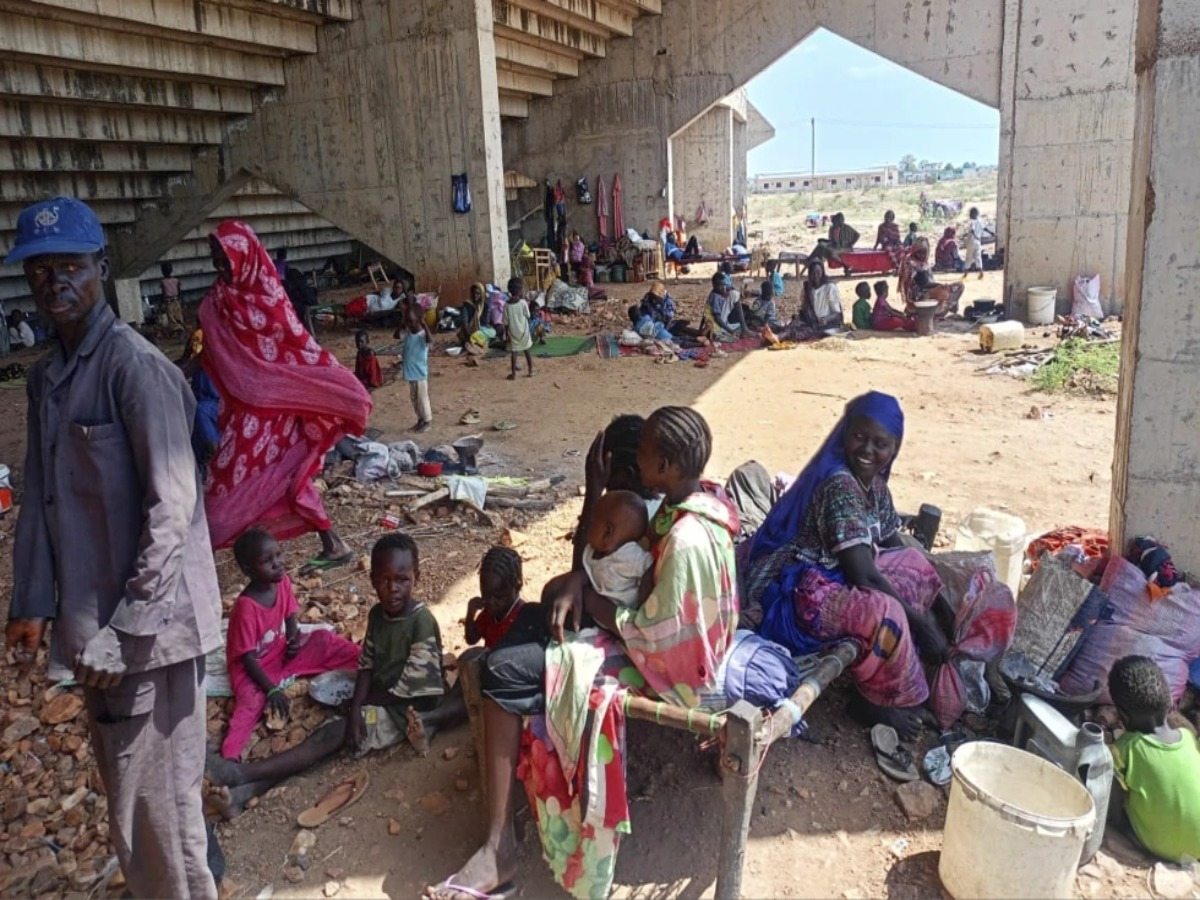
An unrelenting war has kept Sudan at the very top of the world’s humanitarian danger list, with an international aid group warning that conditions are deteriorating as global support dries up.
In its annual Emergency Watchlist, released on Tuesday, the International Rescue Committee named Sudan as the country facing the most severe humanitarian crisis for the third consecutive year. The list flags 20 countries expected to face worsening emergencies in 2026.
The IRC said the outlook is being made bleaker by a steep fall in humanitarian financing, which it estimates dropped by half over the past year. The organization warned that the current period is on pace to become the deadliest ever for aid workers, even as needs continue to rise.




READ ALSO: Sudan militia leader given 20-year ICC sentence over Darfur atrocities
After Sudan, the occupied Palestinian territories and South Sudan ranked second and third on the watchlist, reflecting extreme strain on civilians. Ethiopia, Haiti, the Democratic Republic of Congo, Lebanon, and Ukraine also appeared, alongside Syria and Yemen, where prolonged civil wars have eroded living conditions for years.
Although the 20 countries together make up about 12 percent of the global population, they account for 89 percent of people in need of assistance, the IRC said. That includes 117 million displaced people. The group projects that by 2029, more than half of the world’s extremely poor will live in these countries, describing the trend as a “New World Disorder” supplanting “the post-WWII international system once grounded in rules and rights.”
According to the IRC, many of the crises are fueled by contests for power and profit. In Sudan, it said, warring factions and their foreign supporters are profiting from the gold trade, with severe consequences for civilians caught in the conflict.
“This year’s Watchlist is a testament to misery but also a warning,” Miliband said. “The New World Disorder is here, and winds are picking up everywhere. Disorder begets disorder.”
The organization urged concrete global action, including limiting the use of the U.N. Security Council veto power in situations involving mass atrocities.
Sudan’s descent began in April 2023, when tensions between the national military and the paramilitary Rapid Support Forces erupted into full-scale fighting. The conflict has been marked by mass killings, sexual violence, and ethnically driven attacks that the United Nations and rights groups say amount to war crimes and crimes against humanity.
READ ALSO: Amnesty uncovers RSF war crimes in devastating strike on Sudan’s Zamzam camp
U.N. figures put the death toll at more than 40,000, though aid organizations believe the real number is far higher. The fighting has displaced over 14 million people, triggered disease outbreaks, and pushed parts of the country toward famine, creating what aid groups describe as the largest humanitarian crisis in the world.
“The scale of the crisis in Sudan … is a signature of this disorder,” said David Miliband, President and CEO of the IRC. He warned that without urgent international action, 2026 could become “the most dangerous year yet.”
Both the military and the RSF have been accused of violating international law during the war, with the bulk of the atrocities attributed to the RSF. The Biden administration has said the group committed genocide in the Darfur region.
The latest wave of violence was reported in late October, after RSF forces seized el-Fasher, the military’s last major stronghold in Darfur. Witnesses told The Associated Press that fighters moved from house to house, killing civilians and carrying out sexual assaults.
U.N. High Commissioner for Human Rights Volker Türk said last week that war crimes and “potentially” crimes against humanity were committed in the city.
Satellite imagery reviewed by the Yale School of Public Health’s Humanitarian Research Lab appears to show “widespread and systematic mass killing” following the RSF takeover, including attacks on civilians trying to flee and those sheltering in the Daraja Oula neighborhood, described as the last major civilian refuge.
In a report released Tuesday, the lab said the RSF later carried out a “systematic multi-week campaign” aimed at destroying evidence of atrocities in el-Fasher.
READ ALSO: US-led mediation breakthrough as Sudan’s RSF agrees to truce
The RSF did not immediately respond to a request for comment, AP indicated in a report.