
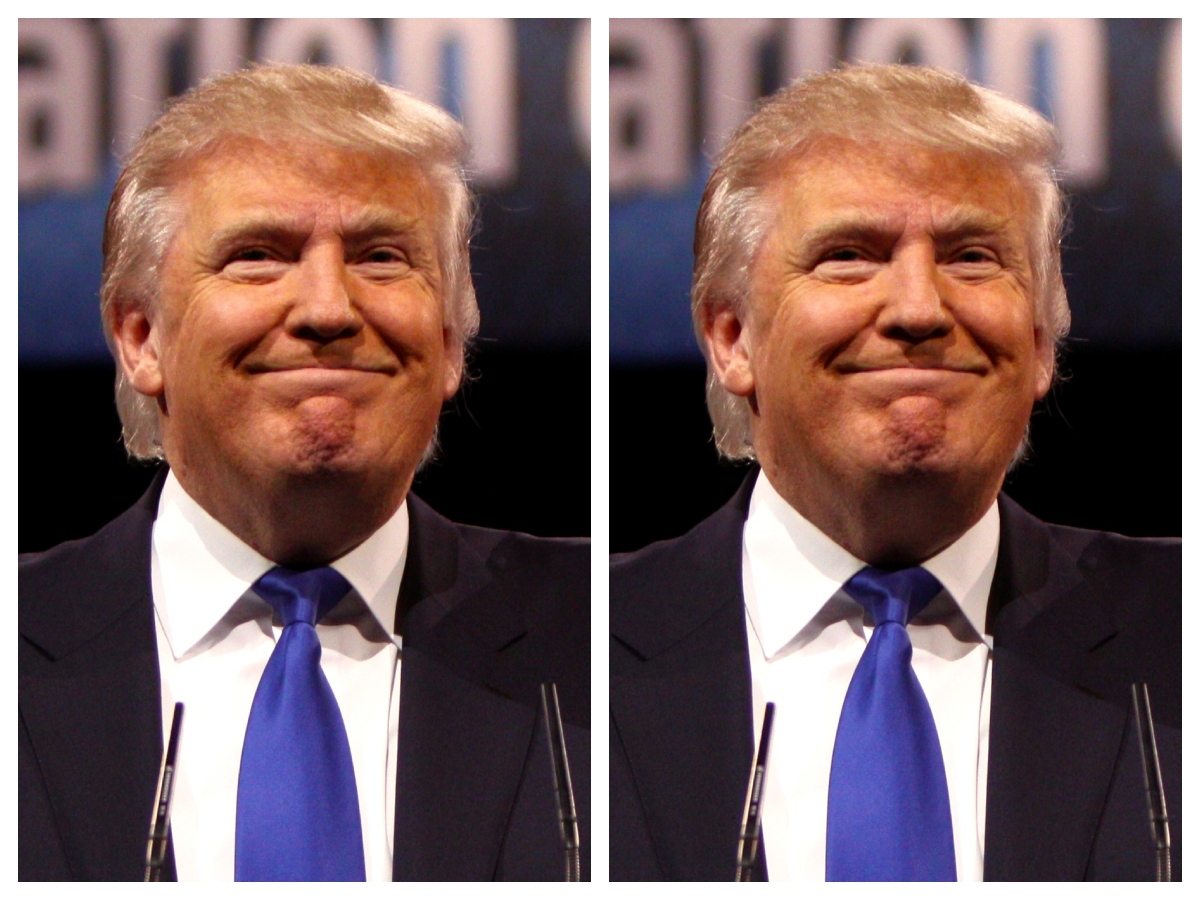
The dramatic seizure of Venezuela’s Nicolás Maduro has been embraced by President Donald Trump and his allies as a defining victory, one that emphasizes the president’s readiness to deploy U.S. forces on high-risk missions when he believes the strategic payoff is worth it.
The operation removed a leader long denounced by the Trump administration as an “illegitimate” ruler and a “narco-terrorist,” blamed for fueling drug trafficking networks that have pushed illegal narcotics into the United States and Europe. Trump believes the capture marked a bold assertion of American power in the Western Hemisphere.
“It was a brilliant operation, actually,” Trump told The New York Times after U.S. forces exited Venezuelan airspace. Speaking later on “Fox & Friends,” he acknowledged that some American troops were injured but said no fatalities were reported.
RELATED STORIES


READ ALSO: Trump scraps $2.9 million chip transaction, flags China-linked security threat
Yet even as the administration celebrated, the fallout raised a host of unresolved questions. Venezuela now faces a power vacuum after years of economic collapse marked by hyperinflation, shortages of food and medicine, and a mass exodus of skilled workers from a country with some of the world’s largest oil reserves.
The move is also being closely watched far beyond Latin America. U.S. opponents are weighing what it signals about Trump’s willingness to act unilaterally, as China’s Xi Jinping continues to press claims over Taiwan and Russia’s Vladimir Putin maintains ambitions in Ukraine while testing NATO’s eastern defenses.
Maduro’s removal stands as another major foreign policy moment early in Trump’s second term. Despite repeated vows to avoid prolonged wars, the president has shown little hesitation in ordering forceful action. In June, he authorized strikes on key Iranian nuclear facilities, another high-stakes decision that reshaped regional dynamics.
Saturday’s operation intensified unease among global leaders already adjusting to what many see as a more confrontational Trump 2.0. The administration has largely abandoned the idea of seeking a broad international consensus before using force. On Friday, Trump warned Iran that if it “violently kills peaceful protesters” amid demonstrations tied to its collapsing currency, the United States “will come to their rescue.”
Retired Navy Rear Adm. Mark Montgomery said Venezuela presents a more complex challenge than Iran did.
“Unlike the (Iran) strikes where Trump did the action and then said ‘fights over,’ he will not have that luxury here in Venezuela,” said Montgomery, now an analyst at the Foundation for Defense of Democracies.
European governments had already been uneasy as the United States expanded its military footprint in the Caribbean in recent months and carried out dozens of deadly strikes against suspected drug traffickers. The administration argued that many of those networks functioned as extensions of the Maduro government.
While Maduro was widely criticized abroad, his capture still unsettled many U.S. partners. His 2018 and 2024 elections were broadly dismissed as fraudulent, but the use of force to remove him prompted concern about precedent and stability.
European Commission President António Costa said he had “great concern” about developments in Venezuela following the U.S. action. France’s Foreign Minister Jean-Noël Barrot went further, saying “the military operation that led to the capture of Maduro infringes the principle of the non-use of force that underpins international law.”
Domestic criticism followed quickly. Sen. Ruben Gallego of Arizona condemned the operation in a post on X, writing, “This war is illegal, it’s embarrassing that we went from the world cop to the world bully in less than one year.” He added, “There is no reason for us to be at war with Venezuela.”
Russia’s Foreign Ministry issued a sharp rebuke, calling the operation an act of armed aggression. In a statement posted on Telegram, it said, “Venezuela must be guaranteed the right to determine its own destiny without any destructive, let alone military, outside intervention.” China’s foreign ministry echoed that view, arguing the operation violated international law and Venezuelan sovereignty.
Inside the administration, the mission capped years of pressure led by Secretary of State Marco Rubio and other hardline critics of Maduro who had urged Trump to act. In South Florida, home to a large Venezuelan exile community that has shaped Rubio’s stance, news of the capture was celebrated as a turning point.
Rep. Carlos Gimenez, a Florida Republican, said he spoke with Rubio and thanked Trump for having “changed the course of history in our hemisphere. Our country & the world are safer for it,” comparing Maduro’s fall to the collapse of the Berlin Wall.
Maduro had previously explored a negotiated exit. Venezuelan officials floated a proposal last year under which he would step aside in three years, handing power to Vice President Delcy Rodriguez to complete the term ending in January 2031. Rodriguez would not seek reelection. The White House rejected the idea, citing doubts about the legitimacy of Maduro’s rule and accusations that he presided over a narco-terrorist state.
Earlier this week, Maduro said Venezuela was open to talks with Washington on combating drug trafficking and expanding U.S. investment in its oil sector. Trump said Maduro had been offered opportunities to surrender but refused.
Shortly after announcing the capture, the White House shared video from October in which Trump told reporters Maduro was under pressure and trying to negotiate.
“He doesn’t want to f—- around with the United States,” Trump said.
Elliot Abrams, who served as U.S. special representative for Iran and Venezuela during Trump’s first term, said the administration now faces a pivotal choice about how deeply it will shape Venezuela’s future. The opposition maintains that exiled politician Edmundo González is the country’s rightful president.
“I think the real question is whether Trump will claim victory and be satisfied with Delcy Rodriguez making some promises or engaging in negotiations,” Abrams said in a report by the AP. “Or will he insist on Gonzalez.”
Trump, speaking Saturday morning, said he was not prepared to endorse a specific successor but made clear the United States would play an active role.
READ ALSO: Trump temporarily abandons National Guard push in Chicago, LA and Portland
“We can’t take a chance of letting somebody else run it — just take over where (Maduro) left,” Trump stated.