
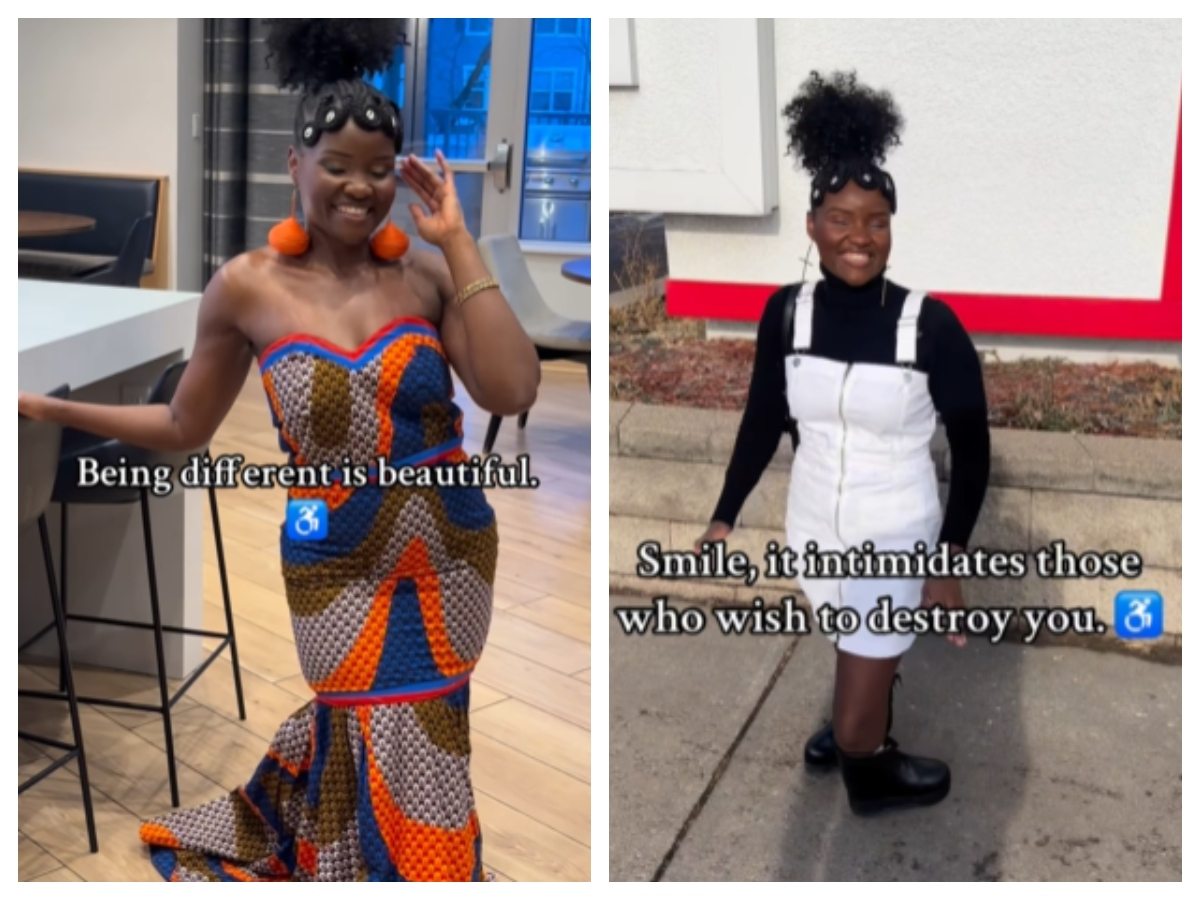
Samrica Zogar, born in Liberia in the late 1980s, has lived with limb differences in her feet and right hand since birth. Despite the challenges, she has pursued her dream life. Today, her goal is to encourage her 15-year-old daughter, Joerica, and others to accept themselves.
The 37-year-old mom said, “I must be strong for my daughter so that she can feed off my strength despite how the world may see me. When she sees my strength, it gives her hope.”
However, it didn’t always come easy. Zogar faced significant discrimination due to the lack of knowledge, social stigmas, and marginalization common in Liberia regarding rare conditions. As she explained to People, “Most Liberians do not have empathy for those born with rare conditions.”
RELATED STORIES



The discrimination extended to her own family, with some relatives calling her names and even expressing that “it would have been best if I was not born.”
READ ALSO: How Crystal Asige rose above disability to become a music star and parliamentarian
Zogar was often stressed and in pain because she didn’t have the right kind of shoes and spent most of her life walking barefoot or in unsuitable footwear.
“I experienced burns from the hot pavement and sand, and during the raining season, I would travel through muddy puddles,” she explained, adding that living without accommodations that would make life “easier” took an even greater toll.
She kept a positive attitude, even when things got tough.
Fashion became a form of therapy for Zogar, offering an escape from the reality of being bullied. To afford clothes, she would use the money she earned from selling her mother’s baked goods when she was a child.
She recounted, “When I was being bullied, I came to find comfort in dressing up. Fashion became therapeutic and an escape from reality.”
Even as an adult, Zogar still finds shopping challenging. She moved to Minnesota from Africa to seek “better opportunities.”
“Most of the time, I have to alter my clothing to fit my body and to suit the deformity in my right hand. At times, clothes may be too long or the buttons may be off, so I have to adjust most of my clothing to fit me properly,” she remarked.
Customizing her wardrobe, particularly her specialized shoes, is a significant financial challenge, with each pair costing between $3,000 and $6,000.
Samrica currently owns only four pairs, but she is fortunate to receive a new pair every five years, thanks to the generosity of Michelle Lerach. Samrica first met Michelle while they were both working at a foundation in Liberia that supported women’s education in fair business practices.
Michelle has committed to providing Samrica with tailored footwear whenever a replacement pair is necessary.
Zogar is passionate about modeling. She believes in her innate talent and refuses to let her disability diminish her ambition, seeing the fashion industry’s obstacles as motivation.
When she began growing her platform on social media, where she has nearly 50,000 followers on Instagram and advocates for the disabled community, Zogar was prepared for the backlash that might come her way.
“I post because I have built resilience toward words that don’t define how I see myself,” she said.
Zogar is determined to be a source of strength for her daughter. This commitment to her daughter is another reason why Zogar posts without worrying about the potential reactions of others.
Zogar also hopes her daughter will embrace the idea that beauty can be found in “unique forms.”
The proud mom said, “We have conversations about loving the hair and skin we are in. She’s motivated by me despite my disability. I’ve [taught] her to look at beauty in a deeper sense, that beauty is not only about appearance, but in the confidence to celebrate unique types of beauty.”