

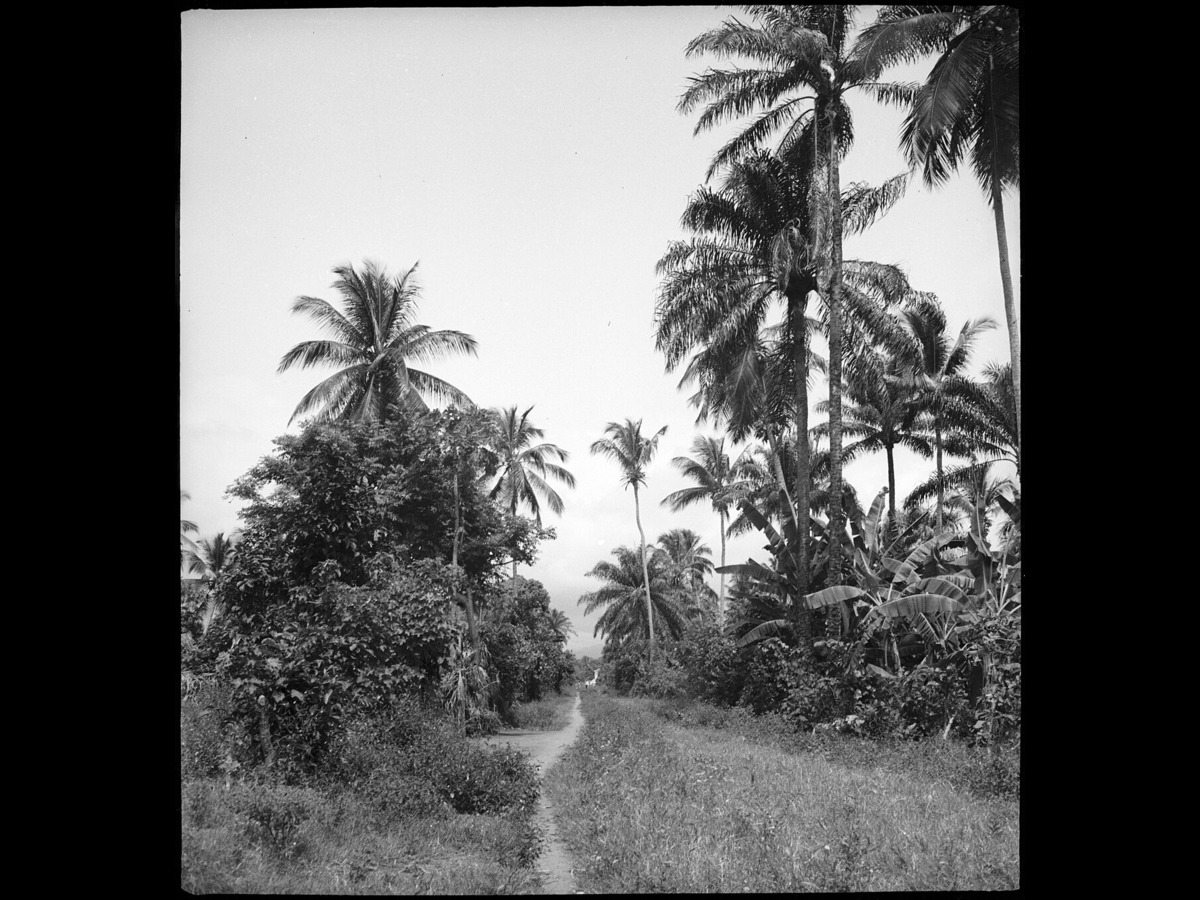
Archaeologists believe that plantation slavery may have taken root on a 16th-century sugar estate on the tiny African island of São Tomé.
The two volcanic islands of São Tomé and Príncipe were discovered off the coast of West Africa in the Gulf of Guinea by Portuguese explorers Pêro Escobar and João de Santarém in the 15th century.
The larger island, São Tomé, was the first to be discovered sometime around the 1470s. Príncipe, which was then known as Santo Antão (Saint Anthony), was subsequently discovered around that same period.
In fact, when the island nation was first discovered, the Portuguese monarchy or rulers made attempts to woo people to the land because they believed it would be ideal for growing sugarcane. Despite its abundant wood and fresh water, people stayed away from the island due to malaria.
But by 1495, the Portuguese rulers needed labor for the sugar trade, so they forced enslaved Africans, convicts, and Portuguese children to the island. Enslaved Africans, mainly from what are now Benin, the Republic of the Congo, Angola and the Democratic Republic of the Congo helped the Portuguese begin the São Tomé sugar plantation system, according to a report by Live Science. They performed almost all the tasks on the plantation, including harvesting and processing the sugarcane. And to build and run the mills, the enslaved Africans also served as carpenters and stone masons.
With this, São Tomé became “the first plantation economy in the tropics based on sugar monoculture and slave labour, a model exported to the New World where it developed and expanded,” according to researchers in a recent study published in the journal Antiquity and cited by Live Science.
At the time, the Portuguese also used Madeira — an Atlantic archipelago — for their sugar business, but Sao Tome’s plantations flourished so well that in the 1530s, they beat Madeira in the business of supplying the European markets with sugar. More sugar mills were built as a result of this success.
Praia Melão, located on the island’s northeastern coast, is the first of São Tomé’s sugar mills that researchers analyzed with modern archaeological methods. Live Science wrote the following about Praia Melão:
“The sugar mill at Praia Melão includes a large stone building that was refurbished and expanded over the span of 400 years. Featuring a now-collapsed clay roof common in Portuguese buildings of the 16th century, the building is two stories tall. Domestic quarters were located on the top floor, while the graffiti-covered lower floor included a sugar boiling room. The archaeologists also discovered numerous fragments of ceramic sugar molds similar to those used in Madeira.”
Later, slave rebellions, high humidity and fast-growing forests didn’t allow São Tomé to meet the demand for sugar. Thus, the Portuguese had to move their operations to Brazil in the early 1600s. Mills on São Tomé were reused or destroyed by the 19th century.
Marco Meniketti, an archaeologist not linked with the study, told Live Science that, “Investigation of the Sao Tome sites may be the most important new development in years for scholarship of the sugar and slave connection.”