

Armed men burst into a family’s tent in Mali in the middle of the night, forcing everyone outside at gunpoint. The relatives could not understand what the fighters wanted. Then the men made them watch as the girl’s uncle was restrained and beheaded. Two of the attackers dragged the family’s 14-year-old daughter back into the tent as she tried to resist and raped her.
“We were so scared that we were not even able to scream anymore,” her aunt said later, recalling the moment as the girl’s mother wept beside her. Like other survivors and relatives, she spoke on condition of anonymity for fear of retaliation. The AP indicated in it report that rape victims are not identified unless they agree to be named.
More than half an hour later, the girl stumbled out, visibly shaken. When she saw her uncle’s body, she screamed and collapsed. When she regained consciousness, the aunt said, she had the eyes of someone “who was no longer there.”
RELATED STORIES



READ ALSO: Mali’s military junta earns praise from a senior U.S. official – Here’s why
The following morning, fighters from JNIM arrived and ordered the family to leave. They loaded what they could onto a donkey cart and began the journey toward the border. At every sound along the way, they hid in bushes, holding their breath.
By the time the family reached Mauritania three days later, the girl was barely conscious. She collapsed shortly after arrival.
She was later found lying on the ground in the courtyard of a local household. Her relatives said they had not taken her to a clinic because they had no money.
“If you have nothing, how can you bring someone to a doctor?” her grandmother said through sobs.
The AP sent the family to a free clinic run by Doctors Without Borders, known by its French acronym MSF. A doctor said the girl showed signs of having been raped.
Inside the small, newly opened clinic, the teenager lay on a cot, her eyes unfocused and her mouth open as flies landed on her lips. Her chest rose and fell faintly. Sweat from a high fever ran down her forehead while health workers rushed to attach an IV line.
“This was the last moment to save her life,” said Bethsabee Djoman Elidje, the clinic’s women’s health manager, who coordinated the response as a heart monitor beeped rapidly. The girl, she said, was suffering from an infection following sexual assault. She had been untreated for days and arrived in shock.
Her family said the attackers were Russian fighters who had entered their tent two weeks earlier. They identified the men as members of Africa Corps, a unit under Russia’s Defense Ministry that replaced the Wagner mercenary group about six months ago.
Sexual violence has been a persistent feature of Mali’s decade-long conflict, according to the United Nations and aid organizations. Men, women and children have been assaulted by multiple armed groups, with reports of gang rape and sexual slavery. The true scale of the abuse is difficult to measure, hidden by stigma in conservative, patriarchal communities where survivors often remain silent.
That silence nearly cost the 14-year-old her life. It also undermines efforts to document crimes and hold perpetrators responsible.
While interviewing dozens of refugees about other alleged abuses such as abductions and beheadings, the AP learned of this case and four other allegations of sexual violence attributed to Africa Corps fighters, often referred to by Malians as the “white men.”
READ ALSO: U.S. urges citizens to flee Mali amid jihadi blockade and fuel shortages
Other armed groups have also been accused. The head of a women’s health clinic in the Mopti region told the AP it had treated 28 women over the past six months who said they were assaulted by militants linked to JNIM, an al-Qaida affiliated group that is the most powerful armed faction in Mali.
Aid workers say the quiet among Malian refugees is striking.
“In eastern Congo, we didn’t have to look for people,” said Mirjam Molenaar, a medical team leader with MSF who was stationed there last year. The women “came in huge numbers.”
Here, she said, the response is different. “People undergo these things and they live with it, and it shows in post-traumatic stress.”
At the Mauritania clinic, Elidje asked the family to describe what had happened so she could guide treatment. She does not speak Arabic and relied on a local nurse to ask how many men carried out the assault. The nurse, overwhelmed by shame, could not bring herself to ask.
The clinic had been operating for barely a month and had already treated three survivors of sexual violence, Elidje said.
“We are convinced that there are many cases like this,” she said. “But so far, very few patients come forward to seek treatment because it’s still a taboo subject here. It really takes time and patience for these women to open up and confide in someone so they can receive care. They only come when things have already become complicated, like the case we saw today.”
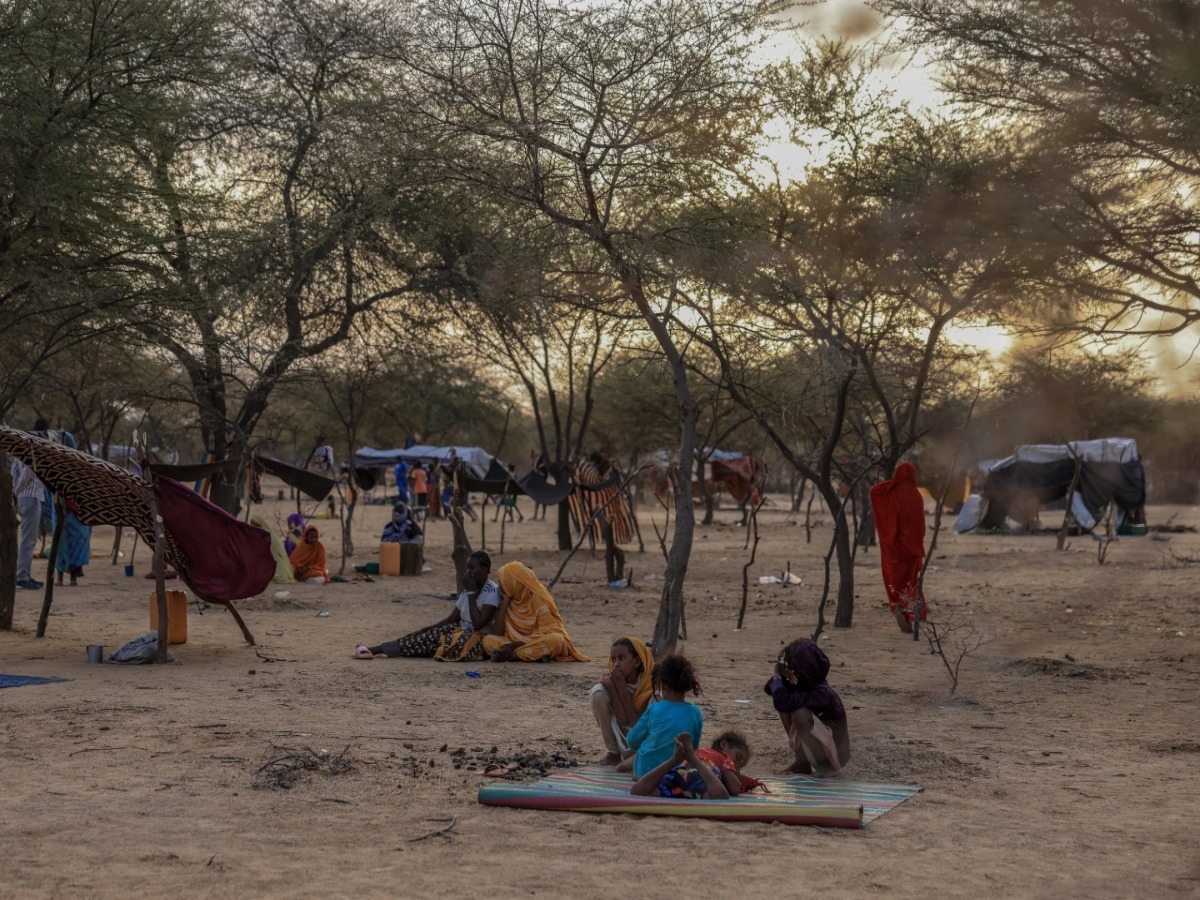
In recent weeks, thousands of newly displaced people from Mali, most of them women and children, have settled just inside Mauritania in shelters made from fabric and branches. The nearest formal refugee camp is already full, making it harder to report and treat sexual violence.
Two women who arrived recently quietly pulled AP journalists aside, adjusting their scarves to cover their faces. They said armed white men came to their village about a week earlier.
“They took everything from us. They burned our houses. They killed our husbands,” one said. “But that’s not all they did. They tried to rape us.”
She said the men entered her home while she was alone and began undressing her, adding that she defended herself “by the grace of Allah.”
As she spoke, the second woman began trembling and crying. Scratch marks were visible on her neck. She was unable to tell her story.
“We are still terrified by what we went through,” she said.
Another woman said separately that what the white men did to her last month while she was alone at home in Mali “stays between God and me.”
A fourth said she watched several armed white men drag her 18-year-old daughter into their house. She fled and has not seen her daughter since.
All declined to speak with aid workers, some of whom are from the region. They said they were not ready to talk about what happened, AP reported.
Russia’s Defense Ministry did not respond to questions. An information agency identified by the U.S. State Department as part of what it calls the Kremlin’s disinformation network dismissed the AP’s reporting on Africa Corps as fake.
Allegations of sexual violence involving Russian fighters predate the creation of Africa Corps. One refugee told the AP she witnessed a mass rape in her village in March 2024.
“The Wagner group burned seven men alive in front of us with gasoline.” she said. Then, she said, the women were gathered and raped, including her 70-year-old mother.
“After my mother was raped, she couldn’t bear to live,” she said. Her mother died a month later.
In the most widely documented case, a 2023 U.N. report said at least 58 women and girls were raped or sexually assaulted during an attack on the village of Moura by Malian troops and others witnesses described as “armed white men.”
Mali’s government later expelled the U.N. peacekeeping mission. Since then, gathering reliable data on conflict-related sexual violence has become extremely difficult.
The AP interviewed five women from Moura now living in a displacement camp. They said they were blindfolded and raped for hours by multiple men.
Three said they had not told anyone except aid workers. Two eventually confided in their husbands months later.
“I kept silent with my family for fear of being rejected or looked at differently. It’s shameful,” one said.
The 14-year-old who fled to Mauritania is now recovering. She does not remember anything after the attack, according to her family and MSF. She is receiving psychiatric care from one of only six psychiatrists working in the country.
Aid workers fear many others will never speak at all.
READ ALSO: Mali hits back at U.S. with matching visa bond rule for American visitors
“It seems that conflict over the years gets worse and worse and worse. There is less regard for human life, whether it’s men, women or children,” Molenaar said through tears. “It’s a battle.”