

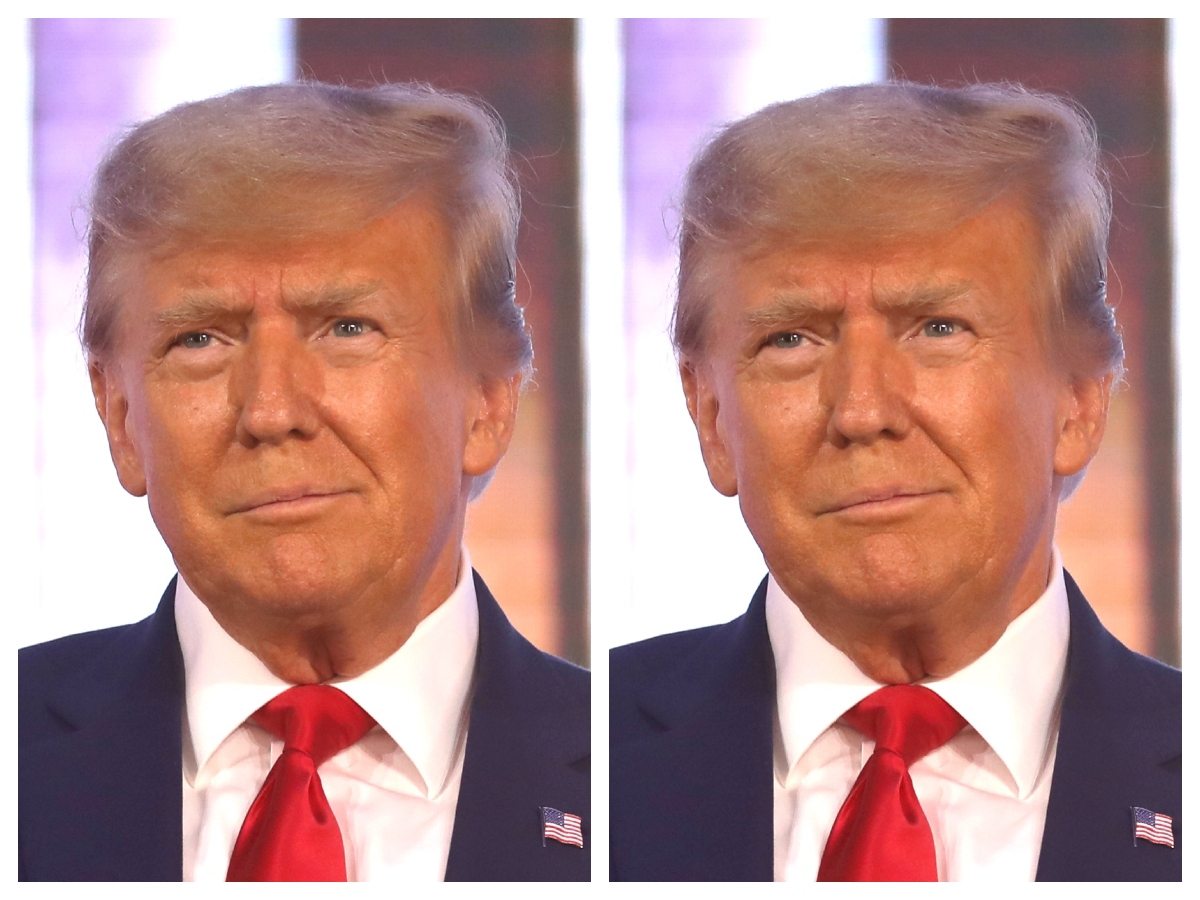
The White House is fighting against calls to restore live American Sign Language interpretation at press briefings, arguing in court that such a requirement would interfere with President Donald Trump’s authority to manage how he appears to the public.
That position is laid out in filings from Justice Department lawyers responding to a lawsuit that seeks to compel the administration to provide real-time ASL interpretation for official events. While the government has not spelled out exactly how interpreters would undermine the president’s public presentation, the argument arises as the second Trump administration continues to dismantle policies associated with diversity, equity, and inclusion, a campaign that began in the president’s first days back in office.
The lawsuit was filed in May by the National Association for the Deaf, which contends that ending the use of ASL interpreters amounts to “denying hundreds of thousands of deaf Americans meaningful access to the White House’s real-time communications on various issues of national and international import.” During the Biden administration, ASL interpretation was regularly included at briefings and major announcements. The association previously sued during Trump’s first term, pressing for interpreters during COVID-19 briefings.
RELATED STORIES



READ ALSO: Inside the Trump administration’s deportation push tearing U.S. families apart
In a June filing opposing a preliminary injunction, first reported by Politico on Thursday, Justice Department attorneys said mandating sign language interpretation at news conferences “would severely intrude on the President’s prerogative to control the image he presents to the public.” The lawyers added that the president retains “the prerogative to shape his Administration’s image and messaging as he sees fit.”
Government attorneys also argued that deaf and hard-of-hearing Americans are not shut out from presidential communications, pointing to alternatives such as written transcripts and closed captioning. They further claimed that arranging an interpretation could be impractical when Trump takes questions spontaneously rather than speaking at a scheduled briefing.
The White House declined to address those arguments on Friday. A spokesperson, according to AP’s report, did not respond to questions about the lawsuit or explain how interpretation services could damage the president’s “image.”
In the same June filing, the administration questioned whether other branches of government are being held to comparable standards when they do not offer the same level of interpretive services sought by the plaintiffs.
That claim stands in contrast to the realities in Washington, home to Gallaudet University, the world’s leading institution for the deaf and hard of hearing. The city has a deep pool of trained ASL interpreters, and Mayor Muriel Bowser routinely uses interpreters at her public appearances, often rotating between two professionals during longer events.
READ ALSO: Trump’s new ‘gold card’ offers wealthy applicants a shortcut to U.S. status
Last month, a federal judge rejected the administration’s objections and ordered the White House to provide real-time ASL interpretation for remarks by Trump and press secretary Karoline Leavitt. The administration appealed the decision. Although interpreters have since appeared at some events, the two sides continue to dispute how extensive those services must be.
The legal fight is occurring alongside broader moves by the administration to roll back diversity and inclusion initiatives. In his first week back in office, Trump signed an executive order ending DEI programs across the federal government. At the Pentagon, Defense Secretary Pete Hegseth followed up in January with a directive declaring such policies “incompatible” with the department’s mission.
That approach has extended into other corners of government. This week, Secretary of State Marco Rubio ordered U.S. diplomatic correspondence to revert to Times New Roman, arguing that the Biden administration’s 2023 switch to the Calibri font reflected misguided diversity, equity, and inclusion priorities.
READ ALSO: How Trump’s ICE crackdown is disrupting America’s preschools
Together, those actions emphasize the administration’s broader posture as it defends its position in court over whether live sign language interpretation belongs in the White House briefing room.