

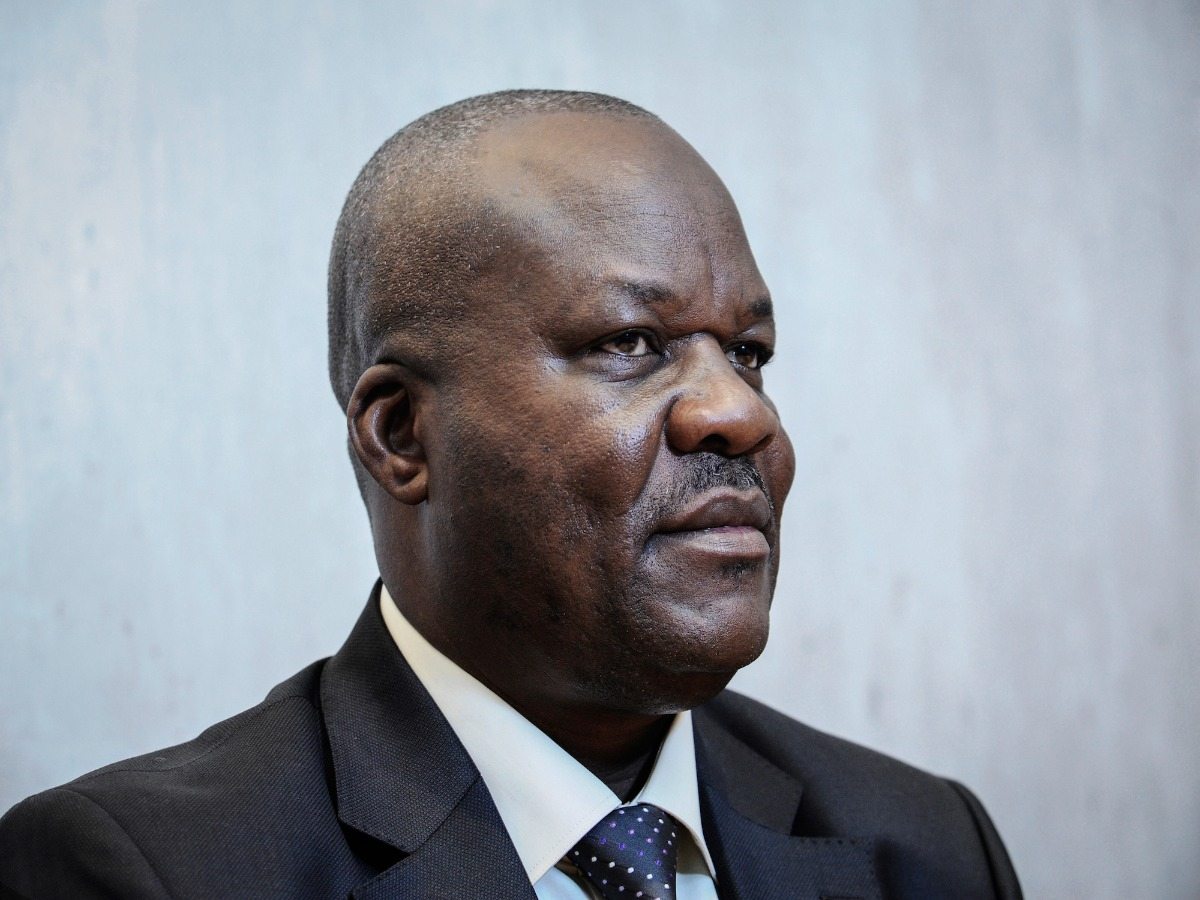
A French court on Monday gave former Congolese rebel leader Roger Lumbala a 30-year prison sentence, delivering a rare conviction tied to atrocities committed during the Second Congo War and getting praise from rights advocates who say the ruling chips away at decades of impunity.
Judges at a Paris criminal court found Lumbala guilty of “complicity of crimes against humanity” for abuses carried out more than 20 years ago in eastern Congo. One of his lawyers described the punishment as excessive and said Lumbala has ten days to appeal.
Lumbala, now 67, led the Congolese Rally for National Democracy, a rebel movement backed by Uganda that operated in eastern Congo in 2002 and 2003. The group was accused of brutal attacks on civilians, with members of the Nande and Bambuti ethnic communities bearing the brunt of the violence.

READ ALSO: Trump lauds Congo–Rwanda leaders as U.S.-brokered peace plan takes shape
United Nations investigations documented a pattern of torture, executions, rape, forced labor and sexual slavery attributed to the rebels under Lumbala’s leadership.
Several survivors recounted their experiences during the trial. David Karamay Kasereka, 41, told the court that his father and multiple neighbors, all from the Nande community, were tortured and killed by fighters loyal to Lumbala. He described acts of extreme cruelty inflicted on people in his village.
“I was just a teenager at the time,” Kasereka said. “The consequences still affect me to this day,” he added, explaining that he still regularly breaks down.
Another witness, Pisco Sirikivuya Paluku, 50, said rebels burst into his uncle’s home where he was staying, looted his belongings and money, and then forced him to work under armed guard for weeks. He told the court he was beaten and compelled to perform grueling tasks, including building huts and transporting stolen goods to the rebels’ base.
“These atrocities took place over 20 years ago and I had already lost hope, so I am happy that justice was finally served,” Paluku told the AP after the verdict.
READ ALSO: DR Congo’s ex-president Joseph Kabila sentenced to death
Lumbala largely refused to engage with the proceedings, arguing that the French judiciary had no authority to judge him. He attended only the opening day of the trial and returned for the verdict, absent for most of the victims’ testimony.
The case moved forward under France’s universal jurisdiction law, which allows national courts to prosecute crimes against humanity regardless of where they were committed. Legal experts say the conviction is unprecedented, marking the first time a Congolese political or military figure has been sentenced by a national court under this principle for mass atrocities.
Analysts note that many leaders responsible for violence during the Second Congo War have avoided accountability, with some later taking up senior roles in government or the military. That legacy, they say, has fueled cycles of violence and weakened public trust in state institutions.
After the war, Lumbala served as Congo’s minister of foreign trade between 2003 and 2005 and later sat in parliament. In 2011, Congolese authorities issued an arrest warrant accusing him of supporting the M23 rebel group, prompting him to flee to France, where he had lived before the conflict.
“Today the court made one thing unmistakably clear: architects of mass violence will be held to account. Neither time nor political power will shield them,” Daniele Perissi, who heads the Democratic Republic of Congo program at TRIAL International, said in a statement. The organization represented civil parties in the case.
Victims of sexual violence also took the stand during the proceedings.
“Their voices were central to the pursuit of accountability for sexual violence crimes, which remain widely under-prosecuted in conflict settings,” said Yasmine Chubin, legal director at the Clooney Foundation for Justice, another group representing victims.
Phillipe Zeller, one of Lumbala’s attorneys, reiterated after the verdict that the sentence was unduly severe and again challenged the court’s jurisdiction.
Eastern Congo has endured near-constant conflict since the 1990s, driven by competition over minerals and the presence of more than 100 armed groups. Fighting intensified again last week when the Rwanda-backed M23 movement captured a key city in the region.
READ ALSO: Kabila resurfaces in Kenya to rally Congo opposition despite death sentence
That advance came despite a peace deal brokered by the United States and signed days earlier in Washington by the presidents of Congo and Rwanda.