
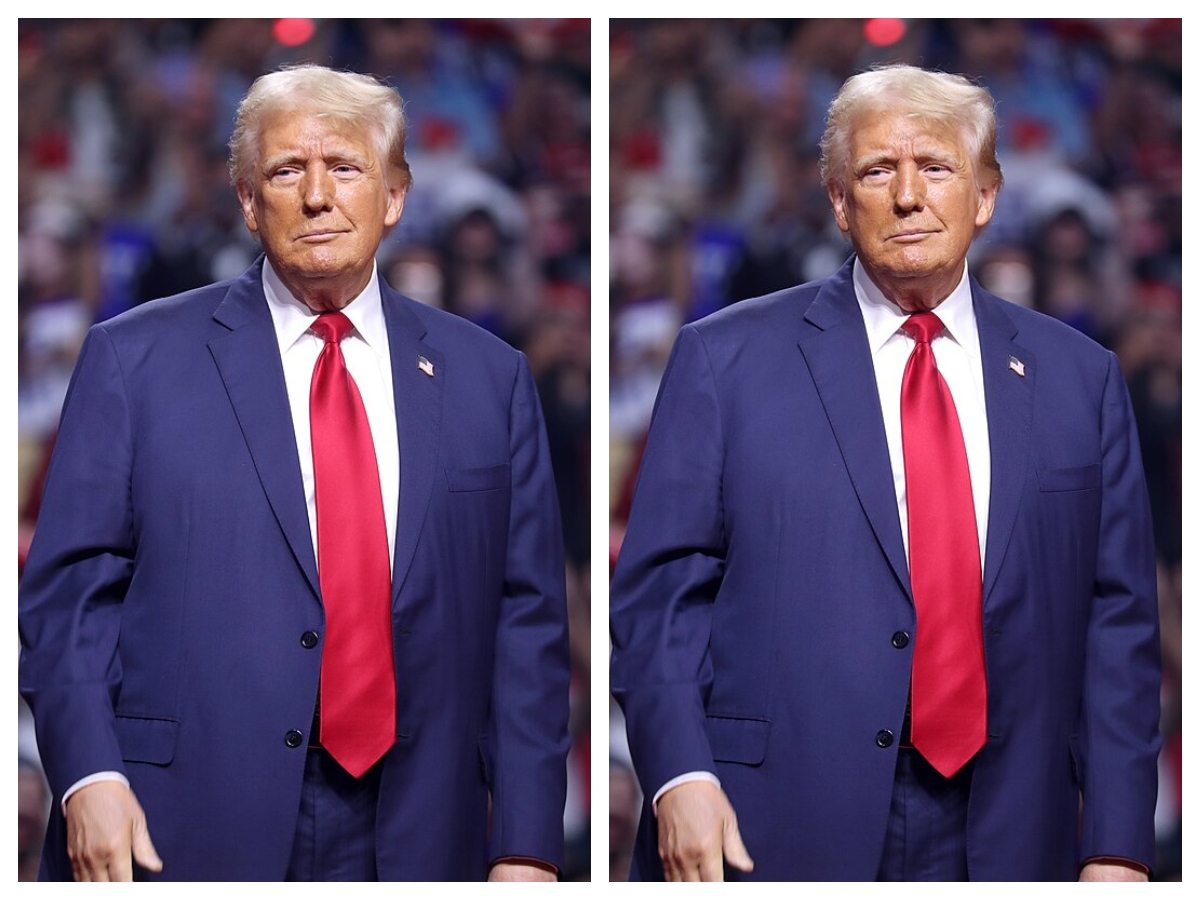
President Donald Trump arrived in northeastern Pennsylvania this week, determined to sell an upbeat economic message, telling supporters that inflation was no longer a concern and that his administration had already turned the corner. Yet as he spoke, the issue that had weighed most heavily on his standing with voters kept resurfacing, often competing with a familiar set of grievances.
Addressing a crowd Tuesday at the Mount Airy Casino Resort in Mount Pocono, Trump dismissed Democratic warnings about the cost of living, calling “affordability” a talking point designed to damage him politically. Even as he made that claim, his remarks drifted into territory that echoed comments from his first term, including language he once denied using about immigration.
“Why is it we only take people from s—-hole countries, right?” Trump said onstage. “Why can’t we have some people from Norway, Sweden, just a few?”
RELATED STORIES


READ ALSO: How Trump’s ICE crackdown is disrupting America’s preschools
He further argued against accepting immigrants from certain nations, referring to “hellholes like Afghanistan, Haiti, Somalia and many other countries,” and adding that those places “are a disaster, right? Filthy, dirty, disgusting, ridden with crime.”
Although the appearance was billed as an official White House event, it carried the tone of a campaign rally more than a policy-focused visit. The setting reflected that mix. Instead of a large arena, Trump spoke in a conference ballroom at a casino in a town of about 3,000 residents, located in a competitive House district in a crucial swing state.
The trip came as the White House works to steady Republican nerves following poor results in last month’s off-cycle elections. Administration officials have tried to reassure voters that the economy will look stronger next year and that lingering inflation concerns cannot be pinned on Trump.
To reinforce his argument, the president displayed a chart comparing price increases under President Joe Biden with prices during his own term. However, inflation has ticked upward since Trump announced broad tariffs in April, leaving many Americans uneasy about the cost of groceries, utilities, and housing.
“I have no higher priority than making America affordable again,” Trump said. “They caused the high prices and we’re bringing them down.”
The political backdrop grew more challenging even as Trump spoke. In Miami, voters elected Eileen Higgins as the city’s first Democratic mayor in nearly three decades, defeating Trump-backed Republican Emilio Gonzalez.
In Monroe County, the reception suggested Trump still commands loyalty from his base. Whether that support can extend to a broader coalition remains uncertain. The county switched from backing Biden in 2020 to supporting Trump in 2024, helping him reclaim Pennsylvania and return to the White House after four years out of office.
The region depends heavily on tourism tied to the Pocono Mountains, with skiing, hiking, and hunting sustaining local jobs. Its location, less than two hours from New York City, has also drawn residents searching for cheaper housing.
Even so, many locals say price pressures have not eased.
Lou Heddy, a 72-year-old retired maintenance mechanic who voted for Trump last year, said his grocery bill has jumped sharply in just the past month.
“Once the prices get up for food, they don’t ever come back down. That’s just the way I feel. I don’t know how the hell he would do it,” Heddy said.
Suzanne Vena, 66, who votes Democratic, said Trump’s tariffs have worsened her financial strain as she struggles with higher costs for rent, food, and electricity on a fixed income.
“That’s what we were originally told,” Vena said, recalling Trump’s pledge to stop inflation. “Did I believe it? That’s another question. I did not.”
The district where Trump appeared could play a decisive role in the fight for control of the House next year. The seat is held by first-term Republican Rep. Rob Bresnahan, a prime Democratic target. Scranton Mayor Paige Cognetti, a Democrat, is running for her party’s nomination to challenge him.
Bresnahan spoke ahead of the president, telling the audience the administration was focused on lowering costs but acknowledging voter impatience.
“Aren’t asking for partisan arguments — they’re asking for results,” he said.
Whether Trump can energize voters who remain anxious about the economy is an open question. Nick Riley, 38, said rising expenses have forced him to scale back, including cutting down on eating out and delaying plans to buy a car. Riley voted for Trump in 2020 but skipped the 2024 election and expects to sit out again next year.
“We’re all broke. It doesn’t matter whether you support Republicans or support Democrats,” Riley said. “We’re all broke, and we’re all feeling it.”
White House chief of staff Susie Wiles has indicated that Trump will not stay on the sidelines during the midterms. Appearing on the conservative talk show “The Mom View,” she said the president plans to campaign aggressively to activate voters who might otherwise skip a congressional race.
“We’re actually going to turn that on its head,” Wiles said, “and put him on the ballot because so many of those low-propensity voters are Trump voters.”
That approach carries risk. Trump has repeatedly touted the economy as booming while many voters say their day-to-day experience tells a different story.
When asked on a Politico podcast to grade the economy, Trump replied “A-plus,” then upgraded it to “A-plus-plus-plus-plus-plus.”
The broader economic data show growth holding steady, and the stock market is up this year. Administration officials argue that prices will eventually stabilize as investment in artificial intelligence and domestic manufacturing increases. For now, many households feel squeezed by the cost of housing, groceries, education, and electricity.
Public confidence remains shaky. In a November survey by The Associated Press-NORC Center for Public Affairs Research, just 33 percent of U.S. adults said they approve of Trump’s handling of the economy.
Still, Trump insisted his policies are strengthening key industries, including steel. He urged Americans to curb purchases of imported consumer goods, framing it as a patriotic choice.
READ ALSO: Judge rules Trump’s wind energy halt unlawful
“You don’t need 37 dolls for your daughter,” he told the crowd. “Two or three is nice.”