
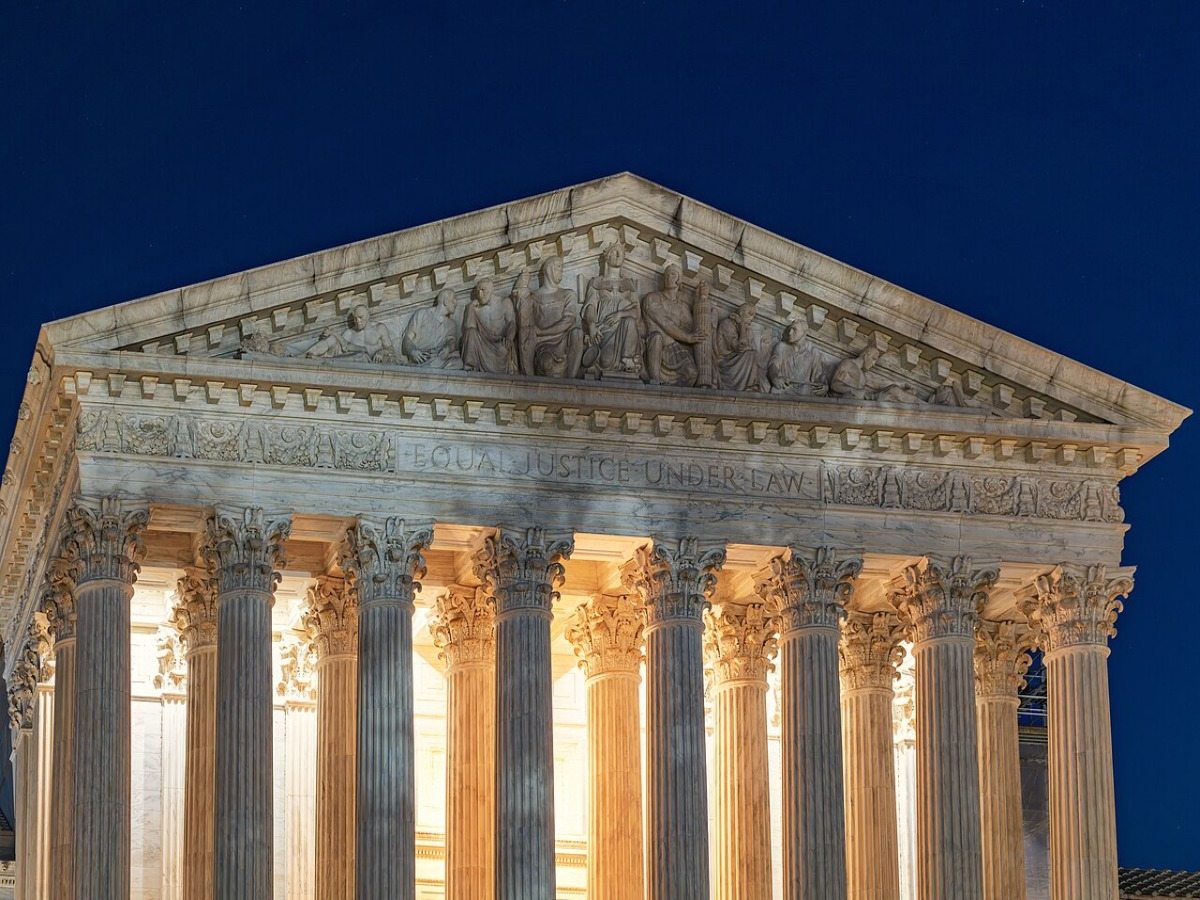
The U.S. Supreme Court has agreed to take up the case of a Black Mississippi death row inmate whose conviction was secured by a prosecutor repeatedly accused of excluding Black jurors. This has reopened scrutiny of jury selection practices that have already attracted massive rebuke from the justices.
The appeal centers on Terry Pitchford, whose murder conviction was briefly overturned by a federal judge before being reinstated by a lower appeals court. By agreeing to hear the case, the justices have returned to familiar ground involving former Mississippi District Attorney Doug Evans, the same prosecutor whose conduct led the court in 2019 to vacate the conviction and death sentence of Curtis Flowers.
Arguments are expected in the spring.
RELATED STORIES

READ ALSO: Curtis Flowers, black man accused of killing three whites granted bail after 23 years
U.S. District Judge Michael P. Mills had ruled that Pitchford’s trial was fundamentally flawed because the presiding judge failed to give defense counsel an adequate opportunity to challenge what they argued was discriminatory jury selection by the prosecution. In his decision, Mills pointed directly to Evans’ record in earlier cases as a factor informing his conclusion.
Pitchford was sentenced to death for his involvement in the 2004 killing of Reuben Britt, who owned the Crossroads Grocery near Grenada in northern Mississippi.
Court records show that the jury selection process dramatically reduced Black representation. An initial pool of 61 white and 35 Black prospective jurors was narrowed to 36 white and five Black candidates, in part because many Black jurors expressed opposition to imposing the death penalty. Prosecutors then struck four of the remaining Black jurors, leaving a final jury with just one Black member.
The Supreme Court first sought to curb racial discrimination in jury selection nearly four decades ago in Batson v. Kentucky. That 1986 decision barred prosecutors from dismissing jurors solely because of race and required trial judges to evaluate claims of bias against purportedly race-neutral explanations.
Concerns about Evans’ use of peremptory strikes came to the forefront in the Flowers case, where Justice Brett Kavanaugh wrote that the prosecutor had engaged in a “relentless, determined effort to rid the jury of Black individuals.”
Flowers was tried six times over the shooting deaths of four people. He was released from prison in 2019, and prosecutors dropped the charges the following year after Evans relinquished control of the case to state authorities, AP reported.