

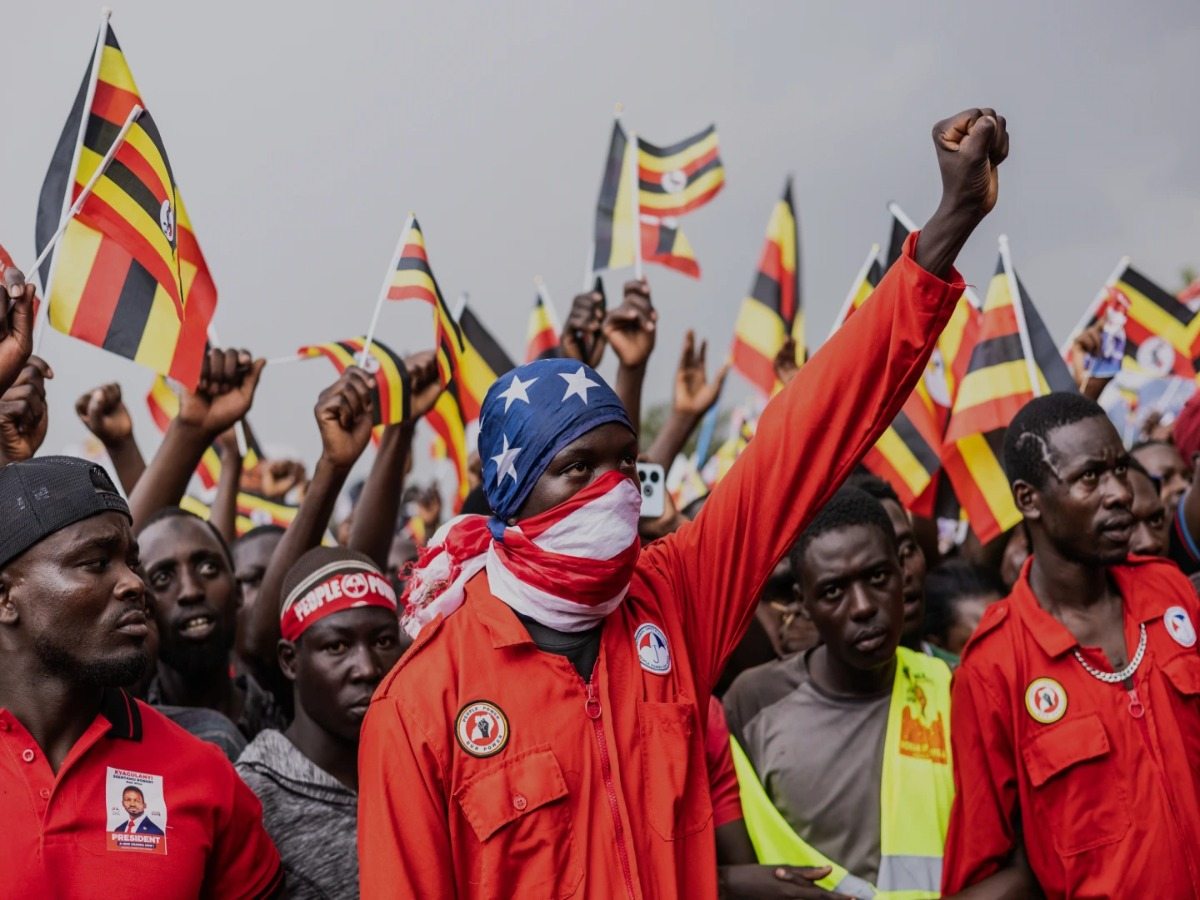
At least seven people were killed overnight in Uganda amid escalating tensions following a disputed presidential election, local authorities disclosed. The violence happened as vote-counting continued under an internet blackout and a crackdown on opposition activity.
The unrest reportedly occurred in Butambala, roughly 55 kilometers southwest of the capital, Kampala, according to both a local police spokesperson and a member of parliament from the area.
Lydia Tumushabe, a police spokesperson, said machete-wielding opposition “goons” organised by MP Muwanga Kivumbi attacked a police station and a vote-tallying centre.
READ ALSO: Museveni takes strong lead in Uganda presidential race, per early results
“Security responded in self-defence because these people came in big numbers. Police fired in self-defence,” Tumushabe told Reuters, adding that 25 individuals had been arrested.
Kivumbi, an opposition lawmaker aligned with singer-turned-politician Bobi Wine, gave a different account. He said the victims were killed around 3 a.m. (00:00 GMT) inside his home while awaiting the results of his parliamentary race.
“They killed 10 people inside my house,” Kivumbi said. “There were people inside the garage who were waiting for the results to celebrate my victory. They broke the front door and began shooting inside the garage. It was a massacre.”
Independent verification of the claims has not yet been possible.
The deadly clashes coincided with the Electoral Commission releasing partial results. The body reported that longtime President Yoweri Museveni led with 76.25 percent of votes from nearly half of all polling stations. Bobi Wine trailed with 19.85 percent, while six other candidates shared the remaining votes.
Following Thursday’s election, Wine’s party said he had been placed under house arrest.
“After casting my ballot, the military deployed all around my home in order to place me under house arrest,” Wine, whose real name is Robert Kyagulanyi, wrote on X. “They do this because they are afraid of the people’s reaction after stealing their vote.”
READ ALSO: Tanzania’s president breaks silence on election-day internet blackout
Museveni, in power since 1986, told reporters after voting that he expected to secure 80 percent of the vote “if there’s no cheating.” A win would grant the former rebel leader a seventh term.
Wine has accused the authorities of large-scale fraud during the election, which took place under an internet blackout, drawing condemnation from the United Nations and human rights groups. Last week, the UN human rights office said the election was occurring amid “widespread repression and intimidation.”
Campaign events were repeatedly disrupted, with security forces firing tear gas and live rounds at Bobi Wine’s rallies, killing at least one person and detaining hundreds. The government claimed it was responding to lawless behavior.
Voting itself was marred by significant delays, with some polling stations opening up to four hours after the scheduled 7 a.m. (04:00 GMT) start due to “technical challenges.”
Recent political unrest in neighboring Tanzania and Kenya has heightened fears of instability in Uganda, which has never experienced a peaceful transfer of presidential power since gaining independence from British colonial rule six decades ago.
Despite calls from Wine for his supporters to protest, there were no major demonstrations observed during polling hours.
READ ALSO: Ugandans head to polls amid internet blackout and polling delays