

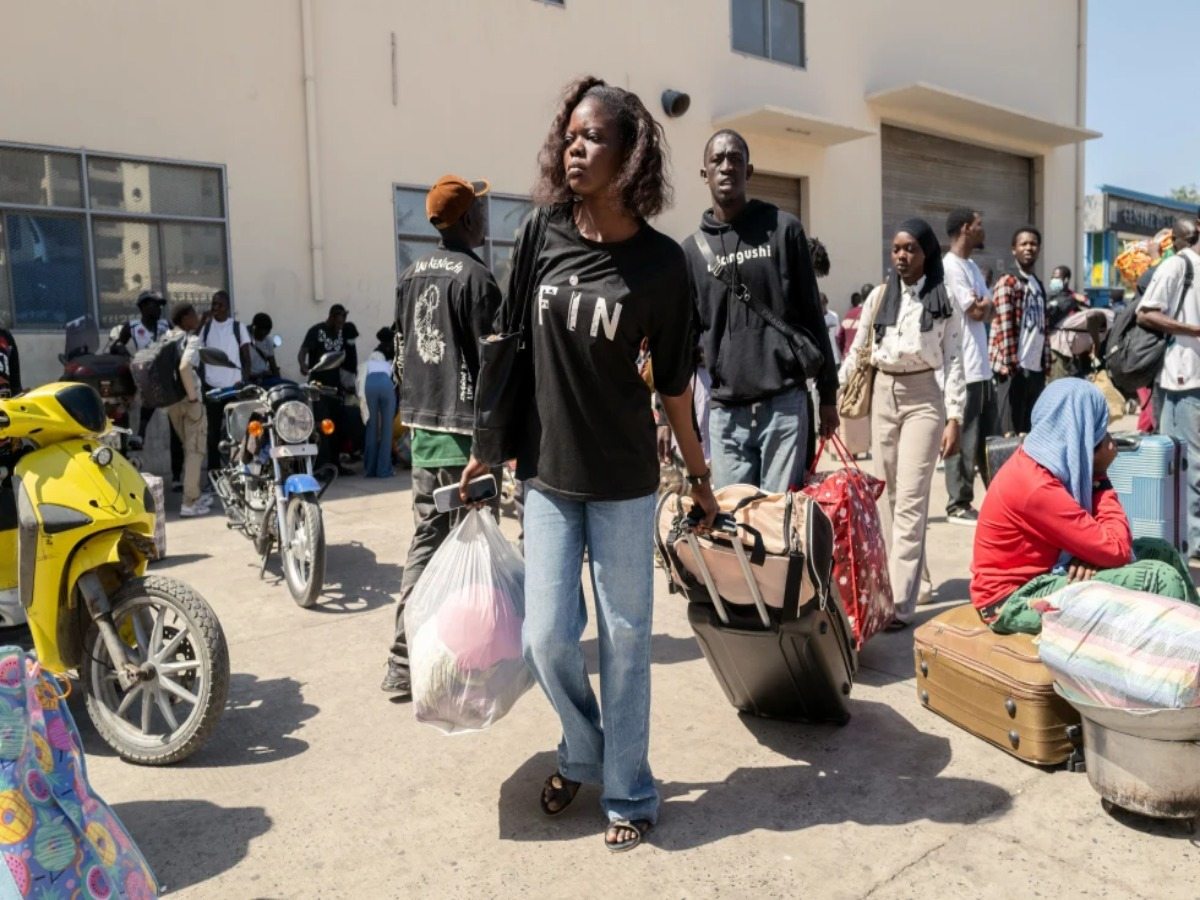
Campus unrest at Senegal’s leading public university has taken a tragic turn, with the death of a student intensifying anger among young people who say the government they once rallied behind has fallen short of its promises.
Authorities shut down Cheikh Anta Diop University in Dakar on Tuesday, following violent clashes linked to delays in student financial support. The closure came a day after Abdoulaye Ba, a second-year medical student, died after sustaining severe head injuries during the disturbances.
A video circulating online on Monday night captured thick smoke and flames engulfing a four-story student residence as students scrambled to escape, with some leaping from windows. The aftermath left charred vehicles and destroyed barricades scattered across the campus.


READ ALSO: France ends permanent military presence in West Africa with troop withdrawal from Senegal
Ba later died at a nearby hospital, according to Cheikh Atab Sagne, president of the Student Association of the Faculty of Medicine, Pharmacy and Dentistry. He said Ba did not participate in the protests but was severely beaten by police in his room. Several other students repeated the allegation.
Government officials have acknowledged the fatal incident but have offered limited details. In a statement, authorities said “serious events” led to the student’s death.
Interior Minister Mouhamadou Bamba Cissé pledged that investigations would be conducted and extended condolences to Ba’s family.
“On the ground, there were acts of violence observed on both sides, including acts that were seen coming from the defense and security forces,” Cissé told a news conference, while unverified video of a student throwing a Molotov cocktail played on a screen nearby.
Rights organizations, including Amnesty International Senegal, have criticized the response by law enforcement, condemning what they described as a “disproportionate use of force by police” in a joint statement.
For years, academic life at Senegal’s universities has been repeatedly disrupted by prolonged shutdowns triggered by student protests. Some closures have stretched beyond nine months, forcing academic calendars to overlap and leaving students uncertain about their studies.
A recurring grievance centres on government stipends that many students depend on for survival. The allowances average about 40,000 CFA francs ($73) per month and often represent students’ only source of income. However, payments frequently arrive late, leaving many struggling to cover basic living costs.
The most recent protests at Cheikh Anta Diop University, which hosts roughly 80,000 students and ranks among West Africa’s largest institutions, began in early December over delayed stipends. Tensions escalated after campus authorities shut down student cafeterias when students refused to pay for meals.
READ ALSO: Senegal intercepts over 200 migrants amid surge in risky Atlantic crossings
The unrest comes after a broader economic strain in Senegal, where young people face mounting hardship. Roughly 75% of the country’s population is under 35, placing youth at the centre of social and political pressures.
Students had previously been at the forefront of demonstrations supporting Prime Minister Ousmane Sonko and President Bassirou Diomaye Faye when both men were opposition figures. Their anti-corruption messaging inspired many young Senegalese and helped propel them to power.
That same university became a focal point of national protests in 2021 after Sonko’s arrest and subsequent exclusion from the 2024 presidential race. The demonstrations escalated into violent confrontations with security forces that left at least 65 people dead, according to rights groups.
Sonko’s ally, Faye, eventually contested the presidency and secured victory.
Yet the reform agenda introduced after the new administration took office in April 2024 has faced mounting challenges. A government audit released in 2025 revealed that the national debt inherited from the previous administration was significantly higher than initially reported. Meanwhile, negotiations with the International Monetary Fund over a new financial programme have stalled amid worsening fiscal conditions.
For many students, the financial strain is immediate and personal. Khadija Ndiaye, a 19-year-old history student, said she has gone three months without receiving her stipend, though she considers herself fortunate compared with some colleagues who have waited nearly a year.
Ndiaye, once a vocal supporter of Sonko, now says she feels let down by the government’s handling of student concerns.
“We were just kids, but we were fighting for him. I can’t believe he is doing this to us today,” Ndiaye said. “He said in his campaign videos that a student can no longer survive without a stipend. It is not normal today for him to stand before us and say that a student can survive without a stipend. It is contradictory.”
She added that policymakers appear detached from the struggles students face daily.
“(Officials’) kids are not even in Senegal, they’re in the United States, Europe, anywhere,” she said. “You’re never going to see the son of a minister or a president here at the university.”
Ibrahima Diatta, a 23-year-old literature student, sees the stipends as essential earnings rather than optional support. Like many others, he relocated from a rural community to pursue his education and help provide for his family with the funds.
Diatta says the current leadership has lost the confidence of many young voters.
“Sonko and Faye were chosen by the youth who protested, and now they have done the same thing to us that their predecessor did,” Diatta said. “I think this serves as a lesson for us young people that we have to wake up to the fact that nobody is coming to save us.”
David Célestin Faye, secretary-general of Senegal’s main university professors’ union, told The Associated Press that repeated campus shutdowns in recent years have disrupted academic schedules and contributed to delays in stipend payments. He said those disruptions ultimately played a role in the fatal events.
Faye also warned that forcing students to vacate dormitories after this week’s unrest, which pushed many to leave Dakar and return to their home regions, risks repeating past policy failures.
READ ALSO: U.S. troops to train Nigerian military as extremist threats rise
“Senegal has decided to grant stipends to all students. It must take responsibility for that choice. Students are not a burden, they are an investment that must be supported,” he stated.