

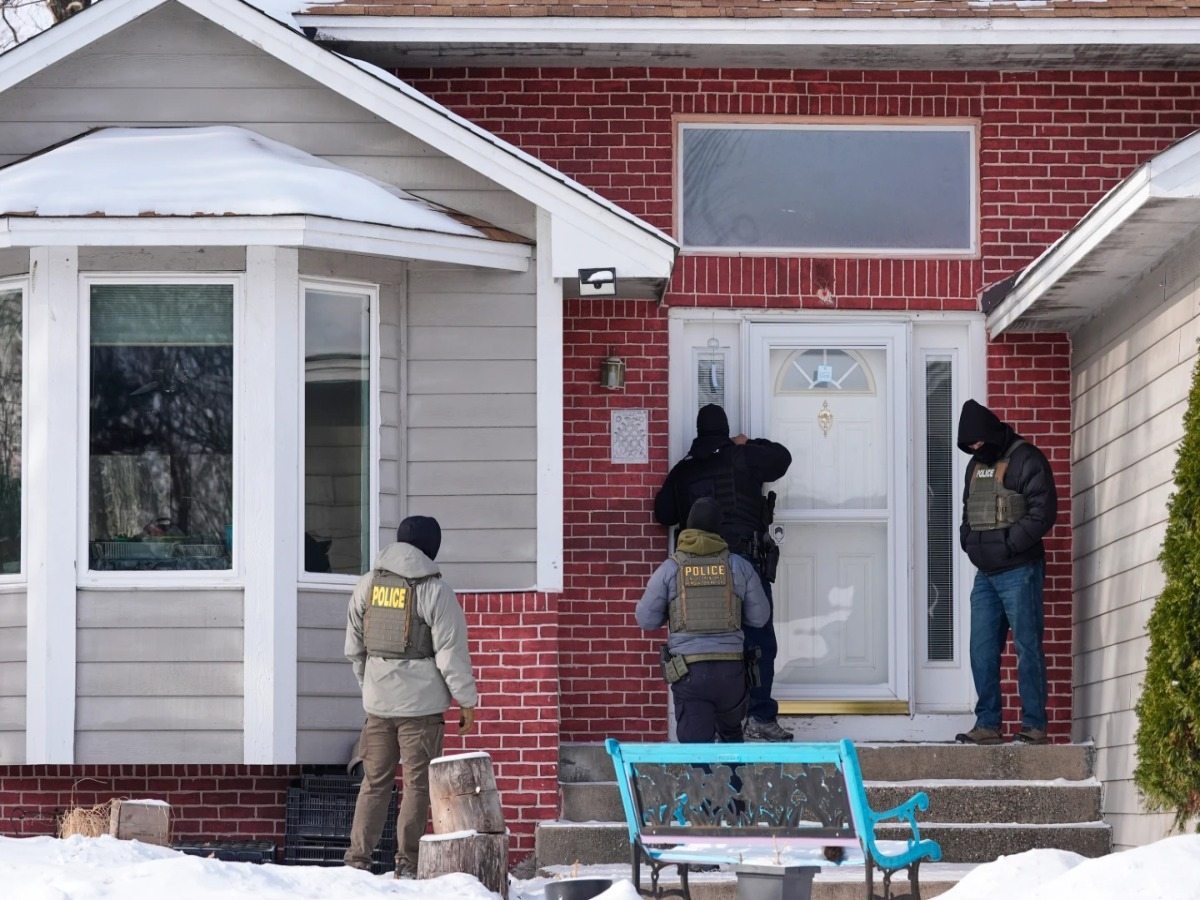
Fear has become part of the daily routine for some Minnesota residents needing medical care. Pregnant women skip prenatal visits, patients in detention go without life-saving medicine, and hospital staff from Latin America, Somalia, and Myanmar worry about showing up for work.
One nurse found a pregnant woman at home, already in labor, after she avoided her checkup out of fear of immigration authorities. Another patient with kidney cancer disappeared from detention facilities without his medicine; legal intervention was needed to get it to him, though doctors remain unsure if he has been able to take it. A diabetic hesitates to pick up insulin, and a patient with a treatable wound developed a serious infection that required intensive care.
“Our places of healing are under siege,” said Dr. Roli Dwivedi, past president of the Minnesota Academy of Family Physicians, at a state Capitol news conference in St. Paul Tuesday, where doctors detailed the toll the crackdown is taking on patients.
RELATED STORIES


READ ALSO: Liberian immigrant released again after controversial Minnesota ICE arrests
For years, hospitals, schools, and churches had been off-limits to immigration enforcement. That changed last year when the Trump administration ended the 2011 policy, allowing federal agencies to make arrests in those spaces.
“I have been a practicing physician for more than 19 years here in Minnesota, and I have never seen this level of chaos and fear,” Dwivedi said in an AP report, noting that it exceeds even the height of the COVID-19 crisis.
At Hennepin County Medical Center in downtown Minneapolis, staff have moved conversations about the enforcement crackdown to an encrypted chat group. They have shared encounters with ICE, including a recent incident in which a patient was allegedly unnecessarily shackled. The hospital, a key trauma center with the busiest emergency room in the state, treats uninsured patients and those living in the U.S. illegally.
“I can’t believe we’re having to resort to this,” said one nurse on condition of anonymity. Plainclothes ICE officers have become a common presence, focusing on people of color and asking patients and employees for documentation when they leave.
“How is this all happening?” the nurse asked.
Tricia McLaughlin, a spokeswoman for the Department of Homeland Security, rejected claims that ICE interferes with medical care. “ICE does not conduct enforcement at hospitals—period. We would only go into a hospital if there were an active danger to public safety,” she said, adding that officers might accompany detainees but do not obstruct treatment. She blamed any disruptions on “violent agitators who are blocking roadways, ramming vehicles, and vandalizing property.”
The fear isn’t confined to Minnesota. Across the country, especially in Democratic-led states, immigrants are avoiding medical care out of concern for enforcement. Sandy Reding, vice president of National Nurses United and president of the California Nurses Association, stated that some Southern California hospitals have experienced a decline in patient numbers.
READ ALSO: Minnesota’s Somali community shocked as Trump intensifies his hostility
In Oregon, ICE’s handling of detainees has drawn concern. The Oregon Nurses Association wrote to Legacy Emanuel Medical Center that officers pressured staff to bypass assessments, tests, or monitoring to expedite discharges. “Nurses have reported instances where physicians have recommended continued hospitalization, but ICE insisted on removing the patient, effectively forcing discharge over clinical advice,” the letter said. Officers often announce, “We’re going,” leaving staff to comply with limited patient input. Legacy Health responded that it has reviewed policies to protect communities while complying with state and federal law and remains “committed to providing medical care to everyone who needs it, including individuals who are in custody and regardless of immigration or citizenship status.”
Minnesota’s crackdown intensified in January when the Department of Homeland Security deployed 2,000 federal agents to the Minneapolis area in what it called Operation Metro Surge, the largest immigration enforcement operation in U.S. history. More than 3,000 people in the country illegally have been arrested, according to a recent court filing.
“Our patients are missing,” said Dr. Erin Stevens, legislative chair for the Minnesota section of the American College of Obstetricians and Gynecologists. Pregnant women are skipping prenatal visits, and requests for home births have surged “even among patients who have never previously considered this or for whom, it is not a safe option.”
The surge has triggered clashes between activists and ICE, set city and state officials against the federal government, and led to the death of a mother of three, shot by an ICE officer in what federal authorities described as self-defense, but local officials called reckless.
Tensions heightened further on Sunday when protesters disrupted a St. Paul church service because one pastor leads the local ICE field office. Some demonstrators approached the pulpit while others chanted, “ICE out.” The Department of Justice has opened a civil rights investigation into the protest.