

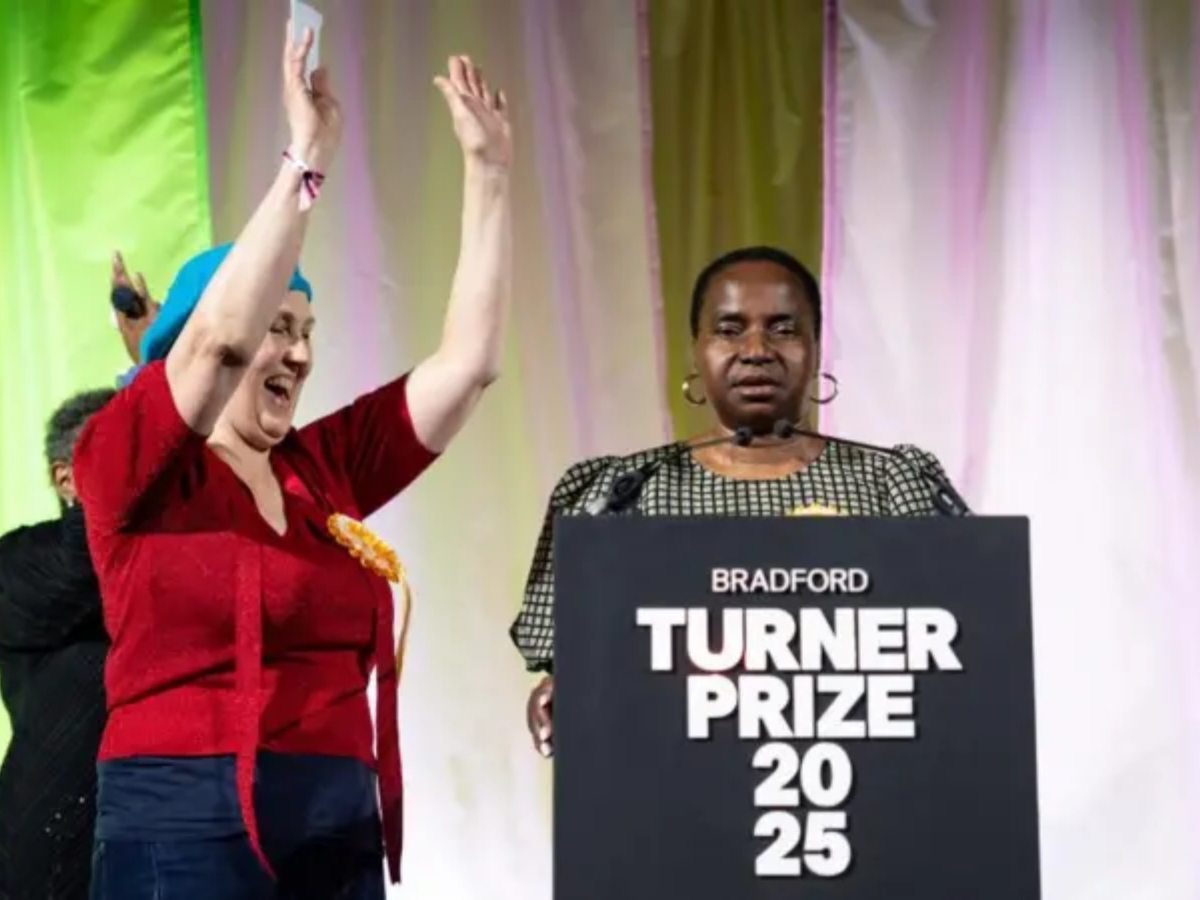
Learning disabled artist Nnena Kalu has been crowned this year’s Turner Prize, the UK’s most high-profile art award, for her “bold and compelling” sculptures and drawings.
Kalu’s incredible feat is gaining loads of traction after she made history as the first artist with a learning disability to win the award.
The judges were full of praise for Kalu’s brightly coloured sculptures – which are haphazardly wrapped in layers of ribbon, string, card and shiny VHS tape – and her drawings of swirling, tornado-like shapes, as per footage and images presented by the BBC.

At age 59, Nnena Kalu is an autistic, learning disabled artist with limited verbal communication.
Charlotte Hollinshead, who has worked with her for 25 years, stated on stage in a heartwarming speech delivered alongside Kalu at the ceremony: “This is a major, major moment for a lot of people. It’s seismic. It’s broken a very stubborn glass ceiling.”
“It’s wonderful she’s finally getting the recognition she rightly, rightly deserves.”
Kalu was born in Glasgow but currently lives in London and was announced as the winner of the award. She took home a £25,000 prize money – at a ceremony in Bradford, the UK’s current city of culture, on Tuesday.
In accepting the honour, Nnena Kalu wore a rosette bearing her photo and the words: “Idol, legend, winner, whatever.”
In the last five years, Kalu has been gaining recognition in the art world after working as a resident artist with Action Space, which supports artists with learning disabilities, since 1999.
Her studio manager and artistic facilitator, Ms Hollinshead said: “We are so happy that Nnena’s talent and beautiful work is now out in the world for you all to see this complex artist who creates gorgeous, complex forms – all while listening to disco music, often as loud as possible.”
“Nnena’s career reflects the long, often very frustrating journey we’ve been on together… to challenge people’s preconceptions about differently abled artists, but especially learning disabled artists, an important creative community so undervalued. When Nnena first began working with Action Space in 1999, the art world was not interested. Her work wasn’t respected, not seen, and certainly wasn’t regarded as cool.”
“Nnena has faced an incredible amount of discrimination, which continues to this day, so hopefully this award smashes that prejudice away. Nnena Kalu, you’ve made history!”
Some art critics tried to downplay the quality of Kalu’s work, but the Turner Prize judges were impressed by the “really compelling sculptures and drawings that could only be made by Nnena”, according to the jury chairman, Tate Britain director Alex Farquharson.
Her drawings, which come in sets of two or three near-identical shapes, have “a beautiful intricacy to them” and “look like swirling vortexes”, he said.
Her sculptures, meanwhile, are hanging shapes covered in reams of re-purposed materials including fabric, rope, parcel tape, cling film and paper.
They resemble three-dimensional versions of abstract expressionist paintings, Mr Farquharson said.
“But they’re not paintings, they’re not flat on the wall. They’re suspended in the space that you’re in, like brightly colored rocks or creatures.
“They’re at almost your eye level. Although there are no figurative features at all, they appear to be communing among themselves and with you.