

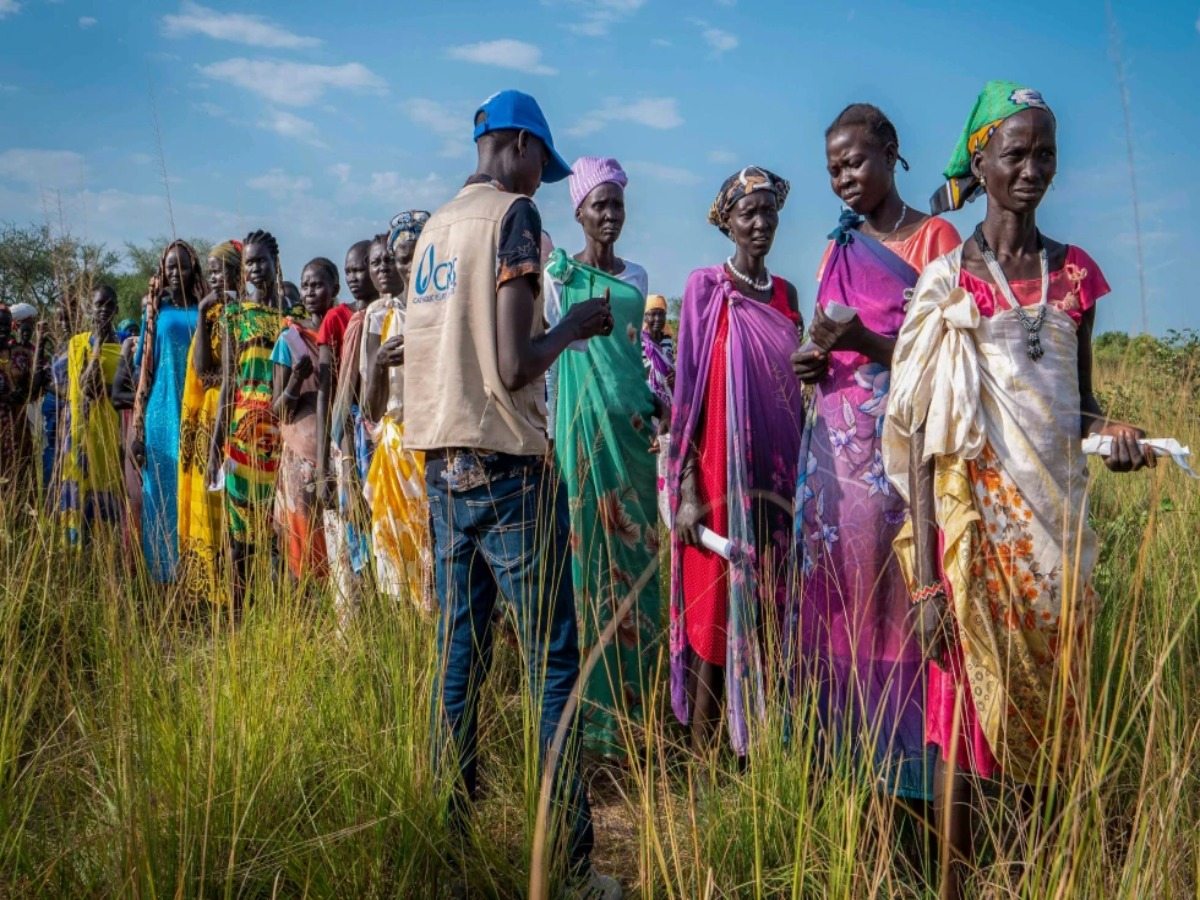
Rising political friction in South Sudan is fueling a fresh wave of violence, drawing alarm from the United Nations, which warns the country is edging toward a critical breaking point.
Addressing the U.N. Security Council on Tuesday, U.N. peacekeeping chief Jean-Pierre Lacroix pressed both the government and opposition to resume negotiations and commit to a political path that could halt the worsening crisis. He cautioned that the conflict is intensifying as rival factions describe their actions as defensive while preparing for broader confrontation.
At the moment, he warned, “Both sides claim to be acting in self-defense, while at the same time preparing for the possibility of large-scale hostilities.”

READ ALSO: Aid workers missing after South Sudan air raid destroys key hospital
South Sudan’s path since independence has been turbulent. The oil-producing nation split from Sudan in 2011 after decades of conflict, raising expectations for stability and development. However, the optimism collapsed in December 2013 when fighting broke out between forces aligned with President Salva Kiir, a Dinka, and supporters of Vice President Riek Machar, who is Nuer. The violence, largely driven by ethnic rivalries, plunged the country into a brutal civil war.
The war claimed more than 400,000 lives before a 2018 peace deal brought Kiir and Machar into a fragile unity government. Progress on implementing the agreement has lagged, while a repeatedly postponed presidential election is now set for December.
Tensions surged again in March 2025 when a Nuer militia captured a military garrison, triggering a strong response from Kiir’s administration. Authorities accused Machar and seven other opposition leaders of treason, murder, terrorism and related offences, suspended the vice president, and initiated a treason trial that has continued since late 2025.
Lacroix highlighted recent violence in Jonglei state, located northeast of the capital, Juba, describing it as particularly troubling. He cited reports of aerial bombardments, inflammatory political messaging, severe limits on humanitarian operations and mass displacement affecting more than 280,000 people, “as per government sources.”
He reiterated that international and regional actors remain united in their view that armed confrontation will not resolve South Sudan’s political crisis. The African Union Peace and Security Council, the Intergovernmental Authority on Development (IGAD) and the United Nations, he said, continue to regard the 2018 agreement as “the only viable framework for peace and stability.”
“Let me be clear,” Lacroix said, “without consensus, without the participation of all those who have placed their hopes into this peace process, and in all corners, in all 10 states of the country, any election will not be credible and therefore worthy of our support.”
READ ALSO: Aid blocked, hunger rising as violence grips South Sudan’s Jonglei
The deteriorating security climate is also placing humanitarian workers at extreme risk. Lacroix noted that 350 attacks targeting aid personnel and facilities were recorded in 2025, a sharp increase from 255 the previous year.
He said aid organizations continue to face obstacles despite assurances from the government, especially when trying to reach opposition-controlled territories during the country’s most severe cholera outbreak. More than 98,000 infections have been documented since September 2024, with new cases emerging again in Jonglei.
Healthcare services are also under pressure from ongoing violence. Lacroix pointed to air raids and looting incidents affecting medical facilities, including a Feb. 3 strike on a hospital in Lankien in Jonglei that destroyed vital supplies and left health workers injured.
“These incidents raise serious concerns about shrinking humanitarian space at a time when more than 10 million people require humanitarian assistance, including 7.5 million facing food insecurity and over 1.3 million returnees and refugees from Sudan,” he said.
The escalating conflict is further complicated by funding shortfalls affecting U.N. operations. Lacroix reportedly revealed that budget constraints have forced the organization to scale back its peacekeeping presence, reducing civilian protection patrols by as much as 40% in areas where troop numbers are declining and by up to 70% in locations where bases have been shut down.
READ ALSO: South Sudan’s new offensive explained: What’s at stake for civilians